Event submissions
Published

This submission belongs to the session S2. Nutrition and Immunology of the event The 2nd International Electronic Conference on Nutrients
Published date
14 Mar, 2022
Academic Editor
'%3e%3cpath%20d='M12.6657%2010.9104C12.4185%2010.325%2012.0599%209.79327%2011.6097%209.34482C11.1609%208.89508%2010.6293%208.5365%2010.0442%208.28888C10.0389%208.28626%2010.0337%208.28495%2010.0285%208.28233C10.8446%207.69279%2011.3752%206.73249%2011.3752%205.64904C11.3752%203.8542%209.92103%202.39999%208.1262%202.39999C6.33136%202.39999%204.87715%203.8542%204.87715%205.64904C4.87715%206.73249%205.40774%207.69279%206.22393%208.28364C6.21869%208.28626%206.21345%208.28757%206.20821%208.29019C5.62129%208.5378%205.09463%208.89284%204.64265%209.34613C4.1929%209.79493%203.83432%2010.3266%203.58671%2010.9117C3.34345%2011.4845%203.21226%2012.0987%203.20023%2012.7209C3.19988%2012.7349%203.20233%2012.7488%203.20744%2012.7619C3.21255%2012.7749%203.22022%2012.7867%203.22998%2012.7968C3.23975%2012.8068%203.25142%2012.8147%203.26431%2012.8202C3.2772%2012.8256%203.29105%2012.8284%203.30504%2012.8284H4.09109C4.14874%2012.8284%204.19459%2012.7825%204.1959%2012.7262C4.2221%2011.7148%204.62823%2010.7676%205.34617%2010.0497C6.08899%209.30683%207.0755%208.89808%208.1262%208.89808C9.17689%208.89808%2010.1634%209.30683%2010.9062%2010.0497C11.6242%2010.7676%2012.0303%2011.7148%2012.0565%2012.7262C12.0578%2012.7838%2012.1037%2012.8284%2012.1613%2012.8284H12.9474C12.9613%2012.8284%2012.9752%2012.8256%2012.9881%2012.8202C13.001%2012.8147%2013.0126%2012.8068%2013.0224%2012.7968C13.0322%2012.7867%2013.0398%2012.7749%2013.0449%2012.7619C13.0501%2012.7488%2013.0525%2012.7349%2013.0522%2012.7209C13.0391%2012.0947%2012.9094%2011.4855%2012.6657%2010.9104ZM8.1262%207.9024C7.52486%207.9024%206.9589%207.6679%206.53312%207.24211C6.10733%206.81633%205.87283%206.25037%205.87283%205.64904C5.87283%205.0477%206.10733%204.48174%206.53312%204.05596C6.9589%203.63018%207.52486%203.39567%208.1262%203.39567C8.72753%203.39567%209.29349%203.63018%209.71927%204.05596C10.1451%204.48174%2010.3796%205.0477%2010.3796%205.64904C10.3796%206.25037%2010.1451%206.81633%209.71927%207.24211C9.29349%207.6679%208.72753%207.9024%208.1262%207.9024Z'%20fill='%235D1EE1'/%3e%3c/g%3e%3c/svg%3e) Pedro Tauler
Pedro TaulerCitation
Gordana Kenđel Jovanović, Ines Mrakovčić-Šutić, Ingrid Šutić Udović, Sanja Klobučar Majanović, The influence of energy-restricted anti-inflammatory diet on innate immune response in obese patients, in Proceedings of The 2nd International Electronic Conference on Nutrients, 15 March–31 March 2022, MDPI: Basel, Switzerland, doi: 10.3390/IECN2022-12399
Share
Email
Facebook
Twitter
LinkedIn
The influence of energy-restricted anti-inflammatory diet on innate immune response in obese patients
'%3e%3cpath%20d='M12.6647%2010.9104C12.4176%2010.325%2012.0589%209.7933%2011.6088%209.34485C11.16%208.89511%2010.6283%208.53653%2010.0432%208.28891C10.038%208.28629%2010.0327%208.28498%2010.0275%208.28236C10.8437%207.69282%2011.3743%206.73252%2011.3743%205.64907C11.3743%203.85423%209.92005%202.40002%208.12522%202.40002C6.33038%202.40002%204.87618%203.85423%204.87618%205.64907C4.87618%206.73252%205.40677%207.69282%206.22296%208.28367C6.21772%208.28629%206.21248%208.2876%206.20724%208.29022C5.62031%208.53783%205.09365%208.89287%204.64167%209.34616C4.19192%209.79496%203.83334%2010.3266%203.58573%2010.9117C3.34247%2011.4846%203.21128%2012.0987%203.19925%2012.721C3.1989%2012.735%203.20135%2012.7489%203.20646%2012.7619C3.21157%2012.7749%203.21924%2012.7868%203.22901%2012.7968C3.23877%2012.8068%203.25045%2012.8148%203.26334%2012.8202C3.27623%2012.8256%203.29007%2012.8284%203.30406%2012.8284H4.09012C4.14776%2012.8284%204.19362%2012.7825%204.19493%2012.7262C4.22113%2011.7148%204.62726%2010.7676%205.34519%2010.0497C6.08802%209.30686%207.07452%208.89811%208.12522%208.89811C9.17592%208.89811%2010.1624%209.30686%2010.9052%2010.0497C11.6232%2010.7676%2012.0293%2011.7148%2012.0555%2012.7262C12.0568%2012.7839%2012.1027%2012.8284%2012.1603%2012.8284H12.9464C12.9604%2012.8284%2012.9742%2012.8256%2012.9871%2012.8202C13%2012.8148%2013.0117%2012.8068%2013.0214%2012.7968C13.0312%2012.7868%2013.0389%2012.7749%2013.044%2012.7619C13.0491%2012.7489%2013.0515%2012.735%2013.0512%2012.721C13.0381%2012.0947%2012.9084%2011.4856%2012.6647%2010.9104ZM8.12522%207.90243C7.52388%207.90243%206.95792%207.66793%206.53214%207.24215C6.10636%206.81636%205.87185%206.2504%205.87185%205.64907C5.87185%205.04773%206.10636%204.48177%206.53214%204.05599C6.95792%203.63021%207.52388%203.3957%208.12522%203.3957C8.72655%203.3957%209.29252%203.63021%209.7183%204.05599C10.1441%204.48177%2010.3786%205.04773%2010.3786%205.64907C10.3786%206.2504%2010.1441%206.81636%209.7183%207.24215C9.29252%207.66793%208.72655%207.90243%208.12522%207.90243Z'%20fill='%235D1EE1'/%3e%3c/g%3e%3c/svg%3e)
Gordana Kenđel Jovanović 1
Ines Mrakovčić-Šutić 2,3
Ingrid Šutić Udović 2,4
Sanja Klobučar Majanović 3,5
1. Department of Health Ecology, Teaching Institute of Public Health of Primorsko-Goranska County, Rijeka, Croatia
2. Department of Physiology, Immunology and Pathophysiology, University of Rijeka, Medical Faculty, Croatia
3. Department of Basic Medical Sciences, University of Rijeka, Faculty of Health Studies, Croatia
4. Department of Dermatology and Venerology, Clinical Hospital Center Rijeka, Croatia
5. Department of Endocrinology, Diabetes and Metabolic Diseases, Clinical Hospital Centre Rijeka, Rijeka
Abstract
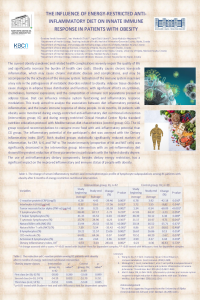
The current obesity pandemic and related health complications severely impair the quality of life and significantly increase the burden of health care costs. Obesity causes chronic low-grade inflammation, which may cause chronic metabolic disease and complications, and may be accompanied by the activation of the immune system. Activation of the immune system may have a key role in the pathogenesis of metabolic disorders related to obesity. Adipose tissue disorders cause changes in adipose tissue distribution and function, with significant effects on cytokines, chemokines, hormone expression, and the composition of immune cell populations present in adipose tissue. Diet can influence immune system functioning and inflammatory response modulation. This study aimed to analyze the association between diet inflammatory potential, inflammation, and the innate immune response of obese people. In six months, 81 obese patients were monitored during energy-restricted anti-inflammatory diet nutritional intervention (intervention group; IG) and during energy-restricted Clinical Hospital Center Rijeka standard nutrition education protocol (control group; CG). The inflammatory potential of the participant’s diet was assessed with the Dietary Inflammatory Index (DII®). Both studied groups statistically significantly reduced markers of inflammation, hs-CRP, IL-6, and TNF-α. The innate immunity (proportion of NK, NKT cells, and Tregs) was significantly decreased in the intervention group. Intervention with an anti-inflammatory diet showed the greatest reduction of these parameters in participants with the highest obesity degree. The use of anti-inflammatory dietary components, besides dietary energy restriction, has a significant impact on the improved immune status of obese people.
Keywords
Obesity
innate immunity
diet intervention
anti-inflammatory
Dietary Inflammatory Index
Manuscript
sciforum-057842-done.pdf
Poster
2nd International Electronic Conference on Nutrients 2022 GKJ.pdf
Title of the article: Effect of short-term Vitamin D supplementation on blood pressure, arterial health, and stress hormones in healthy volunteers
Could bio-fortification of vegetables with iodine represent a tool to boost the immune system? A pilot study on human health