Event submissions
Published

This submission belongs to the session S5. Nutrition and Oxidative Stress of the event The 2nd International Electronic Conference on Nutrients
Published date
14 Mar, 2022
Academic Editor
'%3e%3cpath%20d='M12.6657%2010.9104C12.4185%2010.325%2012.0599%209.79327%2011.6097%209.34482C11.1609%208.89508%2010.6293%208.5365%2010.0442%208.28888C10.0389%208.28626%2010.0337%208.28495%2010.0285%208.28233C10.8446%207.69279%2011.3752%206.73249%2011.3752%205.64904C11.3752%203.8542%209.92103%202.39999%208.1262%202.39999C6.33136%202.39999%204.87715%203.8542%204.87715%205.64904C4.87715%206.73249%205.40774%207.69279%206.22393%208.28364C6.21869%208.28626%206.21345%208.28757%206.20821%208.29019C5.62129%208.5378%205.09463%208.89284%204.64265%209.34613C4.1929%209.79493%203.83432%2010.3266%203.58671%2010.9117C3.34345%2011.4845%203.21226%2012.0987%203.20023%2012.7209C3.19988%2012.7349%203.20233%2012.7488%203.20744%2012.7619C3.21255%2012.7749%203.22022%2012.7867%203.22998%2012.7968C3.23975%2012.8068%203.25142%2012.8147%203.26431%2012.8202C3.2772%2012.8256%203.29105%2012.8284%203.30504%2012.8284H4.09109C4.14874%2012.8284%204.19459%2012.7825%204.1959%2012.7262C4.2221%2011.7148%204.62823%2010.7676%205.34617%2010.0497C6.08899%209.30683%207.0755%208.89808%208.1262%208.89808C9.17689%208.89808%2010.1634%209.30683%2010.9062%2010.0497C11.6242%2010.7676%2012.0303%2011.7148%2012.0565%2012.7262C12.0578%2012.7838%2012.1037%2012.8284%2012.1613%2012.8284H12.9474C12.9613%2012.8284%2012.9752%2012.8256%2012.9881%2012.8202C13.001%2012.8147%2013.0126%2012.8068%2013.0224%2012.7968C13.0322%2012.7867%2013.0398%2012.7749%2013.0449%2012.7619C13.0501%2012.7488%2013.0525%2012.7349%2013.0522%2012.7209C13.0391%2012.0947%2012.9094%2011.4855%2012.6657%2010.9104ZM8.1262%207.9024C7.52486%207.9024%206.9589%207.6679%206.53312%207.24211C6.10733%206.81633%205.87283%206.25037%205.87283%205.64904C5.87283%205.0477%206.10733%204.48174%206.53312%204.05596C6.9589%203.63018%207.52486%203.39567%208.1262%203.39567C8.72753%203.39567%209.29349%203.63018%209.71927%204.05596C10.1451%204.48174%2010.3796%205.0477%2010.3796%205.64904C10.3796%206.25037%2010.1451%206.81633%209.71927%207.24211C9.29349%207.6679%208.72753%207.9024%208.1262%207.9024Z'%20fill='%235D1EE1'/%3e%3c/g%3e%3c/svg%3e) Torsten Bohn
Torsten BohnCitation
Asim Cengiz Akbulut, Leon J Schurgers, Non-canonical role of MK-7 in vascular smooth muscle cells - promoting energy and Inhibiting of oxidative stress, in Proceedings of The 2nd International Electronic Conference on Nutrients, 15 March–31 March 2022, MDPI: Basel, Switzerland, doi: 10.3390/IECN2022-12401
Share
Email
Facebook
Twitter
LinkedIn
Non-canonical role of MK-7 in vascular smooth muscle cells - promoting energy and Inhibiting of oxidative stress
'%3e%3cpath%20d='M12.6647%2010.9104C12.4176%2010.325%2012.0589%209.7933%2011.6088%209.34485C11.16%208.89511%2010.6283%208.53653%2010.0432%208.28891C10.038%208.28629%2010.0327%208.28498%2010.0275%208.28236C10.8437%207.69282%2011.3743%206.73252%2011.3743%205.64907C11.3743%203.85423%209.92005%202.40002%208.12522%202.40002C6.33038%202.40002%204.87618%203.85423%204.87618%205.64907C4.87618%206.73252%205.40677%207.69282%206.22296%208.28367C6.21772%208.28629%206.21248%208.2876%206.20724%208.29022C5.62031%208.53783%205.09365%208.89287%204.64167%209.34616C4.19192%209.79496%203.83334%2010.3266%203.58573%2010.9117C3.34247%2011.4846%203.21128%2012.0987%203.19925%2012.721C3.1989%2012.735%203.20135%2012.7489%203.20646%2012.7619C3.21157%2012.7749%203.21924%2012.7868%203.22901%2012.7968C3.23877%2012.8068%203.25045%2012.8148%203.26334%2012.8202C3.27623%2012.8256%203.29007%2012.8284%203.30406%2012.8284H4.09012C4.14776%2012.8284%204.19362%2012.7825%204.19493%2012.7262C4.22113%2011.7148%204.62726%2010.7676%205.34519%2010.0497C6.08802%209.30686%207.07452%208.89811%208.12522%208.89811C9.17592%208.89811%2010.1624%209.30686%2010.9052%2010.0497C11.6232%2010.7676%2012.0293%2011.7148%2012.0555%2012.7262C12.0568%2012.7839%2012.1027%2012.8284%2012.1603%2012.8284H12.9464C12.9604%2012.8284%2012.9742%2012.8256%2012.9871%2012.8202C13%2012.8148%2013.0117%2012.8068%2013.0214%2012.7968C13.0312%2012.7868%2013.0389%2012.7749%2013.044%2012.7619C13.0491%2012.7489%2013.0515%2012.735%2013.0512%2012.721C13.0381%2012.0947%2012.9084%2011.4856%2012.6647%2010.9104ZM8.12522%207.90243C7.52388%207.90243%206.95792%207.66793%206.53214%207.24215C6.10636%206.81636%205.87185%206.2504%205.87185%205.64907C5.87185%205.04773%206.10636%204.48177%206.53214%204.05599C6.95792%203.63021%207.52388%203.3957%208.12522%203.3957C8.72655%203.3957%209.29252%203.63021%209.7183%204.05599C10.1441%204.48177%2010.3786%205.04773%2010.3786%205.64907C10.3786%206.2504%2010.1441%206.81636%209.7183%207.24215C9.29252%207.66793%208.72655%207.90243%208.12522%207.90243Z'%20fill='%235D1EE1'/%3e%3c/g%3e%3c/svg%3e)
Asim Cengiz Akbulut 1

Leon J Schurgers 1
1. Department of Biochemistry, Cardiovascular Research Institute Maastricht, Maastricht University
Abstract
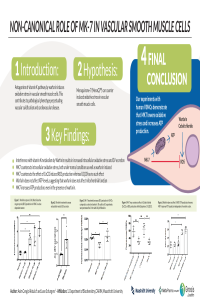
Background: The sequential processes that lead to pathological cardiovascular remodeling is unclear. From the multiple components that constitute the cardiovascular system, it is believed that vascular smooth muscle cells (SMCs) play a central role. SMCs have the ability to differentiate into a proliferative and migratory phenotype which supports vessel homeostasis. These synthetic SMCs display increased oxidative stress, secrete extracellular vesicles, and promote vascular calcification. SMC driven calcification is regulated by vitamin K-dependent matrix Gla protein (MGP). Since vitamin K promotes energy to bacteria, and vitamin K can scavenge free radicals and reduce oxidative stress, we reasoned that vitamin K can have non-canonical functions to decrease vascular calcification.
Aim: We investigated the potential of vitamin K to reduce oxidative stress and support ATP synthesis in SMCs.
Methods: Primary SMCs were cultured in M199 medium containing 20% FBS and 1% P/S. Warfarin (vitamin K antagonist; 10microM) and MK-7 (10microM) were added and ATP (luminescence), oxidative stress (DCFDA) and extracellular vesicles (EV: CD63-CD81-PE bead-assay) were measured.
Results: We show that SMCs take up MK-7 very efficiently. Interference with vitamin K metabolism, using warfarin resulted in increased intracellular oxidative stress (4 fold; p < 0.005) and EV release (2.5 fold; p<0.01). The addition of MK-7 counteracts intracellular oxidative stress, both under normal conditions (2 fold; p< 0.05) as well as under warfarin induced oxidative stress conditions (4 fold; p< 0.001). Additionally, chronic hypoxia induced by the HIF1a stabilizing cobalt chloride induced increased oxidative stress (2.5 fold; p<0.01), and MK-7 could counteract oxidative stress, indicative for improved mitochondrial activity. Finally, MK-7 increased ATP production as compared to vehicle (15%; p<0.05), even in the presence of warfarin.
Conclusion: Our experiments show that in primary human SMCs, MK-7 lowers oxidative stress and EV release and increases ATP production. This pathway points to a non-canonical role of MK-7 in the prevention of vascular calcification, unrelated to its canonical role as cofactor for the posttranslational modification of MGP.
Keywords
Vitamin K
MK-7
vascular smooth muscle cells
oxidative stress
vascular calcification
Manuscript
sciforum-057045-done.pdf
Poster
sciforum-057045 poster.pdf
Could bio-fortification of vegetables with iodine represent a tool to boost the immune system? A pilot study on human health
Bladder Cancer,and Fluorescence Cystoscopy