Event submissions
EventsMOL2NET'22, Conference on Molecular, Biomed., Comput. & Network Science and Engineering, 8th ed.
Published

This submission belongs to the session 06. BIOMODE.ECO-07: Biotech., Mol. Eng., Nat. Products Develop. and Ecology Congress, Paris, France-Ohio, USA, 2022. of the event MOL2NET'22, Conference on Molecular, Biomed., Comput. & Network Science and Engineering, 8th ed.
Published date
31 Mar, 2022
Academic Editor
'%3e%3cpath%20d='M12.6657%2010.9104C12.4185%2010.325%2012.0599%209.79327%2011.6097%209.34482C11.1609%208.89508%2010.6293%208.5365%2010.0442%208.28888C10.0389%208.28626%2010.0337%208.28495%2010.0285%208.28233C10.8446%207.69279%2011.3752%206.73249%2011.3752%205.64904C11.3752%203.8542%209.92103%202.39999%208.1262%202.39999C6.33136%202.39999%204.87715%203.8542%204.87715%205.64904C4.87715%206.73249%205.40774%207.69279%206.22393%208.28364C6.21869%208.28626%206.21345%208.28757%206.20821%208.29019C5.62129%208.5378%205.09463%208.89284%204.64265%209.34613C4.1929%209.79493%203.83432%2010.3266%203.58671%2010.9117C3.34345%2011.4845%203.21226%2012.0987%203.20023%2012.7209C3.19988%2012.7349%203.20233%2012.7488%203.20744%2012.7619C3.21255%2012.7749%203.22022%2012.7867%203.22998%2012.7968C3.23975%2012.8068%203.25142%2012.8147%203.26431%2012.8202C3.2772%2012.8256%203.29105%2012.8284%203.30504%2012.8284H4.09109C4.14874%2012.8284%204.19459%2012.7825%204.1959%2012.7262C4.2221%2011.7148%204.62823%2010.7676%205.34617%2010.0497C6.08899%209.30683%207.0755%208.89808%208.1262%208.89808C9.17689%208.89808%2010.1634%209.30683%2010.9062%2010.0497C11.6242%2010.7676%2012.0303%2011.7148%2012.0565%2012.7262C12.0578%2012.7838%2012.1037%2012.8284%2012.1613%2012.8284H12.9474C12.9613%2012.8284%2012.9752%2012.8256%2012.9881%2012.8202C13.001%2012.8147%2013.0126%2012.8068%2013.0224%2012.7968C13.0322%2012.7867%2013.0398%2012.7749%2013.0449%2012.7619C13.0501%2012.7488%2013.0525%2012.7349%2013.0522%2012.7209C13.0391%2012.0947%2012.9094%2011.4855%2012.6657%2010.9104ZM8.1262%207.9024C7.52486%207.9024%206.9589%207.6679%206.53312%207.24211C6.10733%206.81633%205.87283%206.25037%205.87283%205.64904C5.87283%205.0477%206.10733%204.48174%206.53312%204.05596C6.9589%203.63018%207.52486%203.39567%208.1262%203.39567C8.72753%203.39567%209.29349%203.63018%209.71927%204.05596C10.1451%204.48174%2010.3796%205.0477%2010.3796%205.64904C10.3796%206.25037%2010.1451%206.81633%209.71927%207.24211C9.29349%207.6679%208.72753%207.9024%208.1262%207.9024Z'%20fill='%235D1EE1'/%3e%3c/g%3e%3c/svg%3e) Humbert G. Díaz
Humbert G. DíazCitation
Mohd Hairul Mohd Salleh, Yuzine Esa, Conservation Status of Globally Testudines Terrapins Based on COI Mitochondrial Markers, in Proceedings of MOL2NET'22, Conference on Molecular, Biomed., Comput. & Network Science and Engineering, 8th ed., 1 January–15 January 2023, MDPI: Basel, Switzerland, doi: 10.3390/mol2net-08-12456
Share
Email
Facebook
Twitter
LinkedIn
Conservation Status of Globally Testudines Terrapins Based on COI Mitochondrial Markers
'%3e%3cpath%20d='M12.6647%2010.9104C12.4176%2010.325%2012.0589%209.7933%2011.6088%209.34485C11.16%208.89511%2010.6283%208.53653%2010.0432%208.28891C10.038%208.28629%2010.0327%208.28498%2010.0275%208.28236C10.8437%207.69282%2011.3743%206.73252%2011.3743%205.64907C11.3743%203.85423%209.92005%202.40002%208.12522%202.40002C6.33038%202.40002%204.87618%203.85423%204.87618%205.64907C4.87618%206.73252%205.40677%207.69282%206.22296%208.28367C6.21772%208.28629%206.21248%208.2876%206.20724%208.29022C5.62031%208.53783%205.09365%208.89287%204.64167%209.34616C4.19192%209.79496%203.83334%2010.3266%203.58573%2010.9117C3.34247%2011.4846%203.21128%2012.0987%203.19925%2012.721C3.1989%2012.735%203.20135%2012.7489%203.20646%2012.7619C3.21157%2012.7749%203.21924%2012.7868%203.22901%2012.7968C3.23877%2012.8068%203.25045%2012.8148%203.26334%2012.8202C3.27623%2012.8256%203.29007%2012.8284%203.30406%2012.8284H4.09012C4.14776%2012.8284%204.19362%2012.7825%204.19493%2012.7262C4.22113%2011.7148%204.62726%2010.7676%205.34519%2010.0497C6.08802%209.30686%207.07452%208.89811%208.12522%208.89811C9.17592%208.89811%2010.1624%209.30686%2010.9052%2010.0497C11.6232%2010.7676%2012.0293%2011.7148%2012.0555%2012.7262C12.0568%2012.7839%2012.1027%2012.8284%2012.1603%2012.8284H12.9464C12.9604%2012.8284%2012.9742%2012.8256%2012.9871%2012.8202C13%2012.8148%2013.0117%2012.8068%2013.0214%2012.7968C13.0312%2012.7868%2013.0389%2012.7749%2013.044%2012.7619C13.0491%2012.7489%2013.0515%2012.735%2013.0512%2012.721C13.0381%2012.0947%2012.9084%2011.4856%2012.6647%2010.9104ZM8.12522%207.90243C7.52388%207.90243%206.95792%207.66793%206.53214%207.24215C6.10636%206.81636%205.87185%206.2504%205.87185%205.64907C5.87185%205.04773%206.10636%204.48177%206.53214%204.05599C6.95792%203.63021%207.52388%203.3957%208.12522%203.3957C8.72655%203.3957%209.29252%203.63021%209.7183%204.05599C10.1441%204.48177%2010.3786%205.04773%2010.3786%205.64907C10.3786%206.2504%2010.1441%206.81636%209.7183%207.24215C9.29252%207.66793%208.72655%207.90243%208.12522%207.90243Z'%20fill='%235D1EE1'/%3e%3c/g%3e%3c/svg%3e)
Mohd Hairul Mohd Salleh 1,2
Yuzine Esa 3,4
1. Department of Aquaculture, Faculty of Agriculture, Universiti Putra Malaysia, 43400, UPM, Serdang, Selangor, Malaysia.
2. Royal Malaysian Customs Department, Persiaran Perdana, Presint 2, 62596 Putrajaya, Malaysia.
3. Department of Aquaculture, Faculty of Agriculture, Universiti Putra Malaysia, 43000 Serdang, Selangor, Malaysia
4. International Institute of Aquaculture and Aquatic Sciences, Universiti Putra Malaysia, Lot 960 Jalan Kemang 6, 71050 Port Dickson, Negeri Sembilan, Malaysia
Abstract
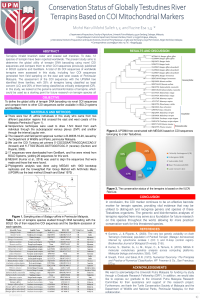
Terrapins inhabit brackish water and coastal salt marshes. Terrapins are adapted to intermediate salinities but frequently face saltwater-inundated marsh habitats. To date, 12 species of terrapin have been reported worldwide. The present study aims to determine the global utility of terrapin DNA barcoding using novel COI sequences and compare them to other COI sequences previously published in BOLD systems and GenBank. A total of 26 COI sequences of worldwide terrapins were assessed in this study, including 13 COI sequences generated from field sampling on the east and west coasts of Peninsular Malaysia. Nevertheless, the conservation status of the terrapins is also taken into account for sustainability priority. The assessment of the COI sequences with the UPGMA tree identified three families, with 33% of terrapins being classified as least concern (LC) and 25% of them being classified as critically endangered (CR). In this study, we looked at the genome and bioinformatics of terrapins, which could be used as a starting point for future research on terrapin species all over the world.
Keywords
DNA Barcoding
BOLD Systems
GenBank
sustainability
UPGMA tree and critically endangered.
Manuscript
Sciforum 060719 Latest.pdf
Poster
sciforum-060719.pdf
Prediction of antiviral activity, cytotoxicity risks and molecular
docking against HIV of constituents from marine algae
docking against HIV of constituents from marine algae
Big Data in Medicine and Healthcare