Event submissions
Published

This submission belongs to the session 10. Posters of the event 1st International Electronic Conference on Horticulturae
Published date
15 Apr, 2022
Academic Editor
'%3e%3cpath%20d='M12.6657%2010.9104C12.4185%2010.325%2012.0599%209.79327%2011.6097%209.34482C11.1609%208.89508%2010.6293%208.5365%2010.0442%208.28888C10.0389%208.28626%2010.0337%208.28495%2010.0285%208.28233C10.8446%207.69279%2011.3752%206.73249%2011.3752%205.64904C11.3752%203.8542%209.92103%202.39999%208.1262%202.39999C6.33136%202.39999%204.87715%203.8542%204.87715%205.64904C4.87715%206.73249%205.40774%207.69279%206.22393%208.28364C6.21869%208.28626%206.21345%208.28757%206.20821%208.29019C5.62129%208.5378%205.09463%208.89284%204.64265%209.34613C4.1929%209.79493%203.83432%2010.3266%203.58671%2010.9117C3.34345%2011.4845%203.21226%2012.0987%203.20023%2012.7209C3.19988%2012.7349%203.20233%2012.7488%203.20744%2012.7619C3.21255%2012.7749%203.22022%2012.7867%203.22998%2012.7968C3.23975%2012.8068%203.25142%2012.8147%203.26431%2012.8202C3.2772%2012.8256%203.29105%2012.8284%203.30504%2012.8284H4.09109C4.14874%2012.8284%204.19459%2012.7825%204.1959%2012.7262C4.2221%2011.7148%204.62823%2010.7676%205.34617%2010.0497C6.08899%209.30683%207.0755%208.89808%208.1262%208.89808C9.17689%208.89808%2010.1634%209.30683%2010.9062%2010.0497C11.6242%2010.7676%2012.0303%2011.7148%2012.0565%2012.7262C12.0578%2012.7838%2012.1037%2012.8284%2012.1613%2012.8284H12.9474C12.9613%2012.8284%2012.9752%2012.8256%2012.9881%2012.8202C13.001%2012.8147%2013.0126%2012.8068%2013.0224%2012.7968C13.0322%2012.7867%2013.0398%2012.7749%2013.0449%2012.7619C13.0501%2012.7488%2013.0525%2012.7349%2013.0522%2012.7209C13.0391%2012.0947%2012.9094%2011.4855%2012.6657%2010.9104ZM8.1262%207.9024C7.52486%207.9024%206.9589%207.6679%206.53312%207.24211C6.10733%206.81633%205.87283%206.25037%205.87283%205.64904C5.87283%205.0477%206.10733%204.48174%206.53312%204.05596C6.9589%203.63018%207.52486%203.39567%208.1262%203.39567C8.72753%203.39567%209.29349%203.63018%209.71927%204.05596C10.1451%204.48174%2010.3796%205.0477%2010.3796%205.64904C10.3796%206.25037%2010.1451%206.81633%209.71927%207.24211C9.29349%207.6679%208.72753%207.9024%208.1262%207.9024Z'%20fill='%235D1EE1'/%3e%3c/g%3e%3c/svg%3e) Juan A. Fernández
Juan A. FernándezCitation
Nora Ibañez, Ashraf Mohamed Abdelsamee Goda, Integrated MultiTrophic Aquaponics-a promising strategy for cycling plant nutrients and minimizing water consumption, in Proceedings of 1st International Electronic Conference on Horticulturae, 16 April–30 April 2022, MDPI: Basel, Switzerland, doi: 10.3390/IECHo2022-12493
Share
Email
Facebook
Twitter
LinkedIn
Integrated MultiTrophic Aquaponics-a promising strategy for cycling plant nutrients and minimizing water consumption
'%3e%3cpath%20d='M12.6647%2010.9104C12.4176%2010.325%2012.0589%209.7933%2011.6088%209.34485C11.16%208.89511%2010.6283%208.53653%2010.0432%208.28891C10.038%208.28629%2010.0327%208.28498%2010.0275%208.28236C10.8437%207.69282%2011.3743%206.73252%2011.3743%205.64907C11.3743%203.85423%209.92005%202.40002%208.12522%202.40002C6.33038%202.40002%204.87618%203.85423%204.87618%205.64907C4.87618%206.73252%205.40677%207.69282%206.22296%208.28367C6.21772%208.28629%206.21248%208.2876%206.20724%208.29022C5.62031%208.53783%205.09365%208.89287%204.64167%209.34616C4.19192%209.79496%203.83334%2010.3266%203.58573%2010.9117C3.34247%2011.4846%203.21128%2012.0987%203.19925%2012.721C3.1989%2012.735%203.20135%2012.7489%203.20646%2012.7619C3.21157%2012.7749%203.21924%2012.7868%203.22901%2012.7968C3.23877%2012.8068%203.25045%2012.8148%203.26334%2012.8202C3.27623%2012.8256%203.29007%2012.8284%203.30406%2012.8284H4.09012C4.14776%2012.8284%204.19362%2012.7825%204.19493%2012.7262C4.22113%2011.7148%204.62726%2010.7676%205.34519%2010.0497C6.08802%209.30686%207.07452%208.89811%208.12522%208.89811C9.17592%208.89811%2010.1624%209.30686%2010.9052%2010.0497C11.6232%2010.7676%2012.0293%2011.7148%2012.0555%2012.7262C12.0568%2012.7839%2012.1027%2012.8284%2012.1603%2012.8284H12.9464C12.9604%2012.8284%2012.9742%2012.8256%2012.9871%2012.8202C13%2012.8148%2013.0117%2012.8068%2013.0214%2012.7968C13.0312%2012.7868%2013.0389%2012.7749%2013.044%2012.7619C13.0491%2012.7489%2013.0515%2012.735%2013.0512%2012.721C13.0381%2012.0947%2012.9084%2011.4856%2012.6647%2010.9104ZM8.12522%207.90243C7.52388%207.90243%206.95792%207.66793%206.53214%207.24215C6.10636%206.81636%205.87185%206.2504%205.87185%205.64907C5.87185%205.04773%206.10636%204.48177%206.53214%204.05599C6.95792%203.63021%207.52388%203.3957%208.12522%203.3957C8.72655%203.3957%209.29252%203.63021%209.7183%204.05599C10.1441%204.48177%2010.3786%205.04773%2010.3786%205.64907C10.3786%206.2504%2010.1441%206.81636%209.7183%207.24215C9.29252%207.66793%208.72655%207.90243%208.12522%207.90243Z'%20fill='%235D1EE1'/%3e%3c/g%3e%3c/svg%3e)
Nora Ibañez 1
Ashraf Mohamed Abdelsamee Goda 2
1. INKOA SISTEMAS
2. National Institute of Oceanography and Fisheries
Abstract
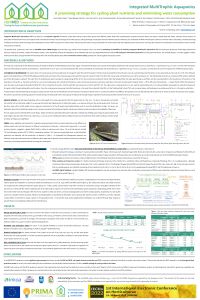
The integration of aquatic animals and horticultural production through aquaponics has been recently studied and endorsed by scientists as a real sustainable solution to optimize the reuse of nutrient and water resources in food production.
The present study (HortiMED H2020 PRIMA Project-Grant No.1915), conducted in three plastic greenhouses at El-Kanater Research Station in Egypt, has gone one-step beyond aquaponics by evaluating the feasibility of combining Integrated MultiTrophic Aquaculture (IMTA production of tilapia, grey mullet, crayfish, clams and silver carp) with hydroponic horticultural production (red and green leaf lettuce, chili pepper, cucumber, eggplant, tomato, mallow, bell pepper, watercress and celery) using Nutrient Film Technique-NFT and Floating Raft-FR systems to maximize nutrient cycling resulting from culturing aquatic animal.
IMTA is based on an ecosystem approach framework, where the farming of aquaculture species from different trophic levels with complementary ecosystem functions allows one species’ uneaten feed and wastes, nutrients and by-products (in particulate and dissolved forms) to be recaptured and converted into fertilizer, feed and energy for the other species, taking advantage of synergistic interaction between species. Moreover, the combination of IMTA with hydroponics allows to minimize water consumption, avoids the discharge of effluents enriched in dissolved nitrogen and phosphorus from IMTA into ground or surface waters, and decreases the need of using crop fertilisers of mineral origin made from depleting natural resources by recovering the nutrients from wastewater (converting fish excretion into high-value products for plants).
In HortiMED IMTA-aquaponics system significant improvements have been recorded in nutrient and water use efficiency, net aquatic biomass production and feed conversion ratio, compared to traditional horticulture or aquatic monoculture systems. These results indicates that IMTA-aquaponics as a bio-integrated food production system is not only a successful method for the simultaneous crop and aquatic biomass production, but also a suitable strategy for cycling nutrients and water.
Keywords
Protected Culture
Vegetable Production Systems
Nutrient cycling
Aquaponics
Nutrient Use Efficiency
Water Use Efficiency
IMTA
Resource efficiency
sustainable farming
circularity
Plant Nutrition
Manuscript
sciforum_056432-done.pdf
Poster
Poster_IECHo_2022_HortiMED_IMTA_v1.pdf
Monitoring of leaf and berry diseases of strawberry
Effect of microbial biostimulants and organic fertigation on nursery production of lettuce transplants