Event submissions
Published
This submission belongs to the session I. Poster of the event The 3rd International Online Conference on Nanomaterials
Published date
24 Apr, 2022
Academic Editor
'%3e%3cpath%20d='M12.6657%2010.9104C12.4185%2010.325%2012.0599%209.79327%2011.6097%209.34482C11.1609%208.89508%2010.6293%208.5365%2010.0442%208.28888C10.0389%208.28626%2010.0337%208.28495%2010.0285%208.28233C10.8446%207.69279%2011.3752%206.73249%2011.3752%205.64904C11.3752%203.8542%209.92103%202.39999%208.1262%202.39999C6.33136%202.39999%204.87715%203.8542%204.87715%205.64904C4.87715%206.73249%205.40774%207.69279%206.22393%208.28364C6.21869%208.28626%206.21345%208.28757%206.20821%208.29019C5.62129%208.5378%205.09463%208.89284%204.64265%209.34613C4.1929%209.79493%203.83432%2010.3266%203.58671%2010.9117C3.34345%2011.4845%203.21226%2012.0987%203.20023%2012.7209C3.19988%2012.7349%203.20233%2012.7488%203.20744%2012.7619C3.21255%2012.7749%203.22022%2012.7867%203.22998%2012.7968C3.23975%2012.8068%203.25142%2012.8147%203.26431%2012.8202C3.2772%2012.8256%203.29105%2012.8284%203.30504%2012.8284H4.09109C4.14874%2012.8284%204.19459%2012.7825%204.1959%2012.7262C4.2221%2011.7148%204.62823%2010.7676%205.34617%2010.0497C6.08899%209.30683%207.0755%208.89808%208.1262%208.89808C9.17689%208.89808%2010.1634%209.30683%2010.9062%2010.0497C11.6242%2010.7676%2012.0303%2011.7148%2012.0565%2012.7262C12.0578%2012.7838%2012.1037%2012.8284%2012.1613%2012.8284H12.9474C12.9613%2012.8284%2012.9752%2012.8256%2012.9881%2012.8202C13.001%2012.8147%2013.0126%2012.8068%2013.0224%2012.7968C13.0322%2012.7867%2013.0398%2012.7749%2013.0449%2012.7619C13.0501%2012.7488%2013.0525%2012.7349%2013.0522%2012.7209C13.0391%2012.0947%2012.9094%2011.4855%2012.6657%2010.9104ZM8.1262%207.9024C7.52486%207.9024%206.9589%207.6679%206.53312%207.24211C6.10733%206.81633%205.87283%206.25037%205.87283%205.64904C5.87283%205.0477%206.10733%204.48174%206.53312%204.05596C6.9589%203.63018%207.52486%203.39567%208.1262%203.39567C8.72753%203.39567%209.29349%203.63018%209.71927%204.05596C10.1451%204.48174%2010.3796%205.0477%2010.3796%205.64904C10.3796%206.25037%2010.1451%206.81633%209.71927%207.24211C9.29349%207.6679%208.72753%207.9024%208.1262%207.9024Z'%20fill='%235D1EE1'/%3e%3c/g%3e%3c/svg%3e) Souad AMMAR-MERAH
Souad AMMAR-MERAHCitation
Liviu Duta, George E Stan, Valentina Grumezescu, Gabriela Dorcioman, Elena Matei, Irina Zgura, Oana Gherasim, Gianina Popescu-Pelin, Faik N Oktar, Hydroxyapatites of Marine Origin as Sustainable Candidates for Implantology, in Proceedings of The 3rd International Online Conference on Nanomaterials, 25 April–10 May 2022, MDPI: Basel, Switzerland
Share
Email
Facebook
Twitter
LinkedIn
Hydroxyapatites of Marine Origin as Sustainable Candidates for Implantology

Liviu Duta 1

George E Stan 2
'%3e%3cpath%20d='M12.6647%2010.9104C12.4176%2010.325%2012.0589%209.7933%2011.6088%209.34485C11.16%208.89511%2010.6283%208.53653%2010.0432%208.28891C10.038%208.28629%2010.0327%208.28498%2010.0275%208.28236C10.8437%207.69282%2011.3743%206.73252%2011.3743%205.64907C11.3743%203.85423%209.92005%202.40002%208.12522%202.40002C6.33038%202.40002%204.87618%203.85423%204.87618%205.64907C4.87618%206.73252%205.40677%207.69282%206.22296%208.28367C6.21772%208.28629%206.21248%208.2876%206.20724%208.29022C5.62031%208.53783%205.09365%208.89287%204.64167%209.34616C4.19192%209.79496%203.83334%2010.3266%203.58573%2010.9117C3.34247%2011.4846%203.21128%2012.0987%203.19925%2012.721C3.1989%2012.735%203.20135%2012.7489%203.20646%2012.7619C3.21157%2012.7749%203.21924%2012.7868%203.22901%2012.7968C3.23877%2012.8068%203.25045%2012.8148%203.26334%2012.8202C3.27623%2012.8256%203.29007%2012.8284%203.30406%2012.8284H4.09012C4.14776%2012.8284%204.19362%2012.7825%204.19493%2012.7262C4.22113%2011.7148%204.62726%2010.7676%205.34519%2010.0497C6.08802%209.30686%207.07452%208.89811%208.12522%208.89811C9.17592%208.89811%2010.1624%209.30686%2010.9052%2010.0497C11.6232%2010.7676%2012.0293%2011.7148%2012.0555%2012.7262C12.0568%2012.7839%2012.1027%2012.8284%2012.1603%2012.8284H12.9464C12.9604%2012.8284%2012.9742%2012.8256%2012.9871%2012.8202C13%2012.8148%2013.0117%2012.8068%2013.0214%2012.7968C13.0312%2012.7868%2013.0389%2012.7749%2013.044%2012.7619C13.0491%2012.7489%2013.0515%2012.735%2013.0512%2012.721C13.0381%2012.0947%2012.9084%2011.4856%2012.6647%2010.9104ZM8.12522%207.90243C7.52388%207.90243%206.95792%207.66793%206.53214%207.24215C6.10636%206.81636%205.87185%206.2504%205.87185%205.64907C5.87185%205.04773%206.10636%204.48177%206.53214%204.05599C6.95792%203.63021%207.52388%203.3957%208.12522%203.3957C8.72655%203.3957%209.29252%203.63021%209.7183%204.05599C10.1441%204.48177%2010.3786%205.04773%2010.3786%205.64907C10.3786%206.2504%2010.1441%206.81636%209.7183%207.24215C9.29252%207.66793%208.72655%207.90243%208.12522%207.90243Z'%20fill='%235D1EE1'/%3e%3c/g%3e%3c/svg%3e)
Valentina Grumezescu 1
Gabriela Dorcioman 1
Elena Matei 2
Irina Zgura 2
Oana Gherasim 1

Gianina Popescu-Pelin 1
Faik N Oktar 3,4
1. National Institute for Lasers, Plasma and Radiation Physics, Lasers Department, Magurele, Romania
2. National Institute of Materials Physics, Magurele, Romania
3. Department of Bioengineering, Faculty of Engineering, University of Marmara, Istanbul, Turkey
4. Advanced Nanomaterials Research Laboratory (ANRL), University of Marmara, Istanbul, Turkey
Abstract
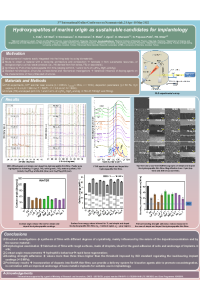
Medical-grade titanium implants were functionalized with hydroxyapatite (HA) coatings of marine origin (derived from fish bones or sea-shells) by Pulsed laser deposition technique. Lithium phosphate, magnesium fluoride and silver were used as doping agents in three different concentrations, of 0.5, 1 and 2 wt.%, respectively. Besides morphological, structural and compositional investigations, the synthesized coatings were also submitted to mechanical testing.
SEM analysis revealed surfaces with rough morphologies, made of generally round-shaped particulates. This type of surface was shown to determine a good adhesion of grown cells and excellent in situ anchorage of implants. XRD and FT-IR investigations demonstrated the synthesis of coatings with different degrees of crystallinity, generally influenced by the concentration of the dopant and the source material. Compositional tests evidenced the presence of trace-elements generally found in the composition of the bone mineral phase, which play a key-role in its functionality. Surfaces with a strong hydrophilic behavior were demonstrated by contact angle measurements. The inferred pull-out bonding strength adherence values were three times higher than the ones imposed by international standard (> 15 MPa) in the case of implant coatings with high biomechanical loads.
Taking into consideration their improved mechanical characteristics and the morphological, structural and compositional results, along with the fact that the base materials are cheap and derived from sustainable resources, one can conclude that these marine-derived materials should be considered as viable candidates to HA synthetic ones, for implant coating applications.
Acknowledgements: Project no. PN-III-P1-1.1-TE2019-1449 (TE 189/2021) and Core Programme 16N/2019.
Keywords
hydroxyapatite coatings of marine origin
lithium phosphate
magnesium fluoride and silver doping
mechanical testing
Pulsed laser deposition
sustainable resources
Manuscript
sciforum-057958-Poster.pdf
Poster
sciforum-057958-Poster.pdf
Conductive Metal Organic Framework Intercalated Vanadium Oxide Cathode with the Dual Energy-Storage Mechanism for High Capacity and Long Lifespan Aqueous Zinc-Ions Batteries
Simultaneous Realization of High Sulfur Utilization and Lithium Dendrite-Free via 3D Carbon Network Structure Based Nanomaterials toward Advanced Lithium-Sulfur Batteries