Event submissions
EventsThe 1st International Electronic Conference on Processes: Processes System Innovation
Published
 10.3390/ECP2022-12675 (registering DOI)
 This submission belongs to the session 9. Poster of the event The 1st International Electronic Conference on Processes: Processes System Innovation
Published date
31 May, 2022
Academic Editor
'%3e%3cpath%20d='M12.6657%2010.9104C12.4185%2010.325%2012.0599%209.79327%2011.6097%209.34482C11.1609%208.89508%2010.6293%208.5365%2010.0442%208.28888C10.0389%208.28626%2010.0337%208.28495%2010.0285%208.28233C10.8446%207.69279%2011.3752%206.73249%2011.3752%205.64904C11.3752%203.8542%209.92103%202.39999%208.1262%202.39999C6.33136%202.39999%204.87715%203.8542%204.87715%205.64904C4.87715%206.73249%205.40774%207.69279%206.22393%208.28364C6.21869%208.28626%206.21345%208.28757%206.20821%208.29019C5.62129%208.5378%205.09463%208.89284%204.64265%209.34613C4.1929%209.79493%203.83432%2010.3266%203.58671%2010.9117C3.34345%2011.4845%203.21226%2012.0987%203.20023%2012.7209C3.19988%2012.7349%203.20233%2012.7488%203.20744%2012.7619C3.21255%2012.7749%203.22022%2012.7867%203.22998%2012.7968C3.23975%2012.8068%203.25142%2012.8147%203.26431%2012.8202C3.2772%2012.8256%203.29105%2012.8284%203.30504%2012.8284H4.09109C4.14874%2012.8284%204.19459%2012.7825%204.1959%2012.7262C4.2221%2011.7148%204.62823%2010.7676%205.34617%2010.0497C6.08899%209.30683%207.0755%208.89808%208.1262%208.89808C9.17689%208.89808%2010.1634%209.30683%2010.9062%2010.0497C11.6242%2010.7676%2012.0303%2011.7148%2012.0565%2012.7262C12.0578%2012.7838%2012.1037%2012.8284%2012.1613%2012.8284H12.9474C12.9613%2012.8284%2012.9752%2012.8256%2012.9881%2012.8202C13.001%2012.8147%2013.0126%2012.8068%2013.0224%2012.7968C13.0322%2012.7867%2013.0398%2012.7749%2013.0449%2012.7619C13.0501%2012.7488%2013.0525%2012.7349%2013.0522%2012.7209C13.0391%2012.0947%2012.9094%2011.4855%2012.6657%2010.9104ZM8.1262%207.9024C7.52486%207.9024%206.9589%207.6679%206.53312%207.24211C6.10733%206.81633%205.87283%206.25037%205.87283%205.64904C5.87283%205.0477%206.10733%204.48174%206.53312%204.05596C6.9589%203.63018%207.52486%203.39567%208.1262%203.39567C8.72753%203.39567%209.29349%203.63018%209.71927%204.05596C10.1451%204.48174%2010.3796%205.0477%2010.3796%205.64904C10.3796%206.25037%2010.1451%206.81633%209.71927%207.24211C9.29349%207.6679%208.72753%207.9024%208.1262%207.9024Z'%20fill='%235D1EE1'/%3e%3c/g%3e%3c/svg%3e) Andrey Yaroslavtsev
Andrey YaroslavtsevCitation
Elena Shubnikova, Elizaveta Lapushkina, Evgeniy Tropin, INVESTIGATIONS OF HYDROGEN PERMEABILITY OF NICKEL CAPILLARIES, in Proceedings of The 1st International Electronic Conference on Processes: Processes System Innovation, 17 May–31 May 2022, MDPI: Basel, Switzerland, doi: 10.3390/ECP2022-12675
Share
Email
Facebook
Twitter
LinkedIn
INVESTIGATIONS OF HYDROGEN PERMEABILITY OF NICKEL CAPILLARIES
'%3e%3cpath%20d='M12.6647%2010.9104C12.4176%2010.325%2012.0589%209.7933%2011.6088%209.34485C11.16%208.89511%2010.6283%208.53653%2010.0432%208.28891C10.038%208.28629%2010.0327%208.28498%2010.0275%208.28236C10.8437%207.69282%2011.3743%206.73252%2011.3743%205.64907C11.3743%203.85423%209.92005%202.40002%208.12522%202.40002C6.33038%202.40002%204.87618%203.85423%204.87618%205.64907C4.87618%206.73252%205.40677%207.69282%206.22296%208.28367C6.21772%208.28629%206.21248%208.2876%206.20724%208.29022C5.62031%208.53783%205.09365%208.89287%204.64167%209.34616C4.19192%209.79496%203.83334%2010.3266%203.58573%2010.9117C3.34247%2011.4846%203.21128%2012.0987%203.19925%2012.721C3.1989%2012.735%203.20135%2012.7489%203.20646%2012.7619C3.21157%2012.7749%203.21924%2012.7868%203.22901%2012.7968C3.23877%2012.8068%203.25045%2012.8148%203.26334%2012.8202C3.27623%2012.8256%203.29007%2012.8284%203.30406%2012.8284H4.09012C4.14776%2012.8284%204.19362%2012.7825%204.19493%2012.7262C4.22113%2011.7148%204.62726%2010.7676%205.34519%2010.0497C6.08802%209.30686%207.07452%208.89811%208.12522%208.89811C9.17592%208.89811%2010.1624%209.30686%2010.9052%2010.0497C11.6232%2010.7676%2012.0293%2011.7148%2012.0555%2012.7262C12.0568%2012.7839%2012.1027%2012.8284%2012.1603%2012.8284H12.9464C12.9604%2012.8284%2012.9742%2012.8256%2012.9871%2012.8202C13%2012.8148%2013.0117%2012.8068%2013.0214%2012.7968C13.0312%2012.7868%2013.0389%2012.7749%2013.044%2012.7619C13.0491%2012.7489%2013.0515%2012.735%2013.0512%2012.721C13.0381%2012.0947%2012.9084%2011.4856%2012.6647%2010.9104ZM8.12522%207.90243C7.52388%207.90243%206.95792%207.66793%206.53214%207.24215C6.10636%206.81636%205.87185%206.2504%205.87185%205.64907C5.87185%205.04773%206.10636%204.48177%206.53214%204.05599C6.95792%203.63021%207.52388%203.3957%208.12522%203.3957C8.72655%203.3957%209.29252%203.63021%209.7183%204.05599C10.1441%204.48177%2010.3786%205.04773%2010.3786%205.64907C10.3786%206.2504%2010.1441%206.81636%209.7183%207.24215C9.29252%207.66793%208.72655%207.90243%208.12522%207.90243Z'%20fill='%235D1EE1'/%3e%3c/g%3e%3c/svg%3e)
Elena Shubnikova 1
Elizaveta Lapushkina 1
Evgeniy Tropin 1
1. Institute of Solid State Chemistry and Mechanochemistry, Siberian Branch of Russian Science
Abstract
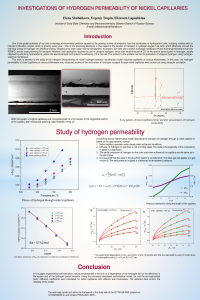
One of the global problems of our time is ecology; environmental pollution caused by the growing number of emissions from the combustion of hydrocarbon fuels, including vehicles with an internal combustion engine, which is growing every year . One of the promising directions in this regard is the transfer of transport to hydrogen-oxygen fuel cells, which effectively convert the chemical energy of hydrogen into electrical energy, releasing only water vapor into the atmosphere. At present, fuel cells with a proton exchange membrane (Proton Exchange Membrane fuel cell, PEMFC) are the most promising for transport [2]. However, their application requires the use of ultrapure hydrogen, since even small amounts of CO (at the level of several ppm) in hydrogen, usually obtained by reforming hydrocarbons, poison the electrocatalysts and reduce the efficiency of the fuel cell. The solution to this problem can be the production of ultrapure hydrogen using hydrogen-selective membranes.
This work is devoted to the study of the transport characteristics of nickel hydrogen-selective membranes (nickel industrial capillaries of various thicknesses). In this work, the hydrogen permeability of nickel capillaries of various thicknesses was measured; studies of the mechanism of hydrogen transport through nickel capillaries were carried out using computer simulation.
Keywords
hydrogen-selective membranes
low-temperature fuel cells
hydrogen energy
nickel membranes
Manuscript
058643.pdf
Poster
PosterShubnikova2022.pdf
Is it possible to stably manage complexes of unstable aggregates?
PEM electrolyzer digital twin embedded within MATLAB-based graphical user interface