Event submissions
Published

This submission belongs to the session S2. Air Quality of the event The 5th International Electronic Conference on Atmospheric Sciences
Published date
14 Jul, 2022
Academic Editor
'%3e%3cpath%20d='M12.6657%2010.9104C12.4185%2010.325%2012.0599%209.79327%2011.6097%209.34482C11.1609%208.89508%2010.6293%208.5365%2010.0442%208.28888C10.0389%208.28626%2010.0337%208.28495%2010.0285%208.28233C10.8446%207.69279%2011.3752%206.73249%2011.3752%205.64904C11.3752%203.8542%209.92103%202.39999%208.1262%202.39999C6.33136%202.39999%204.87715%203.8542%204.87715%205.64904C4.87715%206.73249%205.40774%207.69279%206.22393%208.28364C6.21869%208.28626%206.21345%208.28757%206.20821%208.29019C5.62129%208.5378%205.09463%208.89284%204.64265%209.34613C4.1929%209.79493%203.83432%2010.3266%203.58671%2010.9117C3.34345%2011.4845%203.21226%2012.0987%203.20023%2012.7209C3.19988%2012.7349%203.20233%2012.7488%203.20744%2012.7619C3.21255%2012.7749%203.22022%2012.7867%203.22998%2012.7968C3.23975%2012.8068%203.25142%2012.8147%203.26431%2012.8202C3.2772%2012.8256%203.29105%2012.8284%203.30504%2012.8284H4.09109C4.14874%2012.8284%204.19459%2012.7825%204.1959%2012.7262C4.2221%2011.7148%204.62823%2010.7676%205.34617%2010.0497C6.08899%209.30683%207.0755%208.89808%208.1262%208.89808C9.17689%208.89808%2010.1634%209.30683%2010.9062%2010.0497C11.6242%2010.7676%2012.0303%2011.7148%2012.0565%2012.7262C12.0578%2012.7838%2012.1037%2012.8284%2012.1613%2012.8284H12.9474C12.9613%2012.8284%2012.9752%2012.8256%2012.9881%2012.8202C13.001%2012.8147%2013.0126%2012.8068%2013.0224%2012.7968C13.0322%2012.7867%2013.0398%2012.7749%2013.0449%2012.7619C13.0501%2012.7488%2013.0525%2012.7349%2013.0522%2012.7209C13.0391%2012.0947%2012.9094%2011.4855%2012.6657%2010.9104ZM8.1262%207.9024C7.52486%207.9024%206.9589%207.6679%206.53312%207.24211C6.10733%206.81633%205.87283%206.25037%205.87283%205.64904C5.87283%205.0477%206.10733%204.48174%206.53312%204.05596C6.9589%203.63018%207.52486%203.39567%208.1262%203.39567C8.72753%203.39567%209.29349%203.63018%209.71927%204.05596C10.1451%204.48174%2010.3796%205.0477%2010.3796%205.64904C10.3796%206.25037%2010.1451%206.81633%209.71927%207.24211C9.29349%207.6679%208.72753%207.9024%208.1262%207.9024Z'%20fill='%235D1EE1'/%3e%3c/g%3e%3c/svg%3e) Anthony Lupo
Anthony LupoCitation
Silvia Moroni, Francesco Cruz Torres, Paolo Palomba, Umberto Dal Santo, Cristina Colombi, Near-reference air quality sensors can support local planning: a performance assessment in Milan, Italy, in Proceedings of The 5th International Electronic Conference on Atmospheric Sciences, 16 July–31 July 2022, MDPI: Basel, Switzerland, doi: 10.3390/ecas2022-12814
Share
Email
Facebook
Twitter
LinkedIn
Near-reference air quality sensors can support local planning: a performance assessment in Milan, Italy
'%3e%3cpath%20d='M12.6647%2010.9104C12.4176%2010.325%2012.0589%209.7933%2011.6088%209.34485C11.16%208.89511%2010.6283%208.53653%2010.0432%208.28891C10.038%208.28629%2010.0327%208.28498%2010.0275%208.28236C10.8437%207.69282%2011.3743%206.73252%2011.3743%205.64907C11.3743%203.85423%209.92005%202.40002%208.12522%202.40002C6.33038%202.40002%204.87618%203.85423%204.87618%205.64907C4.87618%206.73252%205.40677%207.69282%206.22296%208.28367C6.21772%208.28629%206.21248%208.2876%206.20724%208.29022C5.62031%208.53783%205.09365%208.89287%204.64167%209.34616C4.19192%209.79496%203.83334%2010.3266%203.58573%2010.9117C3.34247%2011.4846%203.21128%2012.0987%203.19925%2012.721C3.1989%2012.735%203.20135%2012.7489%203.20646%2012.7619C3.21157%2012.7749%203.21924%2012.7868%203.22901%2012.7968C3.23877%2012.8068%203.25045%2012.8148%203.26334%2012.8202C3.27623%2012.8256%203.29007%2012.8284%203.30406%2012.8284H4.09012C4.14776%2012.8284%204.19362%2012.7825%204.19493%2012.7262C4.22113%2011.7148%204.62726%2010.7676%205.34519%2010.0497C6.08802%209.30686%207.07452%208.89811%208.12522%208.89811C9.17592%208.89811%2010.1624%209.30686%2010.9052%2010.0497C11.6232%2010.7676%2012.0293%2011.7148%2012.0555%2012.7262C12.0568%2012.7839%2012.1027%2012.8284%2012.1603%2012.8284H12.9464C12.9604%2012.8284%2012.9742%2012.8256%2012.9871%2012.8202C13%2012.8148%2013.0117%2012.8068%2013.0214%2012.7968C13.0312%2012.7868%2013.0389%2012.7749%2013.044%2012.7619C13.0491%2012.7489%2013.0515%2012.735%2013.0512%2012.721C13.0381%2012.0947%2012.9084%2011.4856%2012.6647%2010.9104ZM8.12522%207.90243C7.52388%207.90243%206.95792%207.66793%206.53214%207.24215C6.10636%206.81636%205.87185%206.2504%205.87185%205.64907C5.87185%205.04773%206.10636%204.48177%206.53214%204.05599C6.95792%203.63021%207.52388%203.3957%208.12522%203.3957C8.72655%203.3957%209.29252%203.63021%209.7183%204.05599C10.1441%204.48177%2010.3786%205.04773%2010.3786%205.64907C10.3786%206.2504%2010.1441%206.81636%209.7183%207.24215C9.29252%207.66793%208.72655%207.90243%208.12522%207.90243Z'%20fill='%235D1EE1'/%3e%3c/g%3e%3c/svg%3e)
Silvia Moroni 1
Francesco Cruz Torres 1,2
Paolo Palomba 1
Umberto Dal Santo 3
Cristina Colombi 3
1. Agenzia Mobilità Ambiente e Territorio s.r.l. (AMAT), Milan, Italy
2. Politecnico di Milano, Sustainable Energy System Analysis and Modelling (SESAM) Group, Milan, Italy
3. Agenzia Regionale per la Protezione dell’Ambiente (ARPA) Lombardia, Milan, Italy
Abstract
At present, 4.2 million deaths occur every year due to ambient air pollution, according to the World Health Organization. To reduce such figure, local administrations are enacting Air Quality Plans, for which accurate air quality monitoring is essential. Expanding monitoring networks to support local air quality planning is a complex task. On the one hand, the high costs of reference monitors make their large-scale adoption prohibitive, while the easily scalable low-cost sensors often feature significantly lower data quality and lack of calibration. Near-reference monitors have been voiced as a promising solution, as they exhibit limited costs, although specific studies assessing their performance against reference monitors are still missing. This article provides an in-depth assessment of three near-reference sensors’ performance, through their collocation with reference monitors from December 2021 onwards. Two sensors were positioned at high-traffic locations, while the third recorded background pollution levels in Milan, Italy. Sensors’ performance was quantified not only via the coefficient of determination (R2) and the regression model, but also with the Root Mean Squared Error, the Mean Normalized Bias (MNB), and the Coefficient of Variation (CV), which are often overlooked in the literature. Finally, a non-parametric Wilcoxon Signed-Rank test was performed to determine the statistical significance of observed differences. After a first measurement period, sensors were re-calibrated to also appraise their behavioral change, showing a general performance increase. Preliminary results show high correlation for all hourly-recorded pollutants, with peaks for Nitrogen Dioxide (NO2) (R2 = 0.92) and Black Carbon (R2 = 0.91). Very low MNB was also recorded for NO2 (MNB = 0.005), and for Carbon Monoxide (CO) (MNB = 0.0001). Similarly, promising CVs were consistently found for NO2 (CV = 0.26), and for CO (CV = 0.31). Although preliminary, such results show the high potential of near-reference sensors to support urban air quality planning.
Keywords
intercomparison
collocation
air quality plans
air pollution
Manuscript
sciforum-061167-done.pdf
Poster
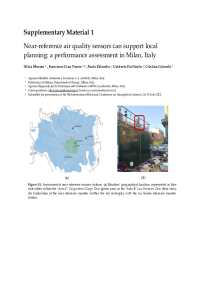
Supplementary Material sciforum-061167 .pdf
Particle Size Distribution from Municipal Solid Waste Burning over National Capital Territory, India
Performance Assessment of CHIRPSv2.0 and MERRA-2 Gridded Precipitation Datasets over Complex Topography of Turkey