Event submissions
Published

This submission belongs to the session 4. Neuropsychology of the event The 3rd International Electronic Conference on Brain Sciences
Published date
30 Sep, 2022
Academic Editor
'%3e%3cpath%20d='M12.6657%2010.9104C12.4185%2010.325%2012.0599%209.79327%2011.6097%209.34482C11.1609%208.89508%2010.6293%208.5365%2010.0442%208.28888C10.0389%208.28626%2010.0337%208.28495%2010.0285%208.28233C10.8446%207.69279%2011.3752%206.73249%2011.3752%205.64904C11.3752%203.8542%209.92103%202.39999%208.1262%202.39999C6.33136%202.39999%204.87715%203.8542%204.87715%205.64904C4.87715%206.73249%205.40774%207.69279%206.22393%208.28364C6.21869%208.28626%206.21345%208.28757%206.20821%208.29019C5.62129%208.5378%205.09463%208.89284%204.64265%209.34613C4.1929%209.79493%203.83432%2010.3266%203.58671%2010.9117C3.34345%2011.4845%203.21226%2012.0987%203.20023%2012.7209C3.19988%2012.7349%203.20233%2012.7488%203.20744%2012.7619C3.21255%2012.7749%203.22022%2012.7867%203.22998%2012.7968C3.23975%2012.8068%203.25142%2012.8147%203.26431%2012.8202C3.2772%2012.8256%203.29105%2012.8284%203.30504%2012.8284H4.09109C4.14874%2012.8284%204.19459%2012.7825%204.1959%2012.7262C4.2221%2011.7148%204.62823%2010.7676%205.34617%2010.0497C6.08899%209.30683%207.0755%208.89808%208.1262%208.89808C9.17689%208.89808%2010.1634%209.30683%2010.9062%2010.0497C11.6242%2010.7676%2012.0303%2011.7148%2012.0565%2012.7262C12.0578%2012.7838%2012.1037%2012.8284%2012.1613%2012.8284H12.9474C12.9613%2012.8284%2012.9752%2012.8256%2012.9881%2012.8202C13.001%2012.8147%2013.0126%2012.8068%2013.0224%2012.7968C13.0322%2012.7867%2013.0398%2012.7749%2013.0449%2012.7619C13.0501%2012.7488%2013.0525%2012.7349%2013.0522%2012.7209C13.0391%2012.0947%2012.9094%2011.4855%2012.6657%2010.9104ZM8.1262%207.9024C7.52486%207.9024%206.9589%207.6679%206.53312%207.24211C6.10733%206.81633%205.87283%206.25037%205.87283%205.64904C5.87283%205.0477%206.10733%204.48174%206.53312%204.05596C6.9589%203.63018%207.52486%203.39567%208.1262%203.39567C8.72753%203.39567%209.29349%203.63018%209.71927%204.05596C10.1451%204.48174%2010.3796%205.0477%2010.3796%205.64904C10.3796%206.25037%2010.1451%206.81633%209.71927%207.24211C9.29349%207.6679%208.72753%207.9024%208.1262%207.9024Z'%20fill='%235D1EE1'/%3e%3c/g%3e%3c/svg%3e) Pierluigi Zoccolotti
Pierluigi ZoccolottiCitation
Mar Salas-Llopart, Lydia Giménez-Llort, Reference models for children and young people with Epidermolysis bullosa: First case report on the protective factors and challenges for psycho-social maturation and resilience., in Proceedings of The 3rd International Electronic Conference on Brain Sciences, 1 October–15 October 2022, MDPI: Basel, Switzerland, doi: 10.3390/IECBS2022-12948
Share
Email
Facebook
Twitter
LinkedIn
Reference models for children and young people with Epidermolysis bullosa: First case report on the protective factors and challenges for psycho-social maturation and resilience.
'%3e%3cpath%20d='M12.6647%2010.9104C12.4176%2010.325%2012.0589%209.7933%2011.6088%209.34485C11.16%208.89511%2010.6283%208.53653%2010.0432%208.28891C10.038%208.28629%2010.0327%208.28498%2010.0275%208.28236C10.8437%207.69282%2011.3743%206.73252%2011.3743%205.64907C11.3743%203.85423%209.92005%202.40002%208.12522%202.40002C6.33038%202.40002%204.87618%203.85423%204.87618%205.64907C4.87618%206.73252%205.40677%207.69282%206.22296%208.28367C6.21772%208.28629%206.21248%208.2876%206.20724%208.29022C5.62031%208.53783%205.09365%208.89287%204.64167%209.34616C4.19192%209.79496%203.83334%2010.3266%203.58573%2010.9117C3.34247%2011.4846%203.21128%2012.0987%203.19925%2012.721C3.1989%2012.735%203.20135%2012.7489%203.20646%2012.7619C3.21157%2012.7749%203.21924%2012.7868%203.22901%2012.7968C3.23877%2012.8068%203.25045%2012.8148%203.26334%2012.8202C3.27623%2012.8256%203.29007%2012.8284%203.30406%2012.8284H4.09012C4.14776%2012.8284%204.19362%2012.7825%204.19493%2012.7262C4.22113%2011.7148%204.62726%2010.7676%205.34519%2010.0497C6.08802%209.30686%207.07452%208.89811%208.12522%208.89811C9.17592%208.89811%2010.1624%209.30686%2010.9052%2010.0497C11.6232%2010.7676%2012.0293%2011.7148%2012.0555%2012.7262C12.0568%2012.7839%2012.1027%2012.8284%2012.1603%2012.8284H12.9464C12.9604%2012.8284%2012.9742%2012.8256%2012.9871%2012.8202C13%2012.8148%2013.0117%2012.8068%2013.0214%2012.7968C13.0312%2012.7868%2013.0389%2012.7749%2013.044%2012.7619C13.0491%2012.7489%2013.0515%2012.735%2013.0512%2012.721C13.0381%2012.0947%2012.9084%2011.4856%2012.6647%2010.9104ZM8.12522%207.90243C7.52388%207.90243%206.95792%207.66793%206.53214%207.24215C6.10636%206.81636%205.87185%206.2504%205.87185%205.64907C5.87185%205.04773%206.10636%204.48177%206.53214%204.05599C6.95792%203.63021%207.52388%203.3957%208.12522%203.3957C8.72655%203.3957%209.29252%203.63021%209.7183%204.05599C10.1441%204.48177%2010.3786%205.04773%2010.3786%205.64907C10.3786%206.2504%2010.1441%206.81636%209.7183%207.24215C9.29252%207.66793%208.72655%207.90243%208.12522%207.90243Z'%20fill='%235D1EE1'/%3e%3c/g%3e%3c/svg%3e)
Mar Salas-Llopart 1

Lydia Giménez-Llort 2,3
1. Medical Psychology Unit, Department of Psychiatry and Forensic Medicine, Universitat Autònoma de Barcelona, Barcelona, Spain
2. Institut de Neurociències, Universitat Autònoma de Barcelona, Barcelona, Spain
3. Department of Psychiatry and Forensic Medicine, School of Medicine, Universitat Autònoma de Barcelona, Barcelona, Spain
Abstract
Epidermolysis Bullosa (EB) is a chronic disease with multiple clinical presentations depending on the subtype, characterized by skin and tissues structural fragility resulting in lesions. The low prevalence contributes to the lack of knowledge of the disease by the general population and the health sector. The disorder's heterogeneity adds challenges to describing psycho-social affectations. Therefore, our current international project searches for reference models for children and young people with EB and the elaboration of a guidebook with different life stories to learn about skills and strategies proven to help to achieve personal/professional success despite the EB condition. In the present work, a qualitative and phenomenological interview with Karen Puga, an expert adult patient with dystrophic EB from Mexico, explored several social dimensions/ages affected in EB and their impact on self-esteem. The semistructured interview depicted several life events and experiences related to her psycho-social maturation that the patient identified as the most negative or positive. The most severe obstacles were experienced during childhood in the scholar scenario. However, some of those classmates later became friendly adults, providing evidence of the temporality of some adverse life events and the relevance of maturation and resilience processes, both of herself and her counterparts. Her parents' professional profiles (nurses) and the essential role of her sister were described as foundational stones of well-being and self-esteem. Multidimensional understanding of affective relationships and sexuality and positive engagement in professional activities illustrated the development of positive dimensions of her adulthood despite the complexity of psycho-social factors in EB.
Keywords
Reference models
Epidermolysis Bullosa (EB)
rare diseases
expert patient
dystrophic epidermolysis bullosa (DEB)
storytelling
successful cases
classmates
family
sisterhood
affect
sexuality.
Manuscript
sciforum-064264.pdf
Poster
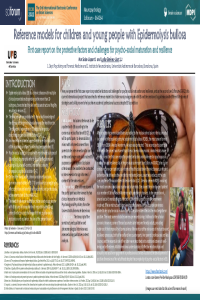
Poster EB2 Mar Salas 2022 Sciforum – 064264.pdf
Pharmacological Modulation of HIF-1α in The Cerebral Cort1ex of Rats after Chronic Prenatal Hypoxia
ROLE Of VITAMIN K2 IN ALUMINIUM CHLORIDE ASSOCIATED COGNITIVE IMPAIRMENT IN MICE