Event submissions
EventsThe 3rd International Electronic Conference on Foods: Food, Microbiome, and Health - A Celebration of the 10th Anniversary of Foods' Impact on Our Wellbeing
Published

This submission belongs to the session 1. Food Formulations - Novel Ingredients and Food Additives of the event The 3rd International Electronic Conference on Foods: Food, Microbiome, and Health - A Celebration of the 10th Anniversary of Foods' Impact on Our Wellbeing
Published date
30 Sep, 2022
Academic Editor
'%3e%3cpath%20d='M12.6657%2010.9104C12.4185%2010.325%2012.0599%209.79327%2011.6097%209.34482C11.1609%208.89508%2010.6293%208.5365%2010.0442%208.28888C10.0389%208.28626%2010.0337%208.28495%2010.0285%208.28233C10.8446%207.69279%2011.3752%206.73249%2011.3752%205.64904C11.3752%203.8542%209.92103%202.39999%208.1262%202.39999C6.33136%202.39999%204.87715%203.8542%204.87715%205.64904C4.87715%206.73249%205.40774%207.69279%206.22393%208.28364C6.21869%208.28626%206.21345%208.28757%206.20821%208.29019C5.62129%208.5378%205.09463%208.89284%204.64265%209.34613C4.1929%209.79493%203.83432%2010.3266%203.58671%2010.9117C3.34345%2011.4845%203.21226%2012.0987%203.20023%2012.7209C3.19988%2012.7349%203.20233%2012.7488%203.20744%2012.7619C3.21255%2012.7749%203.22022%2012.7867%203.22998%2012.7968C3.23975%2012.8068%203.25142%2012.8147%203.26431%2012.8202C3.2772%2012.8256%203.29105%2012.8284%203.30504%2012.8284H4.09109C4.14874%2012.8284%204.19459%2012.7825%204.1959%2012.7262C4.2221%2011.7148%204.62823%2010.7676%205.34617%2010.0497C6.08899%209.30683%207.0755%208.89808%208.1262%208.89808C9.17689%208.89808%2010.1634%209.30683%2010.9062%2010.0497C11.6242%2010.7676%2012.0303%2011.7148%2012.0565%2012.7262C12.0578%2012.7838%2012.1037%2012.8284%2012.1613%2012.8284H12.9474C12.9613%2012.8284%2012.9752%2012.8256%2012.9881%2012.8202C13.001%2012.8147%2013.0126%2012.8068%2013.0224%2012.7968C13.0322%2012.7867%2013.0398%2012.7749%2013.0449%2012.7619C13.0501%2012.7488%2013.0525%2012.7349%2013.0522%2012.7209C13.0391%2012.0947%2012.9094%2011.4855%2012.6657%2010.9104ZM8.1262%207.9024C7.52486%207.9024%206.9589%207.6679%206.53312%207.24211C6.10733%206.81633%205.87283%206.25037%205.87283%205.64904C5.87283%205.0477%206.10733%204.48174%206.53312%204.05596C6.9589%203.63018%207.52486%203.39567%208.1262%203.39567C8.72753%203.39567%209.29349%203.63018%209.71927%204.05596C10.1451%204.48174%2010.3796%205.0477%2010.3796%205.64904C10.3796%206.25037%2010.1451%206.81633%209.71927%207.24211C9.29349%207.6679%208.72753%207.9024%208.1262%207.9024Z'%20fill='%235D1EE1'/%3e%3c/g%3e%3c/svg%3e) Arun Bhunia
Arun BhuniaCitation
Kathrin Wirz, Steffen Schwarz, Elke Richling, Stephan G. Walch, Dirk W. Lachenmeier, Coffee flower as a promising novel food - Chemical characterization and sensory evaluation, in Proceedings of The 3rd International Electronic Conference on Foods: Food, Microbiome, and Health - A Celebration of the 10th Anniversary of Foods' Impact on Our Wellbeing, 1 October–15 October 2022, MDPI: Basel, Switzerland, doi: 10.3390/Foods2022-12967
Share
Email
Facebook
Twitter
LinkedIn
Coffee flower as a promising novel food - Chemical characterization and sensory evaluation
'%3e%3cpath%20d='M12.6647%2010.9104C12.4176%2010.325%2012.0589%209.7933%2011.6088%209.34485C11.16%208.89511%2010.6283%208.53653%2010.0432%208.28891C10.038%208.28629%2010.0327%208.28498%2010.0275%208.28236C10.8437%207.69282%2011.3743%206.73252%2011.3743%205.64907C11.3743%203.85423%209.92005%202.40002%208.12522%202.40002C6.33038%202.40002%204.87618%203.85423%204.87618%205.64907C4.87618%206.73252%205.40677%207.69282%206.22296%208.28367C6.21772%208.28629%206.21248%208.2876%206.20724%208.29022C5.62031%208.53783%205.09365%208.89287%204.64167%209.34616C4.19192%209.79496%203.83334%2010.3266%203.58573%2010.9117C3.34247%2011.4846%203.21128%2012.0987%203.19925%2012.721C3.1989%2012.735%203.20135%2012.7489%203.20646%2012.7619C3.21157%2012.7749%203.21924%2012.7868%203.22901%2012.7968C3.23877%2012.8068%203.25045%2012.8148%203.26334%2012.8202C3.27623%2012.8256%203.29007%2012.8284%203.30406%2012.8284H4.09012C4.14776%2012.8284%204.19362%2012.7825%204.19493%2012.7262C4.22113%2011.7148%204.62726%2010.7676%205.34519%2010.0497C6.08802%209.30686%207.07452%208.89811%208.12522%208.89811C9.17592%208.89811%2010.1624%209.30686%2010.9052%2010.0497C11.6232%2010.7676%2012.0293%2011.7148%2012.0555%2012.7262C12.0568%2012.7839%2012.1027%2012.8284%2012.1603%2012.8284H12.9464C12.9604%2012.8284%2012.9742%2012.8256%2012.9871%2012.8202C13%2012.8148%2013.0117%2012.8068%2013.0214%2012.7968C13.0312%2012.7868%2013.0389%2012.7749%2013.044%2012.7619C13.0491%2012.7489%2013.0515%2012.735%2013.0512%2012.721C13.0381%2012.0947%2012.9084%2011.4856%2012.6647%2010.9104ZM8.12522%207.90243C7.52388%207.90243%206.95792%207.66793%206.53214%207.24215C6.10636%206.81636%205.87185%206.2504%205.87185%205.64907C5.87185%205.04773%206.10636%204.48177%206.53214%204.05599C6.95792%203.63021%207.52388%203.3957%208.12522%203.3957C8.72655%203.3957%209.29252%203.63021%209.7183%204.05599C10.1441%204.48177%2010.3786%205.04773%2010.3786%205.64907C10.3786%206.2504%2010.1441%206.81636%209.7183%207.24215C9.29252%207.66793%208.72655%207.90243%208.12522%207.90243Z'%20fill='%235D1EE1'/%3e%3c/g%3e%3c/svg%3e)
Kathrin Wirz 1,2

Steffen Schwarz 3
Elke Richling 2
Stephan G. Walch 1

Dirk W. Lachenmeier 1
1. Chemisches und Veterinäruntersuchungsamt (CVUA) Karlsruhe, Weissenburger Strasse 3, 76187 Karlsruhe, Germany
2. Technische Universität Kaiserslautern, Erwin-Schrödinger-Straße 52, 67663 Kaiserslautern, Germany
3. Coffee Consulate, Hans-Thoma-Strasse 20, 68163 Mannheim, Germany
Abstract
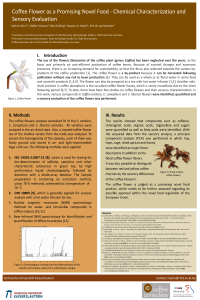
The use of the flowers (blossoms) of the coffee plant (genus Coffea) has been neglected over the years, as the focus was primarily on cost-efficient production of coffee beans. Because of societal changes and economic pressures, there is an increasing demand for sustainability, so that the focus widened also toward the various by-products of the coffee production [1]. The coffee flower is a by-product because it can be harvested following pollination without any risk to bean production [2]. The coffee flower can be used as a whole or as floral water in some food and cosmetic products [1,3,4]. The flower can also be prepared as a tea with hot water infusion [1,5]. Another side-chain product in coffee plantations is the so-called coffee flower honey, which is rarely monofloral due to the short flowering period [6,7]. To date, there have been few studies on coffee flowers and their sensory characterization. In this work, various compounds in Coffea arabica, C. canephora and C. liberica flowers were identified and quantified by high performance liquid chromatography (HPLC) with diode array detection (DAD), nuclear magnetic resonance spectroscopy (NMR), and near-infrared (NIR) spectroscopy. Caffeine, chlorogenic acids, organic acids, trigonelline, and sugars were quantified. Additionally, sensory testing of coffee flower infusions according to the German norm DIN 10 809 was performed. With the acquired data, a principal component analysis (PCA) was performed in which hay, hops, sage, dried apricot, and honey were identified as major flavor descriptors in addition to the floral coffee flower flavors. The coffee flower is judged as a promising ingredient, which needs to be further assessed regarding its possible approval within the novel food regulation of the European Union.
References:
[1] Lachenmeier, D.; Schwarz, S.; Rieke-Zapp, J.; Cantergiani, E.; Rawel, H.; Martín-Cabrejas, M.A.; Martuscelli, M.; Gottstein, V.; Angeloni, S. Coffee by-products as sustainable novel foods: Report of the 2nd International Electronic Conference on Foods—“Future Foods and Food Technologies for a Sustainable World.” Foods 2022, 11, 3. doi:10.3390/foods11010003.
[2] Lachenmeier, D.W.; Rajcic de Rezende, T.; Schwarz, S. An Update on Sustainable Valorization of Coffee By-Products as Novel Foods within the European Union. Biol. Life Sci. Forum 2021, 6, 37. https://doi.org/10.3390/Foods2021-10969
[3] Arrillaga, N.G. A new perfume oil from coffee flowers. Rev. Agr. Puerto Rico 1942, 34, 82−84.
[4] Berry-Caillet, V.; Husson, J.; Barro, L. Floral water from coffee flowers. Patent WO2022053 605A1, 10 September 2021.
[5] Bi, X.; Huang, J.; Hu, F.; Yang, Y.; Li, Y.; Lyu, Y.; Li, G.; Huang, W.; Zhang, X.; He H. et al. Preparation method of coffee flower tea. Patent CN110959719A, 16 December 2019.
[6] Chuttong, B.; Buawangpong, N.; Burgett, M. Honey, bees and coffee. Bee World 2015, 92, 80–83, doi:10.1080/0005772X.2015.1091230.
[7] Schiassi, M.; de Souza, V.; Lago, A.; Carvalho, G.; Curi, P.; Guimarães, A; Queiroz, F. Quality of honeys from different botanical origins. J. Food Sci. Technol. 2020, 58, 4167-4177, doi: 10.1007/s13197-020-04884-7.
Keywords
coffee by-products
coffee flower
coffee blossom
tea
infusion
analysis
HPLC
NMR
NIR
novel food
Manuscript
sciforum_063694_original_02_paper_kbluete_KW_accepted_changes-DONE.pdf
Poster
01_Postersymposium_KathrinWirz.pdf
Acorns as a functional food for cardiovascular disease prevention: chemical characterization and bioactivity
Meta-regression modelling of the inhibition diameter produced by extracts of Origanum, Syzygium and Citrus as a function of the minimum inhibitory concentration