Event submissions
EventsThe 3rd International Electronic Conference on Foods: Food, Microbiome, and Health - A Celebration of the 10th Anniversary of Foods' Impact on Our Wellbeing
Published

This submission belongs to the session 4. Food Microbiology, Microbiome and Food Biotechnology of the event The 3rd International Electronic Conference on Foods: Food, Microbiome, and Health - A Celebration of the 10th Anniversary of Foods' Impact on Our Wellbeing
Published date
30 Sep, 2022
Academic Editor
'%3e%3cpath%20d='M12.6657%2010.9104C12.4185%2010.325%2012.0599%209.79327%2011.6097%209.34482C11.1609%208.89508%2010.6293%208.5365%2010.0442%208.28888C10.0389%208.28626%2010.0337%208.28495%2010.0285%208.28233C10.8446%207.69279%2011.3752%206.73249%2011.3752%205.64904C11.3752%203.8542%209.92103%202.39999%208.1262%202.39999C6.33136%202.39999%204.87715%203.8542%204.87715%205.64904C4.87715%206.73249%205.40774%207.69279%206.22393%208.28364C6.21869%208.28626%206.21345%208.28757%206.20821%208.29019C5.62129%208.5378%205.09463%208.89284%204.64265%209.34613C4.1929%209.79493%203.83432%2010.3266%203.58671%2010.9117C3.34345%2011.4845%203.21226%2012.0987%203.20023%2012.7209C3.19988%2012.7349%203.20233%2012.7488%203.20744%2012.7619C3.21255%2012.7749%203.22022%2012.7867%203.22998%2012.7968C3.23975%2012.8068%203.25142%2012.8147%203.26431%2012.8202C3.2772%2012.8256%203.29105%2012.8284%203.30504%2012.8284H4.09109C4.14874%2012.8284%204.19459%2012.7825%204.1959%2012.7262C4.2221%2011.7148%204.62823%2010.7676%205.34617%2010.0497C6.08899%209.30683%207.0755%208.89808%208.1262%208.89808C9.17689%208.89808%2010.1634%209.30683%2010.9062%2010.0497C11.6242%2010.7676%2012.0303%2011.7148%2012.0565%2012.7262C12.0578%2012.7838%2012.1037%2012.8284%2012.1613%2012.8284H12.9474C12.9613%2012.8284%2012.9752%2012.8256%2012.9881%2012.8202C13.001%2012.8147%2013.0126%2012.8068%2013.0224%2012.7968C13.0322%2012.7867%2013.0398%2012.7749%2013.0449%2012.7619C13.0501%2012.7488%2013.0525%2012.7349%2013.0522%2012.7209C13.0391%2012.0947%2012.9094%2011.4855%2012.6657%2010.9104ZM8.1262%207.9024C7.52486%207.9024%206.9589%207.6679%206.53312%207.24211C6.10733%206.81633%205.87283%206.25037%205.87283%205.64904C5.87283%205.0477%206.10733%204.48174%206.53312%204.05596C6.9589%203.63018%207.52486%203.39567%208.1262%203.39567C8.72753%203.39567%209.29349%203.63018%209.71927%204.05596C10.1451%204.48174%2010.3796%205.0477%2010.3796%205.64904C10.3796%206.25037%2010.1451%206.81633%209.71927%207.24211C9.29349%207.6679%208.72753%207.9024%208.1262%207.9024Z'%20fill='%235D1EE1'/%3e%3c/g%3e%3c/svg%3e) Arun Bhunia
Arun BhuniaCitation
Beatriz Nunes Silva, Sara Coelho-Fernandes, José António Teixeira, Vasco Cadavez, Ursula Gonzales-Barron, Effect of lemon balm and spearmint extracts on the survival of S. aureus in goat’s raw milk cheese, in Proceedings of The 3rd International Electronic Conference on Foods: Food, Microbiome, and Health - A Celebration of the 10th Anniversary of Foods' Impact on Our Wellbeing, 1 October–15 October 2022, MDPI: Basel, Switzerland, doi: 10.3390/Foods2022-12996
Share
Email
Facebook
Twitter
LinkedIn
Effect of lemon balm and spearmint extracts on the survival of S. aureus in goat’s raw milk cheese
'%3e%3cpath%20d='M12.6647%2010.9104C12.4176%2010.325%2012.0589%209.7933%2011.6088%209.34485C11.16%208.89511%2010.6283%208.53653%2010.0432%208.28891C10.038%208.28629%2010.0327%208.28498%2010.0275%208.28236C10.8437%207.69282%2011.3743%206.73252%2011.3743%205.64907C11.3743%203.85423%209.92005%202.40002%208.12522%202.40002C6.33038%202.40002%204.87618%203.85423%204.87618%205.64907C4.87618%206.73252%205.40677%207.69282%206.22296%208.28367C6.21772%208.28629%206.21248%208.2876%206.20724%208.29022C5.62031%208.53783%205.09365%208.89287%204.64167%209.34616C4.19192%209.79496%203.83334%2010.3266%203.58573%2010.9117C3.34247%2011.4846%203.21128%2012.0987%203.19925%2012.721C3.1989%2012.735%203.20135%2012.7489%203.20646%2012.7619C3.21157%2012.7749%203.21924%2012.7868%203.22901%2012.7968C3.23877%2012.8068%203.25045%2012.8148%203.26334%2012.8202C3.27623%2012.8256%203.29007%2012.8284%203.30406%2012.8284H4.09012C4.14776%2012.8284%204.19362%2012.7825%204.19493%2012.7262C4.22113%2011.7148%204.62726%2010.7676%205.34519%2010.0497C6.08802%209.30686%207.07452%208.89811%208.12522%208.89811C9.17592%208.89811%2010.1624%209.30686%2010.9052%2010.0497C11.6232%2010.7676%2012.0293%2011.7148%2012.0555%2012.7262C12.0568%2012.7839%2012.1027%2012.8284%2012.1603%2012.8284H12.9464C12.9604%2012.8284%2012.9742%2012.8256%2012.9871%2012.8202C13%2012.8148%2013.0117%2012.8068%2013.0214%2012.7968C13.0312%2012.7868%2013.0389%2012.7749%2013.044%2012.7619C13.0491%2012.7489%2013.0515%2012.735%2013.0512%2012.721C13.0381%2012.0947%2012.9084%2011.4856%2012.6647%2010.9104ZM8.12522%207.90243C7.52388%207.90243%206.95792%207.66793%206.53214%207.24215C6.10636%206.81636%205.87185%206.2504%205.87185%205.64907C5.87185%205.04773%206.10636%204.48177%206.53214%204.05599C6.95792%203.63021%207.52388%203.3957%208.12522%203.3957C8.72655%203.3957%209.29252%203.63021%209.7183%204.05599C10.1441%204.48177%2010.3786%205.04773%2010.3786%205.64907C10.3786%206.2504%2010.1441%206.81636%209.7183%207.24215C9.29252%207.66793%208.72655%207.90243%208.12522%207.90243Z'%20fill='%235D1EE1'/%3e%3c/g%3e%3c/svg%3e)
Beatriz Nunes Silva 1,2,3

Sara Coelho-Fernandes 2

José António Teixeira 3,4
Vasco Cadavez 2

Ursula Gonzales-Barron 2
1. CEB – Centre of Biological Engineering, University of Minho
2. Centro de Investigação de Montanha (CIMO), Instituto Politécnico de Bragança, Campus de Santa Apolónia, 5300-253 Bragança, Portugal
3. LABBELS – Associate Laboratory, Braga 4710-057 Guimarães, Portugal
4. CEB – Centre of Biological Engineering, University of Minho, Campus Gualtar, 4710-057 Braga, Portugal
Abstract
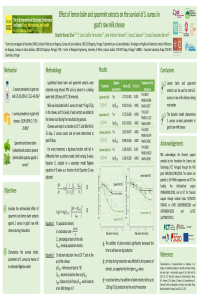
Previous investigation has revealed that lemon balm and spearmint hydroethanolic extracts present high inhibitory capacity against S. aureus (SA). Raw milk cheeses have shown moderate prevalence of (SA), imposing a safety issue. Thus, this study aimed to evaluate the antimicrobial effect of lemon balm and spearmint extracts against SA in goat’s raw milk cheeses during maturation.
Lemon balm and spearmint extracts were obtained using ethanol 70% (v/v) as solvent in a shaking water bath. Milk was inoculated with SA to reach 5 log CFU/g and 1% (w/w) of each extract was added to the curd, while a non-inoculated control was kept. Cheeses were kept in a chamber at 10 °C/98% RH for 15 days. Water activity, pH and SA counts were determined at specific days.
For every treatment, a log-decay function with tail in differential form as primary model (with varying D-value), coupled to a secondary model Bigelow equation of D-value as a function of pH (with parameters logD* at pH 7.0 and zpH) was adjusted.
The dynamic models adequately fitted the survival curves with root mean square errors of 0.1172 and 0.0633, for spearmint and lemon balm, respectively, producing significant parameter estimates. The parameter logD* was affected by the addition of extracts (0.621 [SE=0.061] for spearmint; 1.189 [SE=0.200] for lemon balm) versus the controls (0.932 [SE=0.166] and 0.996 [SE=0.056]); whereas zpH tended to be higher with the addition of extracts (3.172 [SE=0.660] for spearmint; 2.339 [SE=0.835] for lemon balm). The addition of plant extracts significantly decreased the time to achieve one log reduction, which in practical terms corresponded to up to 1.36 log CFU/g reduction by the end of maturation.
Using a dynamic model, this work characterised SA survival parameters in raw milk cheese and demonstrated that lemon balm and spearmint extracts can be used to control SA during maturation.
Keywords
Log-decay model with tail
Bigelow model
D value
zpH
dairy
predictive microbiology
Manuscript
sciforum_063711_original_sciforum_063711_bigelow- done.pdf
Poster
sciforum-063711_bigelow poster presentation.pdf
Inoculum production of Monascus purpureus with Chenopodium quinoa in submerged culture
Review on Ayurvedic Health Drinks and Liquid Nutrition explained in Kshemakutuhala.