Event submissions
EventsThe 3rd International Electronic Conference on Foods: Food, Microbiome, and Health - A Celebration of the 10th Anniversary of Foods' Impact on Our Wellbeing
Published

This submission belongs to the session 1. Food Formulations - Novel Ingredients and Food Additives of the event The 3rd International Electronic Conference on Foods: Food, Microbiome, and Health - A Celebration of the 10th Anniversary of Foods' Impact on Our Wellbeing
Published date
30 Sep, 2022
Academic Editor
'%3e%3cpath%20d='M12.6657%2010.9104C12.4185%2010.325%2012.0599%209.79327%2011.6097%209.34482C11.1609%208.89508%2010.6293%208.5365%2010.0442%208.28888C10.0389%208.28626%2010.0337%208.28495%2010.0285%208.28233C10.8446%207.69279%2011.3752%206.73249%2011.3752%205.64904C11.3752%203.8542%209.92103%202.39999%208.1262%202.39999C6.33136%202.39999%204.87715%203.8542%204.87715%205.64904C4.87715%206.73249%205.40774%207.69279%206.22393%208.28364C6.21869%208.28626%206.21345%208.28757%206.20821%208.29019C5.62129%208.5378%205.09463%208.89284%204.64265%209.34613C4.1929%209.79493%203.83432%2010.3266%203.58671%2010.9117C3.34345%2011.4845%203.21226%2012.0987%203.20023%2012.7209C3.19988%2012.7349%203.20233%2012.7488%203.20744%2012.7619C3.21255%2012.7749%203.22022%2012.7867%203.22998%2012.7968C3.23975%2012.8068%203.25142%2012.8147%203.26431%2012.8202C3.2772%2012.8256%203.29105%2012.8284%203.30504%2012.8284H4.09109C4.14874%2012.8284%204.19459%2012.7825%204.1959%2012.7262C4.2221%2011.7148%204.62823%2010.7676%205.34617%2010.0497C6.08899%209.30683%207.0755%208.89808%208.1262%208.89808C9.17689%208.89808%2010.1634%209.30683%2010.9062%2010.0497C11.6242%2010.7676%2012.0303%2011.7148%2012.0565%2012.7262C12.0578%2012.7838%2012.1037%2012.8284%2012.1613%2012.8284H12.9474C12.9613%2012.8284%2012.9752%2012.8256%2012.9881%2012.8202C13.001%2012.8147%2013.0126%2012.8068%2013.0224%2012.7968C13.0322%2012.7867%2013.0398%2012.7749%2013.0449%2012.7619C13.0501%2012.7488%2013.0525%2012.7349%2013.0522%2012.7209C13.0391%2012.0947%2012.9094%2011.4855%2012.6657%2010.9104ZM8.1262%207.9024C7.52486%207.9024%206.9589%207.6679%206.53312%207.24211C6.10733%206.81633%205.87283%206.25037%205.87283%205.64904C5.87283%205.0477%206.10733%204.48174%206.53312%204.05596C6.9589%203.63018%207.52486%203.39567%208.1262%203.39567C8.72753%203.39567%209.29349%203.63018%209.71927%204.05596C10.1451%204.48174%2010.3796%205.0477%2010.3796%205.64904C10.3796%206.25037%2010.1451%206.81633%209.71927%207.24211C9.29349%207.6679%208.72753%207.9024%208.1262%207.9024Z'%20fill='%235D1EE1'/%3e%3c/g%3e%3c/svg%3e) Arun Bhunia
Arun BhuniaCitation
Gamze Nil Yazici, Tansu Taspinar, Mehmet Sertac Ozer, Aquafaba: A Multifunctional Ingredient in Food Production, in Proceedings of The 3rd International Electronic Conference on Foods: Food, Microbiome, and Health - A Celebration of the 10th Anniversary of Foods' Impact on Our Wellbeing, 1 October–15 October 2022, MDPI: Basel, Switzerland, doi: 10.3390/Foods2022-13004
Share
Email
Facebook
Twitter
LinkedIn
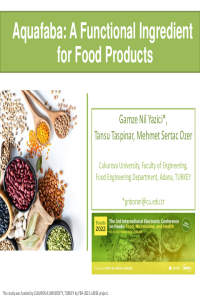
Aquafaba: A Multifunctional Ingredient in Food Production
'%3e%3cpath%20d='M12.6647%2010.9104C12.4176%2010.325%2012.0589%209.7933%2011.6088%209.34485C11.16%208.89511%2010.6283%208.53653%2010.0432%208.28891C10.038%208.28629%2010.0327%208.28498%2010.0275%208.28236C10.8437%207.69282%2011.3743%206.73252%2011.3743%205.64907C11.3743%203.85423%209.92005%202.40002%208.12522%202.40002C6.33038%202.40002%204.87618%203.85423%204.87618%205.64907C4.87618%206.73252%205.40677%207.69282%206.22296%208.28367C6.21772%208.28629%206.21248%208.2876%206.20724%208.29022C5.62031%208.53783%205.09365%208.89287%204.64167%209.34616C4.19192%209.79496%203.83334%2010.3266%203.58573%2010.9117C3.34247%2011.4846%203.21128%2012.0987%203.19925%2012.721C3.1989%2012.735%203.20135%2012.7489%203.20646%2012.7619C3.21157%2012.7749%203.21924%2012.7868%203.22901%2012.7968C3.23877%2012.8068%203.25045%2012.8148%203.26334%2012.8202C3.27623%2012.8256%203.29007%2012.8284%203.30406%2012.8284H4.09012C4.14776%2012.8284%204.19362%2012.7825%204.19493%2012.7262C4.22113%2011.7148%204.62726%2010.7676%205.34519%2010.0497C6.08802%209.30686%207.07452%208.89811%208.12522%208.89811C9.17592%208.89811%2010.1624%209.30686%2010.9052%2010.0497C11.6232%2010.7676%2012.0293%2011.7148%2012.0555%2012.7262C12.0568%2012.7839%2012.1027%2012.8284%2012.1603%2012.8284H12.9464C12.9604%2012.8284%2012.9742%2012.8256%2012.9871%2012.8202C13%2012.8148%2013.0117%2012.8068%2013.0214%2012.7968C13.0312%2012.7868%2013.0389%2012.7749%2013.044%2012.7619C13.0491%2012.7489%2013.0515%2012.735%2013.0512%2012.721C13.0381%2012.0947%2012.9084%2011.4856%2012.6647%2010.9104ZM8.12522%207.90243C7.52388%207.90243%206.95792%207.66793%206.53214%207.24215C6.10636%206.81636%205.87185%206.2504%205.87185%205.64907C5.87185%205.04773%206.10636%204.48177%206.53214%204.05599C6.95792%203.63021%207.52388%203.3957%208.12522%203.3957C8.72655%203.3957%209.29252%203.63021%209.7183%204.05599C10.1441%204.48177%2010.3786%205.04773%2010.3786%205.64907C10.3786%206.2504%2010.1441%206.81636%209.7183%207.24215C9.29252%207.66793%208.72655%207.90243%208.12522%207.90243Z'%20fill='%235D1EE1'/%3e%3c/g%3e%3c/svg%3e)
Gamze Nil Yazici 1
Tansu Taspinar 2
Mehmet Sertac Ozer 3
1. Department of Food Engineering, Faculty of Engineering, Cukurova University, 01250, Adana, Turkey
2. Department of Food Engineering, Faculty of Agriculture, Cukurova University, 01330 Adana, Turkey
3. Faculty of Agriculture, Department of Food Engineering, Cukurova University, 01330 Adana, Turkey
Abstract
Recently, the demand of consumers for plant-based foods to replace mainly meat, egg, and dairy products by mimicking their structure with alternatives in many food applications has grown significantly. This tendency has been driven by many reasons mainly comprised of allergenicity and different dietary preferences of consumers, and sustainability issues. In this regard, aquafaba has a great potential to meet these requests and needs due to not only its nutritional properties but also multi-functionalities such as foaming, emulsifying, gelling, and/or thickening, the ability/capacity of water-, and oil absorption/holding, which allow to use in a wide range of food products. In this regard, aquafaba takes a place in general egg and/or fat replacer, and alternative to emulsifier and gelling agents mainly in baked goods, desserts/confectionery food products, and mayonnaise. Moreover, it gives an opportunity to reduce environmental load, by recycling by-products into value-added food ingredients. Therefore, it is a promising clean-label and eco-friendly ingredient for sustainable food production and a circular economy. However, there are restrictions on the quality standardization of aquafaba and applied food products for industrialization and commercialization, because of several factors affecting the composition of aquafaba. In addition, although some researchers focused on drying aquafaba regarding low aw value and thus increase the shelf life, more studies are needed for the optimization of different drying methods and process parameters for industrialization, as well. Moreover, although the amount and activity of the anti-nutritional compound of aquafaba are generally lower than raw seeds, more studies should affirm this issue. Future studies should also head for the application of aquafaba to more food products and its effects on the quality of end products, even regarding gluten-free and non-dairy food products.
Keywords
Aquafaba
clean-label
cooking water
egg replacer
emulsifier
fat replacer
pulse
plant-based
sustainability
vegan
Manuscript
sciforum_063818 - layout-done.pdf
Poster
Presentation-Gamze Nil Yazici-Aquafaba A Multifunctional Ingredient in Food Production.pdf
Algal-derived hydrocolloids with potential antiviral activity: a mechanistic approach
The use of thermal and chromatographic methods in the assessment of fat isolated from micellar casein.