Event submissions
Published
 10.3390/ECMC2022-13197 (registering DOI)
 This submission belongs to the session S3. General of the event 8th International Electronic Conference on Medicinal Chemistry
Published date
01 Nov, 2022
Academic Editor
'%3e%3cpath%20d='M12.6657%2010.9104C12.4185%2010.325%2012.0599%209.79327%2011.6097%209.34482C11.1609%208.89508%2010.6293%208.5365%2010.0442%208.28888C10.0389%208.28626%2010.0337%208.28495%2010.0285%208.28233C10.8446%207.69279%2011.3752%206.73249%2011.3752%205.64904C11.3752%203.8542%209.92103%202.39999%208.1262%202.39999C6.33136%202.39999%204.87715%203.8542%204.87715%205.64904C4.87715%206.73249%205.40774%207.69279%206.22393%208.28364C6.21869%208.28626%206.21345%208.28757%206.20821%208.29019C5.62129%208.5378%205.09463%208.89284%204.64265%209.34613C4.1929%209.79493%203.83432%2010.3266%203.58671%2010.9117C3.34345%2011.4845%203.21226%2012.0987%203.20023%2012.7209C3.19988%2012.7349%203.20233%2012.7488%203.20744%2012.7619C3.21255%2012.7749%203.22022%2012.7867%203.22998%2012.7968C3.23975%2012.8068%203.25142%2012.8147%203.26431%2012.8202C3.2772%2012.8256%203.29105%2012.8284%203.30504%2012.8284H4.09109C4.14874%2012.8284%204.19459%2012.7825%204.1959%2012.7262C4.2221%2011.7148%204.62823%2010.7676%205.34617%2010.0497C6.08899%209.30683%207.0755%208.89808%208.1262%208.89808C9.17689%208.89808%2010.1634%209.30683%2010.9062%2010.0497C11.6242%2010.7676%2012.0303%2011.7148%2012.0565%2012.7262C12.0578%2012.7838%2012.1037%2012.8284%2012.1613%2012.8284H12.9474C12.9613%2012.8284%2012.9752%2012.8256%2012.9881%2012.8202C13.001%2012.8147%2013.0126%2012.8068%2013.0224%2012.7968C13.0322%2012.7867%2013.0398%2012.7749%2013.0449%2012.7619C13.0501%2012.7488%2013.0525%2012.7349%2013.0522%2012.7209C13.0391%2012.0947%2012.9094%2011.4855%2012.6657%2010.9104ZM8.1262%207.9024C7.52486%207.9024%206.9589%207.6679%206.53312%207.24211C6.10733%206.81633%205.87283%206.25037%205.87283%205.64904C5.87283%205.0477%206.10733%204.48174%206.53312%204.05596C6.9589%203.63018%207.52486%203.39567%208.1262%203.39567C8.72753%203.39567%209.29349%203.63018%209.71927%204.05596C10.1451%204.48174%2010.3796%205.0477%2010.3796%205.64904C10.3796%206.25037%2010.1451%206.81633%209.71927%207.24211C9.29349%207.6679%208.72753%207.9024%208.1262%207.9024Z'%20fill='%235D1EE1'/%3e%3c/g%3e%3c/svg%3e) Alfredo Berzal-Herranz
Alfredo Berzal-HerranzCitation
Carlos A. Méndez-Cuesta, Aline Chávez-Roa, Rodrigo Aguayo-Ortiz, Cuauhtémoc Pérez-González, Search and analysis of information on porphyrin-like structures for the design of new compounds., in Proceedings of 8th International Electronic Conference on Medicinal Chemistry, 1 November–30 November 2022, MDPI: Basel, Switzerland, doi: 10.3390/ECMC2022-13197
Share
Email
Facebook
Twitter
LinkedIn
Search and analysis of information on porphyrin-like structures for the design of new compounds.
'%3e%3cpath%20d='M12.6647%2010.9104C12.4176%2010.325%2012.0589%209.7933%2011.6088%209.34485C11.16%208.89511%2010.6283%208.53653%2010.0432%208.28891C10.038%208.28629%2010.0327%208.28498%2010.0275%208.28236C10.8437%207.69282%2011.3743%206.73252%2011.3743%205.64907C11.3743%203.85423%209.92005%202.40002%208.12522%202.40002C6.33038%202.40002%204.87618%203.85423%204.87618%205.64907C4.87618%206.73252%205.40677%207.69282%206.22296%208.28367C6.21772%208.28629%206.21248%208.2876%206.20724%208.29022C5.62031%208.53783%205.09365%208.89287%204.64167%209.34616C4.19192%209.79496%203.83334%2010.3266%203.58573%2010.9117C3.34247%2011.4846%203.21128%2012.0987%203.19925%2012.721C3.1989%2012.735%203.20135%2012.7489%203.20646%2012.7619C3.21157%2012.7749%203.21924%2012.7868%203.22901%2012.7968C3.23877%2012.8068%203.25045%2012.8148%203.26334%2012.8202C3.27623%2012.8256%203.29007%2012.8284%203.30406%2012.8284H4.09012C4.14776%2012.8284%204.19362%2012.7825%204.19493%2012.7262C4.22113%2011.7148%204.62726%2010.7676%205.34519%2010.0497C6.08802%209.30686%207.07452%208.89811%208.12522%208.89811C9.17592%208.89811%2010.1624%209.30686%2010.9052%2010.0497C11.6232%2010.7676%2012.0293%2011.7148%2012.0555%2012.7262C12.0568%2012.7839%2012.1027%2012.8284%2012.1603%2012.8284H12.9464C12.9604%2012.8284%2012.9742%2012.8256%2012.9871%2012.8202C13%2012.8148%2013.0117%2012.8068%2013.0214%2012.7968C13.0312%2012.7868%2013.0389%2012.7749%2013.044%2012.7619C13.0491%2012.7489%2013.0515%2012.735%2013.0512%2012.721C13.0381%2012.0947%2012.9084%2011.4856%2012.6647%2010.9104ZM8.12522%207.90243C7.52388%207.90243%206.95792%207.66793%206.53214%207.24215C6.10636%206.81636%205.87185%206.2504%205.87185%205.64907C5.87185%205.04773%206.10636%204.48177%206.53214%204.05599C6.95792%203.63021%207.52388%203.3957%208.12522%203.3957C8.72655%203.3957%209.29252%203.63021%209.7183%204.05599C10.1441%204.48177%2010.3786%205.04773%2010.3786%205.64907C10.3786%206.2504%2010.1441%206.81636%209.7183%207.24215C9.29252%207.66793%208.72655%207.90243%208.12522%207.90243Z'%20fill='%235D1EE1'/%3e%3c/g%3e%3c/svg%3e)
Carlos A. Méndez-Cuesta 1
Aline Chávez-Roa 1
Rodrigo Aguayo-Ortiz 2
Cuauhtémoc Pérez-González 1
1. Universidad Autónoma Metropolitana Xochimilco
2. Facultad de Química, Universidad Nacional Autónoma de México
Abstract
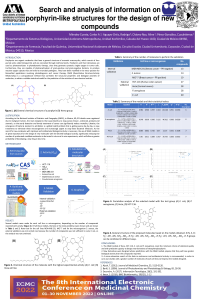
In the Bidiuam, PubMed, SciHub, Elvesier, Academic Search Complete, Google Scholar and CAS-SciFinder databases, information reported on porphyrin-type compounds with anticancer and bactericidal activity was sought, to analyze it and obtain the molecular descriptors using the free ChemDes web platform. The calculated descriptors belong to the subprograms: PaDel, BlueDesc, RDkit and Pybel. The Build QSAR program was used to build and analyze QSAR models containing from one to six descriptors. Data were analyzed with cell lines HCT-116, HeLa, MCF-7 and MDA-MB-231, as well as with reported biological activity against Escherichia coli, Staphylococcus aureus and Pseudomonas aeruginosa bacteria. An evaluation of the model was carried out through internal cross-validation with the Leave-One-Out (LOO) method, with a Q2 > 0.5 and that the difference of R2-Q2 was ≤ 0.3. QSAR models with R2 close to 1 and Q2 > 0.5 were obtained; mainly on HeLa and HCT-116 cell lines, as well as models for bactericidal activity against E. coli and P. aeruginosa were obtained. From these models, 20 new porphyrin derivatives were designed, both with a pyrrole core and using their furan and thiophene bioisosteres. For each model, these compounds were predicted to have very good anticancer and bactericidal activity. Therefore, the synthesis of these compounds is being carried out to evaluate their biological activity.
Keywords
porphyrin
QSAR
cancer
bactericidal
Poster
sciforum-065751.pdf
Polyvinylpyrrolidone-coated silver nanoparticles induce the expression of inducible nitric oxide synthase in intestinal C2BBe1 cells
Development of natural-like small inhibitors of selenoenzymes