Event submissions
Published
 10.3390/ECMC2022-13237 (registering DOI)
 This submission belongs to the session S4. Small molecules as drug candidates of the event 8th International Electronic Conference on Medicinal Chemistry
Published date
01 Nov, 2022
Academic Editor
'%3e%3cpath%20d='M12.6657%2010.9104C12.4185%2010.325%2012.0599%209.79327%2011.6097%209.34482C11.1609%208.89508%2010.6293%208.5365%2010.0442%208.28888C10.0389%208.28626%2010.0337%208.28495%2010.0285%208.28233C10.8446%207.69279%2011.3752%206.73249%2011.3752%205.64904C11.3752%203.8542%209.92103%202.39999%208.1262%202.39999C6.33136%202.39999%204.87715%203.8542%204.87715%205.64904C4.87715%206.73249%205.40774%207.69279%206.22393%208.28364C6.21869%208.28626%206.21345%208.28757%206.20821%208.29019C5.62129%208.5378%205.09463%208.89284%204.64265%209.34613C4.1929%209.79493%203.83432%2010.3266%203.58671%2010.9117C3.34345%2011.4845%203.21226%2012.0987%203.20023%2012.7209C3.19988%2012.7349%203.20233%2012.7488%203.20744%2012.7619C3.21255%2012.7749%203.22022%2012.7867%203.22998%2012.7968C3.23975%2012.8068%203.25142%2012.8147%203.26431%2012.8202C3.2772%2012.8256%203.29105%2012.8284%203.30504%2012.8284H4.09109C4.14874%2012.8284%204.19459%2012.7825%204.1959%2012.7262C4.2221%2011.7148%204.62823%2010.7676%205.34617%2010.0497C6.08899%209.30683%207.0755%208.89808%208.1262%208.89808C9.17689%208.89808%2010.1634%209.30683%2010.9062%2010.0497C11.6242%2010.7676%2012.0303%2011.7148%2012.0565%2012.7262C12.0578%2012.7838%2012.1037%2012.8284%2012.1613%2012.8284H12.9474C12.9613%2012.8284%2012.9752%2012.8256%2012.9881%2012.8202C13.001%2012.8147%2013.0126%2012.8068%2013.0224%2012.7968C13.0322%2012.7867%2013.0398%2012.7749%2013.0449%2012.7619C13.0501%2012.7488%2013.0525%2012.7349%2013.0522%2012.7209C13.0391%2012.0947%2012.9094%2011.4855%2012.6657%2010.9104ZM8.1262%207.9024C7.52486%207.9024%206.9589%207.6679%206.53312%207.24211C6.10733%206.81633%205.87283%206.25037%205.87283%205.64904C5.87283%205.0477%206.10733%204.48174%206.53312%204.05596C6.9589%203.63018%207.52486%203.39567%208.1262%203.39567C8.72753%203.39567%209.29349%203.63018%209.71927%204.05596C10.1451%204.48174%2010.3796%205.0477%2010.3796%205.64904C10.3796%206.25037%2010.1451%206.81633%209.71927%207.24211C9.29349%207.6679%208.72753%207.9024%208.1262%207.9024Z'%20fill='%235D1EE1'/%3e%3c/g%3e%3c/svg%3e) Alfredo Berzal-Herranz
Alfredo Berzal-HerranzCitation
Eirini Papanikolaou, Yannis V. Simos, Konstantinos Spyrou, Michaela Patila, Christina Alatzoglou, Konstantinos Tsamis, Dimitrios Gournis, Haralambos Stamatis, Dimitrios Peschos, Evangelia Dounousi, Green exfoliation of graphene; an in vitro study of toxicity and biocompatibility, in Proceedings of 8th International Electronic Conference on Medicinal Chemistry, 1 November–30 November 2022, MDPI: Basel, Switzerland, doi: 10.3390/ECMC2022-13237
Share
Email
Facebook
Twitter
LinkedIn
Green exfoliation of graphene; an in vitro study of toxicity and biocompatibility
'%3e%3cpath%20d='M12.6647%2010.9104C12.4176%2010.325%2012.0589%209.7933%2011.6088%209.34485C11.16%208.89511%2010.6283%208.53653%2010.0432%208.28891C10.038%208.28629%2010.0327%208.28498%2010.0275%208.28236C10.8437%207.69282%2011.3743%206.73252%2011.3743%205.64907C11.3743%203.85423%209.92005%202.40002%208.12522%202.40002C6.33038%202.40002%204.87618%203.85423%204.87618%205.64907C4.87618%206.73252%205.40677%207.69282%206.22296%208.28367C6.21772%208.28629%206.21248%208.2876%206.20724%208.29022C5.62031%208.53783%205.09365%208.89287%204.64167%209.34616C4.19192%209.79496%203.83334%2010.3266%203.58573%2010.9117C3.34247%2011.4846%203.21128%2012.0987%203.19925%2012.721C3.1989%2012.735%203.20135%2012.7489%203.20646%2012.7619C3.21157%2012.7749%203.21924%2012.7868%203.22901%2012.7968C3.23877%2012.8068%203.25045%2012.8148%203.26334%2012.8202C3.27623%2012.8256%203.29007%2012.8284%203.30406%2012.8284H4.09012C4.14776%2012.8284%204.19362%2012.7825%204.19493%2012.7262C4.22113%2011.7148%204.62726%2010.7676%205.34519%2010.0497C6.08802%209.30686%207.07452%208.89811%208.12522%208.89811C9.17592%208.89811%2010.1624%209.30686%2010.9052%2010.0497C11.6232%2010.7676%2012.0293%2011.7148%2012.0555%2012.7262C12.0568%2012.7839%2012.1027%2012.8284%2012.1603%2012.8284H12.9464C12.9604%2012.8284%2012.9742%2012.8256%2012.9871%2012.8202C13%2012.8148%2013.0117%2012.8068%2013.0214%2012.7968C13.0312%2012.7868%2013.0389%2012.7749%2013.044%2012.7619C13.0491%2012.7489%2013.0515%2012.735%2013.0512%2012.721C13.0381%2012.0947%2012.9084%2011.4856%2012.6647%2010.9104ZM8.12522%207.90243C7.52388%207.90243%206.95792%207.66793%206.53214%207.24215C6.10636%206.81636%205.87185%206.2504%205.87185%205.64907C5.87185%205.04773%206.10636%204.48177%206.53214%204.05599C6.95792%203.63021%207.52388%203.3957%208.12522%203.3957C8.72655%203.3957%209.29252%203.63021%209.7183%204.05599C10.1441%204.48177%2010.3786%205.04773%2010.3786%205.64907C10.3786%206.2504%2010.1441%206.81636%209.7183%207.24215C9.29252%207.66793%208.72655%207.90243%208.12522%207.90243Z'%20fill='%235D1EE1'/%3e%3c/g%3e%3c/svg%3e)
Eirini Papanikolaou 1,2,3

Yannis V. Simos 1,3

Konstantinos Spyrou 3,4
Michaela Patila 3,5
Christina Alatzoglou 5
Konstantinos Tsamis 1,3

Dimitrios Gournis 3,4
_Stamatis.png)
Haralambos Stamatis 3,5
Dimitrios Peschos 1,3
Evangelia Dounousi 2,3
1. 1 Laboratory of Physiology, Faculty of Medicine, University of Ioannina, Ioannina, Greece
2. 2 Department of Nephrology, Faculty of Medicine, School of Health Sciences, University of Ioannina, Ioannina, Greece
3. 3 Nanomedicine and Nanobiotechnology Research Group, University of Ioannina, Ioannina, Greece
4. 4 Department of Materials Science and Engineering, University of Ioannina, Ioannina, Greece
5. 5 Laboratory of Biotechnology, Department of Biological Applications and Technologies, University of Ioannina, Ioannina, Greece
Abstract
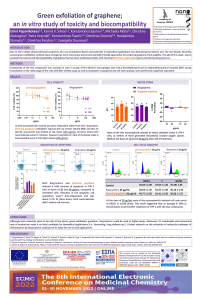
Due to their unique physicochemical properties, the use of graphene-based nanomaterials in biomedical applications has attracted great interest over the last decade. Nonetheless, evaluation of the biocompatibility of a nanomaterial is a crucial prerequisite before its use in biomedical applications. Recently, green exfoliation methods have emerged as more economical and sustainable approaches for producing graphene from graphite. The aim of this study was to evaluate the toxicity and biocompatibility of graphene that has been synthesized either with chemical or green procedures. In vitro assays were performed against THP-1-derived macrophages. Cytotoxicity was assessed with MTT assay, and examination of the redox stage of cells, evaluation of apoptosis and cell cycle analysis, were performed using Flow cytometry. Chemical graphene’s exfoliation requires the use of toxic solvent DMF, and thus its toxicity assessment was limited to low doses (≤20 μg/mL). At these doses both materials weren’t cytotoxic, however green graphene’s lack of chemicals made it biocompatible even at 10x higher doses. Flow cytometry showed that none of the nanomaterials generated intracellular ROS, induced apoptotic death or cell cycle arrest. While both materials seem to be safe at low doses, green exfoliated- graphene could be used at higher doses. Moreover, it’s sustainable and economical way of production make it an ideal candidate for biomedical applications (i.e., biosensing, drug delivery etc.). Further research on the activation of molecular pathways of inflammation by green graphene could prove its value for use in such applications.
Keywords
graphene
green exfoliation
biocompatibility
toxicity
sustainability
biomedical applications
Poster
sciforum-066809.pdf
Small Molecule Radiotracers for PET Imaging of PD-L1 with Copper-64
Cu(PPh3)3Br-CATALYZED SYNTHESIS OF NEW PARACETAMOL-1,2,3-TRIAZOLE MOLECULAR HYBRIDS FROM EXPIRED COMMERCIAL TABLETS AND THEIR IN SILICO ASSESSMENT TO STUDY THEIR PHARMACOLOGICAL PROPERTIES