Event submissions
Published
 10.3390/IECBM2022-13395 (registering DOI)
 This submission belongs to the session A. Biomacromolecules: Proteins of the event The 2nd International Electronic Conference on Biomolecules
Published date
01 Nov, 2022
Academic Editor
'%3e%3cpath%20d='M12.6657%2010.9104C12.4185%2010.325%2012.0599%209.79327%2011.6097%209.34482C11.1609%208.89508%2010.6293%208.5365%2010.0442%208.28888C10.0389%208.28626%2010.0337%208.28495%2010.0285%208.28233C10.8446%207.69279%2011.3752%206.73249%2011.3752%205.64904C11.3752%203.8542%209.92103%202.39999%208.1262%202.39999C6.33136%202.39999%204.87715%203.8542%204.87715%205.64904C4.87715%206.73249%205.40774%207.69279%206.22393%208.28364C6.21869%208.28626%206.21345%208.28757%206.20821%208.29019C5.62129%208.5378%205.09463%208.89284%204.64265%209.34613C4.1929%209.79493%203.83432%2010.3266%203.58671%2010.9117C3.34345%2011.4845%203.21226%2012.0987%203.20023%2012.7209C3.19988%2012.7349%203.20233%2012.7488%203.20744%2012.7619C3.21255%2012.7749%203.22022%2012.7867%203.22998%2012.7968C3.23975%2012.8068%203.25142%2012.8147%203.26431%2012.8202C3.2772%2012.8256%203.29105%2012.8284%203.30504%2012.8284H4.09109C4.14874%2012.8284%204.19459%2012.7825%204.1959%2012.7262C4.2221%2011.7148%204.62823%2010.7676%205.34617%2010.0497C6.08899%209.30683%207.0755%208.89808%208.1262%208.89808C9.17689%208.89808%2010.1634%209.30683%2010.9062%2010.0497C11.6242%2010.7676%2012.0303%2011.7148%2012.0565%2012.7262C12.0578%2012.7838%2012.1037%2012.8284%2012.1613%2012.8284H12.9474C12.9613%2012.8284%2012.9752%2012.8256%2012.9881%2012.8202C13.001%2012.8147%2013.0126%2012.8068%2013.0224%2012.7968C13.0322%2012.7867%2013.0398%2012.7749%2013.0449%2012.7619C13.0501%2012.7488%2013.0525%2012.7349%2013.0522%2012.7209C13.0391%2012.0947%2012.9094%2011.4855%2012.6657%2010.9104ZM8.1262%207.9024C7.52486%207.9024%206.9589%207.6679%206.53312%207.24211C6.10733%206.81633%205.87283%206.25037%205.87283%205.64904C5.87283%205.0477%206.10733%204.48174%206.53312%204.05596C6.9589%203.63018%207.52486%203.39567%208.1262%203.39567C8.72753%203.39567%209.29349%203.63018%209.71927%204.05596C10.1451%204.48174%2010.3796%205.0477%2010.3796%205.64904C10.3796%206.25037%2010.1451%206.81633%209.71927%207.24211C9.29349%207.6679%208.72753%207.9024%208.1262%207.9024Z'%20fill='%235D1EE1'/%3e%3c/g%3e%3c/svg%3e) Cristina Martínez-Villaluenga
Cristina Martínez-VillaluengaCitation
Péter Gaszler, Réka Pintér, Péter Bukovics, Rauan Sakenov, Tamás Huber, Andrea Teréz Vig, Mónika Ágnes Tóth, Veronika Takács-Kollár, Beáta Bugyi, Comparative Analyses of the Gelsolin Homology Domains of Gelsolin and Flightless-I, in Proceedings of The 2nd International Electronic Conference on Biomolecules, 1 November–15 November 2022, MDPI: Basel, Switzerland, doi: 10.3390/IECBM2022-13395
Share
Email
Facebook
Twitter
LinkedIn
Comparative Analyses of the Gelsolin Homology Domains of Gelsolin and Flightless-I
'%3e%3cpath%20d='M12.6647%2010.9104C12.4176%2010.325%2012.0589%209.7933%2011.6088%209.34485C11.16%208.89511%2010.6283%208.53653%2010.0432%208.28891C10.038%208.28629%2010.0327%208.28498%2010.0275%208.28236C10.8437%207.69282%2011.3743%206.73252%2011.3743%205.64907C11.3743%203.85423%209.92005%202.40002%208.12522%202.40002C6.33038%202.40002%204.87618%203.85423%204.87618%205.64907C4.87618%206.73252%205.40677%207.69282%206.22296%208.28367C6.21772%208.28629%206.21248%208.2876%206.20724%208.29022C5.62031%208.53783%205.09365%208.89287%204.64167%209.34616C4.19192%209.79496%203.83334%2010.3266%203.58573%2010.9117C3.34247%2011.4846%203.21128%2012.0987%203.19925%2012.721C3.1989%2012.735%203.20135%2012.7489%203.20646%2012.7619C3.21157%2012.7749%203.21924%2012.7868%203.22901%2012.7968C3.23877%2012.8068%203.25045%2012.8148%203.26334%2012.8202C3.27623%2012.8256%203.29007%2012.8284%203.30406%2012.8284H4.09012C4.14776%2012.8284%204.19362%2012.7825%204.19493%2012.7262C4.22113%2011.7148%204.62726%2010.7676%205.34519%2010.0497C6.08802%209.30686%207.07452%208.89811%208.12522%208.89811C9.17592%208.89811%2010.1624%209.30686%2010.9052%2010.0497C11.6232%2010.7676%2012.0293%2011.7148%2012.0555%2012.7262C12.0568%2012.7839%2012.1027%2012.8284%2012.1603%2012.8284H12.9464C12.9604%2012.8284%2012.9742%2012.8256%2012.9871%2012.8202C13%2012.8148%2013.0117%2012.8068%2013.0214%2012.7968C13.0312%2012.7868%2013.0389%2012.7749%2013.044%2012.7619C13.0491%2012.7489%2013.0515%2012.735%2013.0512%2012.721C13.0381%2012.0947%2012.9084%2011.4856%2012.6647%2010.9104ZM8.12522%207.90243C7.52388%207.90243%206.95792%207.66793%206.53214%207.24215C6.10636%206.81636%205.87185%206.2504%205.87185%205.64907C5.87185%205.04773%206.10636%204.48177%206.53214%204.05599C6.95792%203.63021%207.52388%203.3957%208.12522%203.3957C8.72655%203.3957%209.29252%203.63021%209.7183%204.05599C10.1441%204.48177%2010.3786%205.04773%2010.3786%205.64907C10.3786%206.2504%2010.1441%206.81636%209.7183%207.24215C9.29252%207.66793%208.72655%207.90243%208.12522%207.90243Z'%20fill='%235D1EE1'/%3e%3c/g%3e%3c/svg%3e)
Péter Gaszler 1
Réka Pintér 1
Péter Bukovics 1
Rauan Sakenov 1
Tamás Huber 1
Andrea Teréz Vig 1
Mónika Ágnes Tóth 1
Veronika Takács-Kollár 1

Beáta Bugyi 1
1. University of Pécs, Medical School, Department of Biophysics, Szigeti str. 12, Pécs, H-7624, Hungary
Abstract
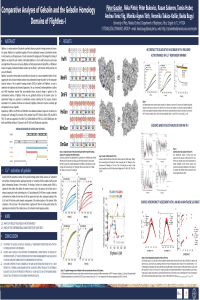
Flightless-I is a unique member of the gelsolin superfamily alloying six gelsolin homology (GH) domains and leucine-rich repeats. Flightless-I is an established regulator of the actin cytoskeleton. However, its biochemical activities in actin dynamics regulation are still largely elusive. To better understand its biological functioning, we studied Flightless-I by in vitro fluorescence spectroscopy and single filament TIRF microscopy approaches. We found that Flightless-I inhibits actin assembly by high-affinity (∼ nM) filament barbed end capping, moderately facilitates nucleation by low-affinity (∼ µM) monomer binding and does not sever actin filaments in vitro. Flightless-I was found to interact with actin and affect actin dynamics in a calcium-independent fashion. Notably, our functional analyses indicate that GSN and Flightless-I respond to calcium differently implying different conformational characteristics of the GH domains in the two proteins. Bioinformatics analyses predict that the sequence elements responsible for calcium activation of GSN are not conserved in the GH domains of Flightless-I. Consistently, the use of the hydrophobic fluorescent dye (8-anilinonaphthalene-1-sulfonic acid; ANS) revealed that unlike that of GSN the conformational behavior of the GH domains Flightless-I was not significantly affected by calcium-binding. Altogether, our work reveals different calcium-response and predicts distinct modes of activation of GSN and Flightless-I.
New National Excellence Program of the Ministry for Innovation and Technology ÚNKP-21-3-II-PTE-997 (PG), University of Pécs, Medical School, KA-2021-30 (AV). We thank József Mihály (Institute of Genetics, Biological Research Centre) for the Flightless-I plasmids and Robert C. Robinson (Okoyama University) for the GSN plasmid.
Keywords
actin
Flightless-I
gelsolin
cytoskeleton
ANS
Manuscript
sciforum-060962-done.pdf
Poster
IECBM Gaszler 2022 .pdf
Bacterial nanocellulose films loaded with nisin Z -antibacterial efficacy against Staphylococcus aureus strains
Pipeline to develop and characterize a potential regenerative topical treatment based on lavender essential oil and the CW49 peptide