Event submissions
Published

This submission belongs to the session S4. Medicinally Active Plants and Phytochemicals of the event The 2nd International Electronic Conference on Biomedicines
Published date
01 Mar, 2023
Academic Editor
'%3e%3cpath%20d='M12.6657%2010.9104C12.4185%2010.325%2012.0599%209.79327%2011.6097%209.34482C11.1609%208.89508%2010.6293%208.5365%2010.0442%208.28888C10.0389%208.28626%2010.0337%208.28495%2010.0285%208.28233C10.8446%207.69279%2011.3752%206.73249%2011.3752%205.64904C11.3752%203.8542%209.92103%202.39999%208.1262%202.39999C6.33136%202.39999%204.87715%203.8542%204.87715%205.64904C4.87715%206.73249%205.40774%207.69279%206.22393%208.28364C6.21869%208.28626%206.21345%208.28757%206.20821%208.29019C5.62129%208.5378%205.09463%208.89284%204.64265%209.34613C4.1929%209.79493%203.83432%2010.3266%203.58671%2010.9117C3.34345%2011.4845%203.21226%2012.0987%203.20023%2012.7209C3.19988%2012.7349%203.20233%2012.7488%203.20744%2012.7619C3.21255%2012.7749%203.22022%2012.7867%203.22998%2012.7968C3.23975%2012.8068%203.25142%2012.8147%203.26431%2012.8202C3.2772%2012.8256%203.29105%2012.8284%203.30504%2012.8284H4.09109C4.14874%2012.8284%204.19459%2012.7825%204.1959%2012.7262C4.2221%2011.7148%204.62823%2010.7676%205.34617%2010.0497C6.08899%209.30683%207.0755%208.89808%208.1262%208.89808C9.17689%208.89808%2010.1634%209.30683%2010.9062%2010.0497C11.6242%2010.7676%2012.0303%2011.7148%2012.0565%2012.7262C12.0578%2012.7838%2012.1037%2012.8284%2012.1613%2012.8284H12.9474C12.9613%2012.8284%2012.9752%2012.8256%2012.9881%2012.8202C13.001%2012.8147%2013.0126%2012.8068%2013.0224%2012.7968C13.0322%2012.7867%2013.0398%2012.7749%2013.0449%2012.7619C13.0501%2012.7488%2013.0525%2012.7349%2013.0522%2012.7209C13.0391%2012.0947%2012.9094%2011.4855%2012.6657%2010.9104ZM8.1262%207.9024C7.52486%207.9024%206.9589%207.6679%206.53312%207.24211C6.10733%206.81633%205.87283%206.25037%205.87283%205.64904C5.87283%205.0477%206.10733%204.48174%206.53312%204.05596C6.9589%203.63018%207.52486%203.39567%208.1262%203.39567C8.72753%203.39567%209.29349%203.63018%209.71927%204.05596C10.1451%204.48174%2010.3796%205.0477%2010.3796%205.64904C10.3796%206.25037%2010.1451%206.81633%209.71927%207.24211C9.29349%207.6679%208.72753%207.9024%208.1262%207.9024Z'%20fill='%235D1EE1'/%3e%3c/g%3e%3c/svg%3e) Shaker Mousa
Shaker MousaCitation
Amit Kumar Shrivastava, Dipendra Chaudhary, Laxmi Shrestha, Maaweya E. Awadalla, Samia T. Al-Shouli, Anjan Palikhey, Wafa Ali Eltayb, Anamika Gupta, Pramodkumar P. Gupta, Mala Parab, Anchal Trivedi, Aditi Srivastava, Mohnad Abdalla, GC-MS based Metabolite profiling, and anti-inflammatory activity of Aqueous extract of Myrica esculenta through In vitro and In-Silico approach., in Proceedings of The 2nd International Electronic Conference on Biomedicines, 1 March–31 March 2023, MDPI: Basel, Switzerland, doi: 10.3390/ECB2023-14079
Share
Email
Facebook
Twitter
LinkedIn
GC-MS based Metabolite profiling, and anti-inflammatory activity of Aqueous extract of Myrica esculenta through In vitro and In-Silico approach.
'%3e%3cpath%20d='M12.6647%2010.9104C12.4176%2010.325%2012.0589%209.7933%2011.6088%209.34485C11.16%208.89511%2010.6283%208.53653%2010.0432%208.28891C10.038%208.28629%2010.0327%208.28498%2010.0275%208.28236C10.8437%207.69282%2011.3743%206.73252%2011.3743%205.64907C11.3743%203.85423%209.92005%202.40002%208.12522%202.40002C6.33038%202.40002%204.87618%203.85423%204.87618%205.64907C4.87618%206.73252%205.40677%207.69282%206.22296%208.28367C6.21772%208.28629%206.21248%208.2876%206.20724%208.29022C5.62031%208.53783%205.09365%208.89287%204.64167%209.34616C4.19192%209.79496%203.83334%2010.3266%203.58573%2010.9117C3.34247%2011.4846%203.21128%2012.0987%203.19925%2012.721C3.1989%2012.735%203.20135%2012.7489%203.20646%2012.7619C3.21157%2012.7749%203.21924%2012.7868%203.22901%2012.7968C3.23877%2012.8068%203.25045%2012.8148%203.26334%2012.8202C3.27623%2012.8256%203.29007%2012.8284%203.30406%2012.8284H4.09012C4.14776%2012.8284%204.19362%2012.7825%204.19493%2012.7262C4.22113%2011.7148%204.62726%2010.7676%205.34519%2010.0497C6.08802%209.30686%207.07452%208.89811%208.12522%208.89811C9.17592%208.89811%2010.1624%209.30686%2010.9052%2010.0497C11.6232%2010.7676%2012.0293%2011.7148%2012.0555%2012.7262C12.0568%2012.7839%2012.1027%2012.8284%2012.1603%2012.8284H12.9464C12.9604%2012.8284%2012.9742%2012.8256%2012.9871%2012.8202C13%2012.8148%2013.0117%2012.8068%2013.0214%2012.7968C13.0312%2012.7868%2013.0389%2012.7749%2013.044%2012.7619C13.0491%2012.7489%2013.0515%2012.735%2013.0512%2012.721C13.0381%2012.0947%2012.9084%2011.4856%2012.6647%2010.9104ZM8.12522%207.90243C7.52388%207.90243%206.95792%207.66793%206.53214%207.24215C6.10636%206.81636%205.87185%206.2504%205.87185%205.64907C5.87185%205.04773%206.10636%204.48177%206.53214%204.05599C6.95792%203.63021%207.52388%203.3957%208.12522%203.3957C8.72655%203.3957%209.29252%203.63021%209.7183%204.05599C10.1441%204.48177%2010.3786%205.04773%2010.3786%205.64907C10.3786%206.2504%2010.1441%206.81636%209.7183%207.24215C9.29252%207.66793%208.72655%207.90243%208.12522%207.90243Z'%20fill='%235D1EE1'/%3e%3c/g%3e%3c/svg%3e)
Amit Kumar Shrivastava 1
Dipendra Chaudhary 2
Laxmi Shrestha 3
Maaweya E. Awadalla 4
Samia T. Al-Shouli 5
Anjan Palikhey 3
Wafa Ali Eltayb 6
Anamika Gupta 7

Pramodkumar P. Gupta 8

Mala Parab 9
Anchal Trivedi 10
Aditi Srivastava 10

Mohnad Abdalla 11
1. Department of Pharmacology, Universal College of Medical Sciences, Bhairahawa, Rupandehi, Nepal, 32900
2. Department of Pharmacy, Provincial Lumbini Hospital, Butwal, Rupandehi, Nepal
3. Department of Pharmacology, Universal College of Medical Sciences, Bhairahaw, Rupandehi, Nepal, 32900.
4. Research Center, King Fahad Medical City, Riyadh, Saudi Arabia.
5. Immunology Unit, Pathology department, College of Medicine, King Saud University, Riyadh, Kingdom of Saudi Arabia.
6. Biotechnology Department, Faculty of Science and Technology, Shendi University,Shendi 11111, Nher Anile, Sudan.
7. Cardiovascular Research Group, Sharjah Institute for Medical Research, University of Sharjah, Sharjah 27272, UAE
8. School of Biotechnology and Bioinformatics, D Y Patil Deemed to be University, CBD, Belapur, Navi Mumbai, Maharashtra, India
9. Department of Biochemistry, Era’s Lucknow Medical College and Hospital, Era University, Lucknow, Uttar Pradesh, India
10. Department of Biochemistry, Era’s Lucknow Medical College and Hospital, Era University, Lucknow, Uttar Pradesh, India.
11. Research Institute of Paediatrics Children’s Hospital Affiliated to Shandong University (Jinan Children’s Hospital), Jinan, China
Abstract
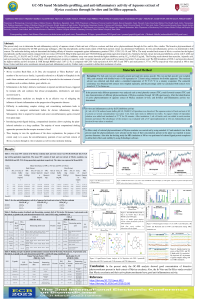
The present study was to determine the anti-inflammatory activity of aqueous extract of bark and root of Myrica esculenta and their active phytoconstituents through In-Vitro and In-Silico studies. The bioactive phytoconstituent of Myrica esculenta determined by GC-MS spectroscopy techniques. After that total phenolic and flavonoid content of both bark and root extract was determined. Furthermore, In-vitro anti-inflammatory activity was determined in both extracts. The molecular docking analysis determined the binding affinity of bioactive compounds against inflammatory proteins COX-1, COX-2, IL-10, and TNF-α. The present study revealed bark extract of Myrica esculenta has the highest total phenolic and flavonoid content compared with root extract (553.44±18.38mg GAE/g equivalent and 336.02±8.04mg quercetin/g equivalent respectively). Similarly, the bark extract showed good inhibitory activity with 5-LOX and HYA assay (IC50 11.26±3.93 and 21.61±8.27 µg/mL respectively), but in 15-Lox inhibitory assay root extract showed the highest inhibitory activity, IC50 16.95±5.92 µg/mL. The Docking result showed that myrecitin, Arjunolic acid, and myricanone have the highest binding affinity with all inflammatory proteins in respective order: myrecitin>arjunolic acid>celecoxib>myricanone>myricitrin>3-epi-ursonic acid. The MD simulation of COX-1 and myrecitin showed the highest stability and low deviation at 310K through RMSD values (1.07-2.3 Å) as compared with COX-1 and myricitrin (0.193-1.885 Å) and TNF-α and myricanone (1.377 to 3.457Å) respectively when analyzed at 100 ns time frame. Extract and their active constituents showed good anti-inflammatory activity. Further study is essential to define their mechanism of action.
Keywords
Myrica esculenta
In-Vitro
Anti-inflammatory
QSAR analysis
Molecular docking
Lipoxygenase assay.
Manuscript
final manuscript draft [sciforum-069847].pdf
Poster
MDPI biomedicine_amit_Poster.pdf
Antipsychotic drugs counteract autophagy and mitophagy in multiple sclerosis
Signature garlic phytochemical as a potential anti-candidal candidate targeting virulence factors in Candida albicans