Event submissions
Published

This submission belongs to the session H3. Holography posters of the event Holography Meets Advanced Manufacturing
Published date
06 Mar, 2023
Academic Editor
'%3e%3cpath%20d='M12.6657%2010.9104C12.4185%2010.325%2012.0599%209.79327%2011.6097%209.34482C11.1609%208.89508%2010.6293%208.5365%2010.0442%208.28888C10.0389%208.28626%2010.0337%208.28495%2010.0285%208.28233C10.8446%207.69279%2011.3752%206.73249%2011.3752%205.64904C11.3752%203.8542%209.92103%202.39999%208.1262%202.39999C6.33136%202.39999%204.87715%203.8542%204.87715%205.64904C4.87715%206.73249%205.40774%207.69279%206.22393%208.28364C6.21869%208.28626%206.21345%208.28757%206.20821%208.29019C5.62129%208.5378%205.09463%208.89284%204.64265%209.34613C4.1929%209.79493%203.83432%2010.3266%203.58671%2010.9117C3.34345%2011.4845%203.21226%2012.0987%203.20023%2012.7209C3.19988%2012.7349%203.20233%2012.7488%203.20744%2012.7619C3.21255%2012.7749%203.22022%2012.7867%203.22998%2012.7968C3.23975%2012.8068%203.25142%2012.8147%203.26431%2012.8202C3.2772%2012.8256%203.29105%2012.8284%203.30504%2012.8284H4.09109C4.14874%2012.8284%204.19459%2012.7825%204.1959%2012.7262C4.2221%2011.7148%204.62823%2010.7676%205.34617%2010.0497C6.08899%209.30683%207.0755%208.89808%208.1262%208.89808C9.17689%208.89808%2010.1634%209.30683%2010.9062%2010.0497C11.6242%2010.7676%2012.0303%2011.7148%2012.0565%2012.7262C12.0578%2012.7838%2012.1037%2012.8284%2012.1613%2012.8284H12.9474C12.9613%2012.8284%2012.9752%2012.8256%2012.9881%2012.8202C13.001%2012.8147%2013.0126%2012.8068%2013.0224%2012.7968C13.0322%2012.7867%2013.0398%2012.7749%2013.0449%2012.7619C13.0501%2012.7488%2013.0525%2012.7349%2013.0522%2012.7209C13.0391%2012.0947%2012.9094%2011.4855%2012.6657%2010.9104ZM8.1262%207.9024C7.52486%207.9024%206.9589%207.6679%206.53312%207.24211C6.10733%206.81633%205.87283%206.25037%205.87283%205.64904C5.87283%205.0477%206.10733%204.48174%206.53312%204.05596C6.9589%203.63018%207.52486%203.39567%208.1262%203.39567C8.72753%203.39567%209.29349%203.63018%209.71927%204.05596C10.1451%204.48174%2010.3796%205.0477%2010.3796%205.64904C10.3796%206.25037%2010.1451%206.81633%209.71927%207.24211C9.29349%207.6679%208.72753%207.9024%208.1262%207.9024Z'%20fill='%235D1EE1'/%3e%3c/g%3e%3c/svg%3e) VIJAYAKUMAR ANAND
VIJAYAKUMAR ANANDCitation
Vinny Cris M, Harsh Vardhan, Shashi Prabhakar, Ravi Kumar, Salla Gangi Reddy, Sakshi Choudhary, Ravindra P Singh, An asymmetric optical cryptosystem using physically unclonable functions in the Fresnel domain, in Proceedings of Holography Meets Advanced Manufacturing, 20 February–22 February 2023, MDPI: Basel, Switzerland, doi: 10.3390/HMAM2-14124
Share
Email
Facebook
Twitter
LinkedIn
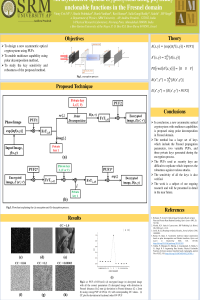
An asymmetric optical cryptosystem using physically unclonable functions in the Fresnel domain
'%3e%3cpath%20d='M12.6647%2010.9104C12.4176%2010.325%2012.0589%209.7933%2011.6088%209.34485C11.16%208.89511%2010.6283%208.53653%2010.0432%208.28891C10.038%208.28629%2010.0327%208.28498%2010.0275%208.28236C10.8437%207.69282%2011.3743%206.73252%2011.3743%205.64907C11.3743%203.85423%209.92005%202.40002%208.12522%202.40002C6.33038%202.40002%204.87618%203.85423%204.87618%205.64907C4.87618%206.73252%205.40677%207.69282%206.22296%208.28367C6.21772%208.28629%206.21248%208.2876%206.20724%208.29022C5.62031%208.53783%205.09365%208.89287%204.64167%209.34616C4.19192%209.79496%203.83334%2010.3266%203.58573%2010.9117C3.34247%2011.4846%203.21128%2012.0987%203.19925%2012.721C3.1989%2012.735%203.20135%2012.7489%203.20646%2012.7619C3.21157%2012.7749%203.21924%2012.7868%203.22901%2012.7968C3.23877%2012.8068%203.25045%2012.8148%203.26334%2012.8202C3.27623%2012.8256%203.29007%2012.8284%203.30406%2012.8284H4.09012C4.14776%2012.8284%204.19362%2012.7825%204.19493%2012.7262C4.22113%2011.7148%204.62726%2010.7676%205.34519%2010.0497C6.08802%209.30686%207.07452%208.89811%208.12522%208.89811C9.17592%208.89811%2010.1624%209.30686%2010.9052%2010.0497C11.6232%2010.7676%2012.0293%2011.7148%2012.0555%2012.7262C12.0568%2012.7839%2012.1027%2012.8284%2012.1603%2012.8284H12.9464C12.9604%2012.8284%2012.9742%2012.8256%2012.9871%2012.8202C13%2012.8148%2013.0117%2012.8068%2013.0214%2012.7968C13.0312%2012.7868%2013.0389%2012.7749%2013.044%2012.7619C13.0491%2012.7489%2013.0515%2012.735%2013.0512%2012.721C13.0381%2012.0947%2012.9084%2011.4856%2012.6647%2010.9104ZM8.12522%207.90243C7.52388%207.90243%206.95792%207.66793%206.53214%207.24215C6.10636%206.81636%205.87185%206.2504%205.87185%205.64907C5.87185%205.04773%206.10636%204.48177%206.53214%204.05599C6.95792%203.63021%207.52388%203.3957%208.12522%203.3957C8.72655%203.3957%209.29252%203.63021%209.7183%204.05599C10.1441%204.48177%2010.3786%205.04773%2010.3786%205.64907C10.3786%206.2504%2010.1441%206.81636%209.7183%207.24215C9.29252%207.66793%208.72655%207.90243%208.12522%207.90243Z'%20fill='%235D1EE1'/%3e%3c/g%3e%3c/svg%3e)
Vinny Cris M 1
Harsh Vardhan 1
Shashi Prabhakar 2

Ravi Kumar 1
Salla Gangi Reddy 1
Sakshi Choudhary 3
Ravindra P Singh 2
1. Department of Physics, SRM University - AP, Andhra Pradesh - 522502, India
2. Physical Research Laboratory, Navrang Pura, Ahmedabad-380009, India
3. Ben-Gurion University of the Negev, P. O. Box 653, Beer-Sheva 8410501, Israel
Abstract
The advancement in data transfer and storage technology has prompted new challenges for its
secure transmission. Everyday a huge amount of data (images, passwords, bank details etc.)
is transmitted through open channels, making it vulnerable to intruders. To ensure the safe
transmission, several optical and digital encryption techniques have been explored. Mostly,
the security keys used in the existing image encryption methods are computer generated noise
like distributions having uniformly distributed histogram. Statistically, an attacker may
retrieve these keys if he/she will have partial/full knowledge of the cryptosystem or its
constituents. In this paper, we propose a new asymmetric cryptosystem for phase image
encryption which uses the physically unclonable functions (PUFs) as security keys. The
PUFs are the speckle patterns recorded optically by scattering of vortex beams through
ground glass diffuser (GGD) having unique properties. For encryption, the original amplitude
image is first converted to a phase image and modulated with a PUF to get the complex
image. This complex image is then illuminated with a plane wave and the complex wavefront
at a distance d is recorded. The real part of the complex wavefront is further processed to get
the encrypted image and the imaginary part is kept as the first private key. Polar
decomposition approach is utilized for generating two more private security keys and to
enable the multi-user capability in the cryptosystem. Numerical simulation results consisting
of encryption/decryption, key sensitivity and robustness analysis will be shown in support of
the proposed method.
Keywords
optical encryption
physically unclonable functions
polar decomposition
Manuscript
Manuscript_HMAM.pdf
Poster
Poster_HMAM.pdf
Role of Deep Learning in Optical Imaging
Digital Fourier transform holography using a beam displacer