Event submissions
Published

This submission belongs to the session G. Water Quality and Advanced Water Treatment and Reuse of the event The 7th International Electronic Conference on Water Sciences
Published date
14 Mar, 2023
Academic Editor
'%3e%3cpath%20d='M12.6657%2010.9104C12.4185%2010.325%2012.0599%209.79327%2011.6097%209.34482C11.1609%208.89508%2010.6293%208.5365%2010.0442%208.28888C10.0389%208.28626%2010.0337%208.28495%2010.0285%208.28233C10.8446%207.69279%2011.3752%206.73249%2011.3752%205.64904C11.3752%203.8542%209.92103%202.39999%208.1262%202.39999C6.33136%202.39999%204.87715%203.8542%204.87715%205.64904C4.87715%206.73249%205.40774%207.69279%206.22393%208.28364C6.21869%208.28626%206.21345%208.28757%206.20821%208.29019C5.62129%208.5378%205.09463%208.89284%204.64265%209.34613C4.1929%209.79493%203.83432%2010.3266%203.58671%2010.9117C3.34345%2011.4845%203.21226%2012.0987%203.20023%2012.7209C3.19988%2012.7349%203.20233%2012.7488%203.20744%2012.7619C3.21255%2012.7749%203.22022%2012.7867%203.22998%2012.7968C3.23975%2012.8068%203.25142%2012.8147%203.26431%2012.8202C3.2772%2012.8256%203.29105%2012.8284%203.30504%2012.8284H4.09109C4.14874%2012.8284%204.19459%2012.7825%204.1959%2012.7262C4.2221%2011.7148%204.62823%2010.7676%205.34617%2010.0497C6.08899%209.30683%207.0755%208.89808%208.1262%208.89808C9.17689%208.89808%2010.1634%209.30683%2010.9062%2010.0497C11.6242%2010.7676%2012.0303%2011.7148%2012.0565%2012.7262C12.0578%2012.7838%2012.1037%2012.8284%2012.1613%2012.8284H12.9474C12.9613%2012.8284%2012.9752%2012.8256%2012.9881%2012.8202C13.001%2012.8147%2013.0126%2012.8068%2013.0224%2012.7968C13.0322%2012.7867%2013.0398%2012.7749%2013.0449%2012.7619C13.0501%2012.7488%2013.0525%2012.7349%2013.0522%2012.7209C13.0391%2012.0947%2012.9094%2011.4855%2012.6657%2010.9104ZM8.1262%207.9024C7.52486%207.9024%206.9589%207.6679%206.53312%207.24211C6.10733%206.81633%205.87283%206.25037%205.87283%205.64904C5.87283%205.0477%206.10733%204.48174%206.53312%204.05596C6.9589%203.63018%207.52486%203.39567%208.1262%203.39567C8.72753%203.39567%209.29349%203.63018%209.71927%204.05596C10.1451%204.48174%2010.3796%205.0477%2010.3796%205.64904C10.3796%206.25037%2010.1451%206.81633%209.71927%207.24211C9.29349%207.6679%208.72753%207.9024%208.1262%207.9024Z'%20fill='%235D1EE1'/%3e%3c/g%3e%3c/svg%3e) Lampros Vasiliades
Lampros VasiliadesCitation
Shania Pesik, Eric Jobiliong, Eden Steven, Comparative Analysis of Photodegradation of Ibuprofen and Clotrimazole Water Pollutant using UVC Rays in presence and absence of ZnO Photocatalyst, in Proceedings of The 7th International Electronic Conference on Water Sciences, 15 March–30 March 2023, MDPI: Basel, Switzerland, doi: 10.3390/ECWS-7-14176
Share
Email
Facebook
Twitter
LinkedIn
Comparative Analysis of Photodegradation of Ibuprofen and Clotrimazole Water Pollutant using UVC Rays in presence and absence of ZnO Photocatalyst
'%3e%3cpath%20d='M12.6647%2010.9104C12.4176%2010.325%2012.0589%209.7933%2011.6088%209.34485C11.16%208.89511%2010.6283%208.53653%2010.0432%208.28891C10.038%208.28629%2010.0327%208.28498%2010.0275%208.28236C10.8437%207.69282%2011.3743%206.73252%2011.3743%205.64907C11.3743%203.85423%209.92005%202.40002%208.12522%202.40002C6.33038%202.40002%204.87618%203.85423%204.87618%205.64907C4.87618%206.73252%205.40677%207.69282%206.22296%208.28367C6.21772%208.28629%206.21248%208.2876%206.20724%208.29022C5.62031%208.53783%205.09365%208.89287%204.64167%209.34616C4.19192%209.79496%203.83334%2010.3266%203.58573%2010.9117C3.34247%2011.4846%203.21128%2012.0987%203.19925%2012.721C3.1989%2012.735%203.20135%2012.7489%203.20646%2012.7619C3.21157%2012.7749%203.21924%2012.7868%203.22901%2012.7968C3.23877%2012.8068%203.25045%2012.8148%203.26334%2012.8202C3.27623%2012.8256%203.29007%2012.8284%203.30406%2012.8284H4.09012C4.14776%2012.8284%204.19362%2012.7825%204.19493%2012.7262C4.22113%2011.7148%204.62726%2010.7676%205.34519%2010.0497C6.08802%209.30686%207.07452%208.89811%208.12522%208.89811C9.17592%208.89811%2010.1624%209.30686%2010.9052%2010.0497C11.6232%2010.7676%2012.0293%2011.7148%2012.0555%2012.7262C12.0568%2012.7839%2012.1027%2012.8284%2012.1603%2012.8284H12.9464C12.9604%2012.8284%2012.9742%2012.8256%2012.9871%2012.8202C13%2012.8148%2013.0117%2012.8068%2013.0214%2012.7968C13.0312%2012.7868%2013.0389%2012.7749%2013.044%2012.7619C13.0491%2012.7489%2013.0515%2012.735%2013.0512%2012.721C13.0381%2012.0947%2012.9084%2011.4856%2012.6647%2010.9104ZM8.12522%207.90243C7.52388%207.90243%206.95792%207.66793%206.53214%207.24215C6.10636%206.81636%205.87185%206.2504%205.87185%205.64907C5.87185%205.04773%206.10636%204.48177%206.53214%204.05599C6.95792%203.63021%207.52388%203.3957%208.12522%203.3957C8.72655%203.3957%209.29252%203.63021%209.7183%204.05599C10.1441%204.48177%2010.3786%205.04773%2010.3786%205.64907C10.3786%206.2504%2010.1441%206.81636%209.7183%207.24215C9.29252%207.66793%208.72655%207.90243%208.12522%207.90243Z'%20fill='%235D1EE1'/%3e%3c/g%3e%3c/svg%3e)
Shania Pesik 1
Eric Jobiliong 2
Eden Steven 1,3
1. SPH Applied Science Academy, Sekolah Pelita Harapan Lippo Village, Tangerang, Indonesia 15810
2. Department of Industrial Engineering, Universitas Pelita Harapan, Tangerang, Indonesia 15810
3. Emmerich Research Center, Jakarta, Indonesia 14450
Abstract
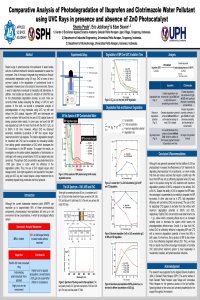
Recent surge in pharmaceutical micro-pollutants in water bodies calls for an efficient method to neutralize wastewater to sustain the ecosystem. One of the ways to degrade drug molecules is through photocatalytic degradation using UV rays. ZnO is known to be a common catalyst in the degradation of contaminants found in wastewater. However due to its toxicity to the environment, there is a need to objectively re-evaluate its necessity and alternatives. In addition, most studies are focused on utilization of UVA/UVB rays for the photocatalytic degradation process, as such, there are currently limited studies evaluating the efficacy of UVC for such purpose. In this work, we provide a comparative analysis of photodegradation of drug molecules using UVC ray with and without the ZnO catalyst. Ibuprofen (IBP) and clotrimazole are used for analysis. We found that the use of ZnO catalyst does not always produce better results. In some case, we found that IBP was degraded up to 94.8% more than that with the ZnO up to 91.4% in 60 mins. However, without ZnO we observed secondary metabolite by-products of IBP that require longer treatment period to fully degrade. The inferior degradation strength for treatment with ZnO can be explained by increasing turbidity from adding greater concentrations of ZnO which decreases the UV transmission to the IBP solution. To support the results, an investigation on the photocatalytic degradation of clotrimazole, an antifungal, with varying concentrations of ZnO as catalyst was also carried out. The optimum ZnO concentration was determined to be ~1000 ppm, above or under which the efficiency of the degradation suffers. Thus, the use of ZnO catalyst require strict dosage control. Such tight regulation is not required for the system using just UVC ray, but it would require a longer treatment time to completely degrade drug molecules and its by-products.
Keywords
Photodegradation
photocatalytic
wastewater treatment
Manuscript
sciforum_068284.pdf
Poster
Shania_ECWS_Poster.pdf
Bivariate analysis with synthetic hydrograph shapes for hydrological dam safety assessment
Enhancement of Atmospheric Water Harvesting via Salt-Infused Sponges and Peltier Devices