Event submissions
Published

This submission belongs to the session G. Water Quality and Advanced Water Treatment and Reuse of the event The 7th International Electronic Conference on Water Sciences
Published date
16 Mar, 2023
Academic Editor
'%3e%3cpath%20d='M12.6657%2010.9104C12.4185%2010.325%2012.0599%209.79327%2011.6097%209.34482C11.1609%208.89508%2010.6293%208.5365%2010.0442%208.28888C10.0389%208.28626%2010.0337%208.28495%2010.0285%208.28233C10.8446%207.69279%2011.3752%206.73249%2011.3752%205.64904C11.3752%203.8542%209.92103%202.39999%208.1262%202.39999C6.33136%202.39999%204.87715%203.8542%204.87715%205.64904C4.87715%206.73249%205.40774%207.69279%206.22393%208.28364C6.21869%208.28626%206.21345%208.28757%206.20821%208.29019C5.62129%208.5378%205.09463%208.89284%204.64265%209.34613C4.1929%209.79493%203.83432%2010.3266%203.58671%2010.9117C3.34345%2011.4845%203.21226%2012.0987%203.20023%2012.7209C3.19988%2012.7349%203.20233%2012.7488%203.20744%2012.7619C3.21255%2012.7749%203.22022%2012.7867%203.22998%2012.7968C3.23975%2012.8068%203.25142%2012.8147%203.26431%2012.8202C3.2772%2012.8256%203.29105%2012.8284%203.30504%2012.8284H4.09109C4.14874%2012.8284%204.19459%2012.7825%204.1959%2012.7262C4.2221%2011.7148%204.62823%2010.7676%205.34617%2010.0497C6.08899%209.30683%207.0755%208.89808%208.1262%208.89808C9.17689%208.89808%2010.1634%209.30683%2010.9062%2010.0497C11.6242%2010.7676%2012.0303%2011.7148%2012.0565%2012.7262C12.0578%2012.7838%2012.1037%2012.8284%2012.1613%2012.8284H12.9474C12.9613%2012.8284%2012.9752%2012.8256%2012.9881%2012.8202C13.001%2012.8147%2013.0126%2012.8068%2013.0224%2012.7968C13.0322%2012.7867%2013.0398%2012.7749%2013.0449%2012.7619C13.0501%2012.7488%2013.0525%2012.7349%2013.0522%2012.7209C13.0391%2012.0947%2012.9094%2011.4855%2012.6657%2010.9104ZM8.1262%207.9024C7.52486%207.9024%206.9589%207.6679%206.53312%207.24211C6.10733%206.81633%205.87283%206.25037%205.87283%205.64904C5.87283%205.0477%206.10733%204.48174%206.53312%204.05596C6.9589%203.63018%207.52486%203.39567%208.1262%203.39567C8.72753%203.39567%209.29349%203.63018%209.71927%204.05596C10.1451%204.48174%2010.3796%205.0477%2010.3796%205.64904C10.3796%206.25037%2010.1451%206.81633%209.71927%207.24211C9.29349%207.6679%208.72753%207.9024%208.1262%207.9024Z'%20fill='%235D1EE1'/%3e%3c/g%3e%3c/svg%3e) ATHANASIOS LOUKAS
ATHANASIOS LOUKASCitation
Mert Yildirim, Zeki Candan, An Insight into the Next-Generation Smart Membranes, in Proceedings of The 7th International Electronic Conference on Water Sciences, 15 March–30 March 2023, MDPI: Basel, Switzerland, doi: 10.3390/ECWS-7-14256
Share
Email
Facebook
Twitter
LinkedIn
An Insight into the Next-Generation Smart Membranes
'%3e%3cpath%20d='M12.6647%2010.9104C12.4176%2010.325%2012.0589%209.7933%2011.6088%209.34485C11.16%208.89511%2010.6283%208.53653%2010.0432%208.28891C10.038%208.28629%2010.0327%208.28498%2010.0275%208.28236C10.8437%207.69282%2011.3743%206.73252%2011.3743%205.64907C11.3743%203.85423%209.92005%202.40002%208.12522%202.40002C6.33038%202.40002%204.87618%203.85423%204.87618%205.64907C4.87618%206.73252%205.40677%207.69282%206.22296%208.28367C6.21772%208.28629%206.21248%208.2876%206.20724%208.29022C5.62031%208.53783%205.09365%208.89287%204.64167%209.34616C4.19192%209.79496%203.83334%2010.3266%203.58573%2010.9117C3.34247%2011.4846%203.21128%2012.0987%203.19925%2012.721C3.1989%2012.735%203.20135%2012.7489%203.20646%2012.7619C3.21157%2012.7749%203.21924%2012.7868%203.22901%2012.7968C3.23877%2012.8068%203.25045%2012.8148%203.26334%2012.8202C3.27623%2012.8256%203.29007%2012.8284%203.30406%2012.8284H4.09012C4.14776%2012.8284%204.19362%2012.7825%204.19493%2012.7262C4.22113%2011.7148%204.62726%2010.7676%205.34519%2010.0497C6.08802%209.30686%207.07452%208.89811%208.12522%208.89811C9.17592%208.89811%2010.1624%209.30686%2010.9052%2010.0497C11.6232%2010.7676%2012.0293%2011.7148%2012.0555%2012.7262C12.0568%2012.7839%2012.1027%2012.8284%2012.1603%2012.8284H12.9464C12.9604%2012.8284%2012.9742%2012.8256%2012.9871%2012.8202C13%2012.8148%2013.0117%2012.8068%2013.0214%2012.7968C13.0312%2012.7868%2013.0389%2012.7749%2013.044%2012.7619C13.0491%2012.7489%2013.0515%2012.735%2013.0512%2012.721C13.0381%2012.0947%2012.9084%2011.4856%2012.6647%2010.9104ZM8.12522%207.90243C7.52388%207.90243%206.95792%207.66793%206.53214%207.24215C6.10636%206.81636%205.87185%206.2504%205.87185%205.64907C5.87185%205.04773%206.10636%204.48177%206.53214%204.05599C6.95792%203.63021%207.52388%203.3957%208.12522%203.3957C8.72655%203.3957%209.29252%203.63021%209.7183%204.05599C10.1441%204.48177%2010.3786%205.04773%2010.3786%205.64907C10.3786%206.2504%2010.1441%206.81636%209.7183%207.24215C9.29252%207.66793%208.72655%207.90243%208.12522%207.90243Z'%20fill='%235D1EE1'/%3e%3c/g%3e%3c/svg%3e)
Mert Yildirim 1,2,3
Zeki Candan 1,3
1. Department of Forest Industrial Engineering, Istanbul University-Cerrahpasa, Istanbul, Turkey
2. Istanbul Gelisim University, Istanbul, Turkey
3. Biomaterials and Nanotechnology Research Group, Istanbul University-Cerrahpasa, Istanbul, Turkey
Abstract
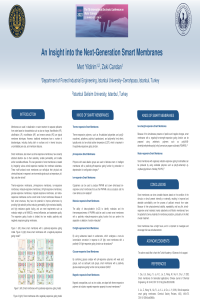
Membranes are used in desalination or water treatment to separate pollutants from water based on characteristics such as size or charge. Nanofiltration (NF), ultrafiltration (UF), microfiltration (MF), and reverse osmosis (RO) are typical membrane techniques. However, traditional membranes have a number of disadvantages, including fouling both on surfaces and in internal structure, uncontrollable pore size, and membrane features. Smart membranes, also known as stimuli-responsive membranes, have recently attracted attention due to their selectivity, tunable permeability, and tunable and/or reversible attributes. This new generation of smart membranes is created by integrating various stimuli-responsive materials into membrane substrates. These multi-functional smart membranes can self-adjust their physical and chemical features in response to environmental signals such as temperature, pH, light, and other stimuli. Thermo-responsive membranes, pH-responsive membranes, ion-responsive membranes, molecule-responsive membranes, UV-light-responsive membranes, glucose-responsive membranes, magnetic-responsive membranes, and redox-responsive membranes are the current kinds of smart membranes. Because of their smart structures, they have the potential to improve performance by providing high selectivity without reducing permeability, high mechanical stability, and high resistance against fouling, and can meet requirements such as molecular weight cut-off (MWCO), removal efficiencies, and wastewater quality. Smart membranes can show tuneable features based on the condition of the stimulus or stimuli present internally or externally, resulting in improved and desirable controllability over the process of pollutant removal from water. Because of their physicochemical stability, repeatability, and long life, stimuli-responsive smart materials (mainly adsorbents and filtration membranes) have the potential to be key materials for membrane production, particularly in the field of water treatment. Smart membranes have a bright future, and it is important to investigate and encourage their use and advancement. This review provides a comprehensive overview of smart membranes.
Keywords
Membranes
Smart materials
Smart membranes
Stimuli-responsive membranes
Water treatment
Manuscript
sciforum-068971.pdf
Poster
068971_Poster Presentation.pdf
Climate Change Impacts on Monsoon Flood situation in Pakistan
Vulnerability of small rivers coastal part due to floods and climate change: the case study of Lesvos West - North Coast