Event submissions
Published
This submission belongs to the session S4. Medicinally Active Plants and Phytochemicals of the event The 2nd International Electronic Conference on Biomedicines
Published date
21 Apr, 2023
Academic Editor
'%3e%3cpath%20d='M12.6657%2010.9104C12.4185%2010.325%2012.0599%209.79327%2011.6097%209.34482C11.1609%208.89508%2010.6293%208.5365%2010.0442%208.28888C10.0389%208.28626%2010.0337%208.28495%2010.0285%208.28233C10.8446%207.69279%2011.3752%206.73249%2011.3752%205.64904C11.3752%203.8542%209.92103%202.39999%208.1262%202.39999C6.33136%202.39999%204.87715%203.8542%204.87715%205.64904C4.87715%206.73249%205.40774%207.69279%206.22393%208.28364C6.21869%208.28626%206.21345%208.28757%206.20821%208.29019C5.62129%208.5378%205.09463%208.89284%204.64265%209.34613C4.1929%209.79493%203.83432%2010.3266%203.58671%2010.9117C3.34345%2011.4845%203.21226%2012.0987%203.20023%2012.7209C3.19988%2012.7349%203.20233%2012.7488%203.20744%2012.7619C3.21255%2012.7749%203.22022%2012.7867%203.22998%2012.7968C3.23975%2012.8068%203.25142%2012.8147%203.26431%2012.8202C3.2772%2012.8256%203.29105%2012.8284%203.30504%2012.8284H4.09109C4.14874%2012.8284%204.19459%2012.7825%204.1959%2012.7262C4.2221%2011.7148%204.62823%2010.7676%205.34617%2010.0497C6.08899%209.30683%207.0755%208.89808%208.1262%208.89808C9.17689%208.89808%2010.1634%209.30683%2010.9062%2010.0497C11.6242%2010.7676%2012.0303%2011.7148%2012.0565%2012.7262C12.0578%2012.7838%2012.1037%2012.8284%2012.1613%2012.8284H12.9474C12.9613%2012.8284%2012.9752%2012.8256%2012.9881%2012.8202C13.001%2012.8147%2013.0126%2012.8068%2013.0224%2012.7968C13.0322%2012.7867%2013.0398%2012.7749%2013.0449%2012.7619C13.0501%2012.7488%2013.0525%2012.7349%2013.0522%2012.7209C13.0391%2012.0947%2012.9094%2011.4855%2012.6657%2010.9104ZM8.1262%207.9024C7.52486%207.9024%206.9589%207.6679%206.53312%207.24211C6.10733%206.81633%205.87283%206.25037%205.87283%205.64904C5.87283%205.0477%206.10733%204.48174%206.53312%204.05596C6.9589%203.63018%207.52486%203.39567%208.1262%203.39567C8.72753%203.39567%209.29349%203.63018%209.71927%204.05596C10.1451%204.48174%2010.3796%205.0477%2010.3796%205.64904C10.3796%206.25037%2010.1451%206.81633%209.71927%207.24211C9.29349%207.6679%208.72753%207.9024%208.1262%207.9024Z'%20fill='%235D1EE1'/%3e%3c/g%3e%3c/svg%3e) Shaker Mousa
Shaker MousaCitation
Francisco José Vidal-Sánchez, Silvia Navarro-Orcajada, Irene Conesa, Adrián Matencio, Francisco García-Carmona, José Manuel López-Nicolás, Stilbenes: a review of their physicochemical properties, biological activities, molecular encapsulation and structural modifications, in Proceedings of The 2nd International Electronic Conference on Biomedicines, 1 March–31 March 2023, MDPI: Basel, Switzerland
Share
Email
Facebook
Twitter
LinkedIn
Stilbenes: a review of their physicochemical properties, biological activities, molecular encapsulation and structural modifications
'%3e%3cpath%20d='M12.6647%2010.9104C12.4176%2010.325%2012.0589%209.7933%2011.6088%209.34485C11.16%208.89511%2010.6283%208.53653%2010.0432%208.28891C10.038%208.28629%2010.0327%208.28498%2010.0275%208.28236C10.8437%207.69282%2011.3743%206.73252%2011.3743%205.64907C11.3743%203.85423%209.92005%202.40002%208.12522%202.40002C6.33038%202.40002%204.87618%203.85423%204.87618%205.64907C4.87618%206.73252%205.40677%207.69282%206.22296%208.28367C6.21772%208.28629%206.21248%208.2876%206.20724%208.29022C5.62031%208.53783%205.09365%208.89287%204.64167%209.34616C4.19192%209.79496%203.83334%2010.3266%203.58573%2010.9117C3.34247%2011.4846%203.21128%2012.0987%203.19925%2012.721C3.1989%2012.735%203.20135%2012.7489%203.20646%2012.7619C3.21157%2012.7749%203.21924%2012.7868%203.22901%2012.7968C3.23877%2012.8068%203.25045%2012.8148%203.26334%2012.8202C3.27623%2012.8256%203.29007%2012.8284%203.30406%2012.8284H4.09012C4.14776%2012.8284%204.19362%2012.7825%204.19493%2012.7262C4.22113%2011.7148%204.62726%2010.7676%205.34519%2010.0497C6.08802%209.30686%207.07452%208.89811%208.12522%208.89811C9.17592%208.89811%2010.1624%209.30686%2010.9052%2010.0497C11.6232%2010.7676%2012.0293%2011.7148%2012.0555%2012.7262C12.0568%2012.7839%2012.1027%2012.8284%2012.1603%2012.8284H12.9464C12.9604%2012.8284%2012.9742%2012.8256%2012.9871%2012.8202C13%2012.8148%2013.0117%2012.8068%2013.0214%2012.7968C13.0312%2012.7868%2013.0389%2012.7749%2013.044%2012.7619C13.0491%2012.7489%2013.0515%2012.735%2013.0512%2012.721C13.0381%2012.0947%2012.9084%2011.4856%2012.6647%2010.9104ZM8.12522%207.90243C7.52388%207.90243%206.95792%207.66793%206.53214%207.24215C6.10636%206.81636%205.87185%206.2504%205.87185%205.64907C5.87185%205.04773%206.10636%204.48177%206.53214%204.05599C6.95792%203.63021%207.52388%203.3957%208.12522%203.3957C8.72655%203.3957%209.29252%203.63021%209.7183%204.05599C10.1441%204.48177%2010.3786%205.04773%2010.3786%205.64907C10.3786%206.2504%2010.1441%206.81636%209.7183%207.24215C9.29252%207.66793%208.72655%207.90243%208.12522%207.90243Z'%20fill='%235D1EE1'/%3e%3c/g%3e%3c/svg%3e)
Francisco José Vidal-Sánchez 1
Silvia Navarro-Orcajada 1
Irene Conesa 1

Adrián Matencio 2
Francisco García-Carmona 1

José Manuel López-Nicolás 1
1. Departamento de Bioquímica y Biología Molecular-A, Facultad de Biología, Universidad de Murcia - Regional Campus of International Excellence “Campus Mare Nostrum”, E-30100 Murcia, Spain
2. Dipartimento Di Chimica, Università di Torino, via P. Giuria 7, 10125 Torino, Italy
Abstract
Stilbenes are secondary metabolites produced by some plant species like grapes, peanuts or mulberries as a defence mechanism against biotic and abiotic stress conditions (fungal infections, UV radiation, etc.). These compounds are produced through the shikimic acid pathway and they share the 1,2-diphenylethylene structure with different substituents. These substituents are responsible for the vast variety of stilbenes that we know (resveratrol, piceatannol, pterostilbene, gnetol, pinosylvin, piceid, etc.), as well as responsible of their different physicochemical properties (solubility, polarity, stability, fluorescence and spectrophotometric features, among others) and their different biological activities (anticancer, antifungal, antioxidant, cardioprotective, antiobesity, etc.). Resveratrol is the most studied stilbene, but recently there is a growing interest for other stilbenes (both natural and synthetic) with better properties due to their structure.
However, these beneficial properties that stilbenes have are accompanied by some pharmacokinetic and physicochemical drawbacks that have to be solved to use them in cosmetic, food and pharmaceutical industries. Among these problems, the most important is the low water solubility of stilbenes (they are highly hydrophobic) and their fast degradation because of pH, temperature, oxidation or radiation. Moreover, the good bioactive results showed in in vitro studies do not correspond with those seen in the in vivo ones, probably because of the low bioavailability of stilbenes and their fast metabolization. To overcome these issues, 2 possible solutions have been proposed: the molecular encapsulation of stilbenes in cyclodextrins and the structural modification of native stilbenes.
The molecular encapsulation of stilbenes can be performed with liposomes, cyclodextrins or nanosponges, among other encapsulating agents. All of them have hydrophobic regions where stilbenes can be included, enhancing their water solubility and protecting them from degradation. On the other hand, the stilbene derivatization with different functional groups (hydroxyl, methoxyl, glycosyl, etc.) frequently improves the physicochemical properties and/or biological activities of native stilbenes.
Keywords
Stilbenes
Encapsulation
Cyclodextrins
Antioxidant
Resveratrol
Manuscript
msf-Abstract Fran MDPI 2023-done.pdf
Poster
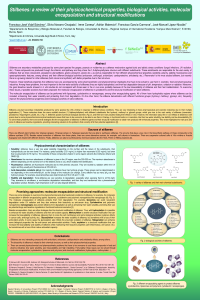
Review poster MDPI.pdf
Effect of cyclodextrins on the ORAC method for measuring the bioactivity of phytochemicals
Study of the antioxidant activity, solubility, stability and cyclodextrin complexation of gnetol.