Event submissions
Published

This submission belongs to the session S1. Environmental and Green Processes of the event The 2nd International Electronic Conference on Processes
Published date
17 May, 2023
Academic Editor
'%3e%3cpath%20d='M12.6657%2010.9104C12.4185%2010.325%2012.0599%209.79327%2011.6097%209.34482C11.1609%208.89508%2010.6293%208.5365%2010.0442%208.28888C10.0389%208.28626%2010.0337%208.28495%2010.0285%208.28233C10.8446%207.69279%2011.3752%206.73249%2011.3752%205.64904C11.3752%203.8542%209.92103%202.39999%208.1262%202.39999C6.33136%202.39999%204.87715%203.8542%204.87715%205.64904C4.87715%206.73249%205.40774%207.69279%206.22393%208.28364C6.21869%208.28626%206.21345%208.28757%206.20821%208.29019C5.62129%208.5378%205.09463%208.89284%204.64265%209.34613C4.1929%209.79493%203.83432%2010.3266%203.58671%2010.9117C3.34345%2011.4845%203.21226%2012.0987%203.20023%2012.7209C3.19988%2012.7349%203.20233%2012.7488%203.20744%2012.7619C3.21255%2012.7749%203.22022%2012.7867%203.22998%2012.7968C3.23975%2012.8068%203.25142%2012.8147%203.26431%2012.8202C3.2772%2012.8256%203.29105%2012.8284%203.30504%2012.8284H4.09109C4.14874%2012.8284%204.19459%2012.7825%204.1959%2012.7262C4.2221%2011.7148%204.62823%2010.7676%205.34617%2010.0497C6.08899%209.30683%207.0755%208.89808%208.1262%208.89808C9.17689%208.89808%2010.1634%209.30683%2010.9062%2010.0497C11.6242%2010.7676%2012.0303%2011.7148%2012.0565%2012.7262C12.0578%2012.7838%2012.1037%2012.8284%2012.1613%2012.8284H12.9474C12.9613%2012.8284%2012.9752%2012.8256%2012.9881%2012.8202C13.001%2012.8147%2013.0126%2012.8068%2013.0224%2012.7968C13.0322%2012.7867%2013.0398%2012.7749%2013.0449%2012.7619C13.0501%2012.7488%2013.0525%2012.7349%2013.0522%2012.7209C13.0391%2012.0947%2012.9094%2011.4855%2012.6657%2010.9104ZM8.1262%207.9024C7.52486%207.9024%206.9589%207.6679%206.53312%207.24211C6.10733%206.81633%205.87283%206.25037%205.87283%205.64904C5.87283%205.0477%206.10733%204.48174%206.53312%204.05596C6.9589%203.63018%207.52486%203.39567%208.1262%203.39567C8.72753%203.39567%209.29349%203.63018%209.71927%204.05596C10.1451%204.48174%2010.3796%205.0477%2010.3796%205.64904C10.3796%206.25037%2010.1451%206.81633%209.71927%207.24211C9.29349%207.6679%208.72753%207.9024%208.1262%207.9024Z'%20fill='%235D1EE1'/%3e%3c/g%3e%3c/svg%3e) Bipro Dhar
Bipro DharCitation
P. Barciela, A. Perez-Vázquez, M. Carpena, S. Seyyedi-Mansour, P. Donn, M. Fraga-Corral, Paz Otero, Jianbo Xiao, J. Simal-Gandara, M.A. Prieto, L. Cassani, Steam explosion pretreatment of sugarcane bagasse for bioethanol production, in Proceedings of The 2nd International Electronic Conference on Processes, 17 May–31 May 2023, MDPI: Basel, Switzerland, doi: 10.3390/ECP2023-14673
Share
Email
Facebook
Twitter
LinkedIn
Steam explosion pretreatment of sugarcane bagasse for bioethanol production

P. Barciela 1
'%3e%3cpath%20d='M12.6647%2010.9104C12.4176%2010.325%2012.0589%209.7933%2011.6088%209.34485C11.16%208.89511%2010.6283%208.53653%2010.0432%208.28891C10.038%208.28629%2010.0327%208.28498%2010.0275%208.28236C10.8437%207.69282%2011.3743%206.73252%2011.3743%205.64907C11.3743%203.85423%209.92005%202.40002%208.12522%202.40002C6.33038%202.40002%204.87618%203.85423%204.87618%205.64907C4.87618%206.73252%205.40677%207.69282%206.22296%208.28367C6.21772%208.28629%206.21248%208.2876%206.20724%208.29022C5.62031%208.53783%205.09365%208.89287%204.64167%209.34616C4.19192%209.79496%203.83334%2010.3266%203.58573%2010.9117C3.34247%2011.4846%203.21128%2012.0987%203.19925%2012.721C3.1989%2012.735%203.20135%2012.7489%203.20646%2012.7619C3.21157%2012.7749%203.21924%2012.7868%203.22901%2012.7968C3.23877%2012.8068%203.25045%2012.8148%203.26334%2012.8202C3.27623%2012.8256%203.29007%2012.8284%203.30406%2012.8284H4.09012C4.14776%2012.8284%204.19362%2012.7825%204.19493%2012.7262C4.22113%2011.7148%204.62726%2010.7676%205.34519%2010.0497C6.08802%209.30686%207.07452%208.89811%208.12522%208.89811C9.17592%208.89811%2010.1624%209.30686%2010.9052%2010.0497C11.6232%2010.7676%2012.0293%2011.7148%2012.0555%2012.7262C12.0568%2012.7839%2012.1027%2012.8284%2012.1603%2012.8284H12.9464C12.9604%2012.8284%2012.9742%2012.8256%2012.9871%2012.8202C13%2012.8148%2013.0117%2012.8068%2013.0214%2012.7968C13.0312%2012.7868%2013.0389%2012.7749%2013.044%2012.7619C13.0491%2012.7489%2013.0515%2012.735%2013.0512%2012.721C13.0381%2012.0947%2012.9084%2011.4856%2012.6647%2010.9104ZM8.12522%207.90243C7.52388%207.90243%206.95792%207.66793%206.53214%207.24215C6.10636%206.81636%205.87185%206.2504%205.87185%205.64907C5.87185%205.04773%206.10636%204.48177%206.53214%204.05599C6.95792%203.63021%207.52388%203.3957%208.12522%203.3957C8.72655%203.3957%209.29252%203.63021%209.7183%204.05599C10.1441%204.48177%2010.3786%205.04773%2010.3786%205.64907C10.3786%206.2504%2010.1441%206.81636%209.7183%207.24215C9.29252%207.66793%208.72655%207.90243%208.12522%207.90243Z'%20fill='%235D1EE1'/%3e%3c/g%3e%3c/svg%3e)
A. Perez-Vázquez 1

M. Carpena 1
S. Seyyedi-Mansour 1
P. Donn 1
M. Fraga-Corral 1,2

Paz Otero 1,2
Jianbo Xiao 1,3

J. Simal-Gandara 1

M.A. Prieto 1,2

L. Cassani 1,2,4
1. Universidade de Vigo, Nutrition and Bromatology Group, Department of Analytical Chemistry and Food Science, Faculty of Science, E32004 Ourense, Spain
2. Centro de Investigação de Montanha (CIMO), Instituto Politécnico de Bragança, Campus de Santa Apolónia, 5300-253 Bragança, Portugal
3. International Research Center for Food Nutrition and Safety, Jiangsu University, Zhenjiang 212013, China
4. Instituto de Investigaciones en Ciencia y Tecnología de Materiales (INTEMA, CCT-CONICET), Colón 10850, Mar del Plata (7600), Argentina
Abstract
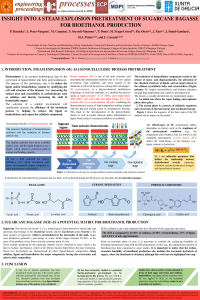
Lignocellulosic biomass is a powerful material for producing sustainable biofuels because it converts into second-generation clean energy capable of coping with the depletion of fossil reserves and rising energy demands. Pretreatment is required in the conversion process to overcome the recalcitrance of the lignocellulosic biomass, accelerate its disintegration into cellulose, hemicellulose, and lignin and obtain an optimal yield of fermentable sugars in the enzymatic hydrolysis. In addition, it should be industrially scalable and capable of improving fuel properties and feedstock processability. Despite its conventionality, steam explosion technology has stood out due to its results and advantages such as wide applicability, high efficiency in the short term, and lack of contamination. This gentle and quick pretreatment combines high-temperature autohydrolysis and structural alteration via explosive decompression. So, steam at high pressure (1-3.5 MPa) and temperature (180-240ºC) are pressed into the cell walls and plant tissues for a duration of seconds (30 s) to several minutes (20 min). The steam explosion method has been one of the most effective especially for the hydrolysis of cellulose from agricultural wastes due to the lower amount of acetyl groups in the composition of hemicellulose. In this aspect, sugarcane bagasse is a promising feedstock for bioethanol production due to its high cellulosic content and high availability. Thereby, by selecting sugarcane bagasse pretreated by steam explosion, it is possible to achieve yields of over 80% depending on the process conditions. The aim of this review was to show the potential application of steam explosion as a thermomechanical pretreatment applied in sugarcane bagasse for bioethanol production considering its high recovery profile and its economic feasibility in a large-scale process. The stages, equipment, variables involved, by-products generated, and advantages and disadvantages of the steam explosion were all considered in this study. Finally, the technique's efficacy with various feedstocks was evaluated, resulting in a novel approach to steam explosion pretreatment.
Keywords
steam explosion pretreatment
sugarcane bagasse
lignocellulosic biomass
bioethanol.
Manuscript
ECP2023_Proceedings_Paula_Sugarcane bagasse_revised.pdf
Poster
ECP2023_Poster_Paula_Ana_Sugarcane bagasse.pdf
Linear Quadratic Gaussian Design in Grid-Connected and Islanded Microgrid System for Stability Enrichment
Supercritical fluid extraction as a potential extraction technique for the food industry