Event submissions
Published
This submission belongs to the session S3. Use of toxins as tools for research, drug discovery, and therapeutics of the event The 2nd International Electronic Conference on Toxins
Published date
14 Jul, 2023
Academic Editor
'%3e%3cpath%20d='M12.6657%2010.9104C12.4185%2010.325%2012.0599%209.79327%2011.6097%209.34482C11.1609%208.89508%2010.6293%208.5365%2010.0442%208.28888C10.0389%208.28626%2010.0337%208.28495%2010.0285%208.28233C10.8446%207.69279%2011.3752%206.73249%2011.3752%205.64904C11.3752%203.8542%209.92103%202.39999%208.1262%202.39999C6.33136%202.39999%204.87715%203.8542%204.87715%205.64904C4.87715%206.73249%205.40774%207.69279%206.22393%208.28364C6.21869%208.28626%206.21345%208.28757%206.20821%208.29019C5.62129%208.5378%205.09463%208.89284%204.64265%209.34613C4.1929%209.79493%203.83432%2010.3266%203.58671%2010.9117C3.34345%2011.4845%203.21226%2012.0987%203.20023%2012.7209C3.19988%2012.7349%203.20233%2012.7488%203.20744%2012.7619C3.21255%2012.7749%203.22022%2012.7867%203.22998%2012.7968C3.23975%2012.8068%203.25142%2012.8147%203.26431%2012.8202C3.2772%2012.8256%203.29105%2012.8284%203.30504%2012.8284H4.09109C4.14874%2012.8284%204.19459%2012.7825%204.1959%2012.7262C4.2221%2011.7148%204.62823%2010.7676%205.34617%2010.0497C6.08899%209.30683%207.0755%208.89808%208.1262%208.89808C9.17689%208.89808%2010.1634%209.30683%2010.9062%2010.0497C11.6242%2010.7676%2012.0303%2011.7148%2012.0565%2012.7262C12.0578%2012.7838%2012.1037%2012.8284%2012.1613%2012.8284H12.9474C12.9613%2012.8284%2012.9752%2012.8256%2012.9881%2012.8202C13.001%2012.8147%2013.0126%2012.8068%2013.0224%2012.7968C13.0322%2012.7867%2013.0398%2012.7749%2013.0449%2012.7619C13.0501%2012.7488%2013.0525%2012.7349%2013.0522%2012.7209C13.0391%2012.0947%2012.9094%2011.4855%2012.6657%2010.9104ZM8.1262%207.9024C7.52486%207.9024%206.9589%207.6679%206.53312%207.24211C6.10733%206.81633%205.87283%206.25037%205.87283%205.64904C5.87283%205.0477%206.10733%204.48174%206.53312%204.05596C6.9589%203.63018%207.52486%203.39567%208.1262%203.39567C8.72753%203.39567%209.29349%203.63018%209.71927%204.05596C10.1451%204.48174%2010.3796%205.0477%2010.3796%205.64904C10.3796%206.25037%2010.1451%206.81633%209.71927%207.24211C9.29349%207.6679%208.72753%207.9024%208.1262%207.9024Z'%20fill='%235D1EE1'/%3e%3c/g%3e%3c/svg%3e) R. Manjunatha Kini
R. Manjunatha KiniCitation
Gregorio J. Mac Callum, Ignacio Smith, Joaquín M. Birembaum, Maria S. Rodríguez, Alejandra M. Targovnik, Federico J. Wolman, José Christian Dokmetjian, Osvaldo Cascone, Adolfo Rafael de Roodt, Matias Fingermann, Maria Victoria Miranda, Insect larvae as Biofactories to produce sphingomyelinase D for Loxosceles antivenom development, in Proceedings of The 2nd International Electronic Conference on Toxins, 14 July–28 July 2023, MDPI: Basel, Switzerland
Share
Email
Facebook
Twitter
LinkedIn
Insect larvae as Biofactories to produce sphingomyelinase D for Loxosceles antivenom development
'%3e%3cpath%20d='M12.6647%2010.9104C12.4176%2010.325%2012.0589%209.7933%2011.6088%209.34485C11.16%208.89511%2010.6283%208.53653%2010.0432%208.28891C10.038%208.28629%2010.0327%208.28498%2010.0275%208.28236C10.8437%207.69282%2011.3743%206.73252%2011.3743%205.64907C11.3743%203.85423%209.92005%202.40002%208.12522%202.40002C6.33038%202.40002%204.87618%203.85423%204.87618%205.64907C4.87618%206.73252%205.40677%207.69282%206.22296%208.28367C6.21772%208.28629%206.21248%208.2876%206.20724%208.29022C5.62031%208.53783%205.09365%208.89287%204.64167%209.34616C4.19192%209.79496%203.83334%2010.3266%203.58573%2010.9117C3.34247%2011.4846%203.21128%2012.0987%203.19925%2012.721C3.1989%2012.735%203.20135%2012.7489%203.20646%2012.7619C3.21157%2012.7749%203.21924%2012.7868%203.22901%2012.7968C3.23877%2012.8068%203.25045%2012.8148%203.26334%2012.8202C3.27623%2012.8256%203.29007%2012.8284%203.30406%2012.8284H4.09012C4.14776%2012.8284%204.19362%2012.7825%204.19493%2012.7262C4.22113%2011.7148%204.62726%2010.7676%205.34519%2010.0497C6.08802%209.30686%207.07452%208.89811%208.12522%208.89811C9.17592%208.89811%2010.1624%209.30686%2010.9052%2010.0497C11.6232%2010.7676%2012.0293%2011.7148%2012.0555%2012.7262C12.0568%2012.7839%2012.1027%2012.8284%2012.1603%2012.8284H12.9464C12.9604%2012.8284%2012.9742%2012.8256%2012.9871%2012.8202C13%2012.8148%2013.0117%2012.8068%2013.0214%2012.7968C13.0312%2012.7868%2013.0389%2012.7749%2013.044%2012.7619C13.0491%2012.7489%2013.0515%2012.735%2013.0512%2012.721C13.0381%2012.0947%2012.9084%2011.4856%2012.6647%2010.9104ZM8.12522%207.90243C7.52388%207.90243%206.95792%207.66793%206.53214%207.24215C6.10636%206.81636%205.87185%206.2504%205.87185%205.64907C5.87185%205.04773%206.10636%204.48177%206.53214%204.05599C6.95792%203.63021%207.52388%203.3957%208.12522%203.3957C8.72655%203.3957%209.29252%203.63021%209.7183%204.05599C10.1441%204.48177%2010.3786%205.04773%2010.3786%205.64907C10.3786%206.2504%2010.1441%206.81636%209.7183%207.24215C9.29252%207.66793%208.72655%207.90243%208.12522%207.90243Z'%20fill='%235D1EE1'/%3e%3c/g%3e%3c/svg%3e)
Gregorio J. Mac Callum 1
Ignacio Smith 2
Joaquín M. Birembaum 1
Maria S. Rodríguez 1
Alejandra M. Targovnik 1
Federico J. Wolman 1
José Christian Dokmetjian 3
Osvaldo Cascone 1

Adolfo Rafael de Roodt 4,5
Matias Fingermann 6
Maria Victoria Miranda 1
1. Instituto de Nanobiotecnología, Facultad de Farmacia y Bioquímica, Universidad de Buenos Aires.
2. 1Instituto de Nanobiotecnología, Facultad de Farmacia y Bioquímica, Universidad de Buenos Aires.
3. Director, Instituto Nacional de Producción de Biológicos, ANLIS “Dr. Carlos G. Malbrán”, Ministerio de Salud y Desarrollo Social, Argentina.
4. Área Investigación y Desarrollo – Venenos, Instituto Nacional de Producción de Biológicos, ANLIS “Dr. Carlos G. Malbrán”, Ministerio de Salud y Desarrollo Social, Argentina.
5. Primera Cátedra de Toxicología, Facultad de Medicina, Universidad de Buenos Aires, Argentina.
6. Área Investigación y Desarrollo, Instituto Nacional de Producción de Biológicos, ANLIS “Dr. Carlos G. Malbrán”, Ministerio de Salud y Desarrollo Social, Argentina.
Abstract
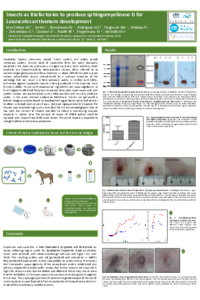
Loxosceles species, commonly named “violin” spiders, are widely spread venomous spiders. Clinical cases of Loxosceles bites are more commonly reported in the Americas, particularly in Argentina, Brazil, Chile and Perú. Most accidents are characterized by dermonecrotic lesions, often referred to as necrotic or gangrenous arachnidism. However, in about 10% of the cases a more serious presentation occurs, characterized by a systemic evolution of the pathology that can result in a fatal outcome, mostly in children and elders. Antivenom against Loxosceles species is being produced in the Americas since the early 1960s. Its Active Pharmaceutical Ingredients are immunoglobulins or their fragments obtained from equine plasma of animals hyperimmunized with spiders’ venom. Venom extraction, a very laborious task with very low yields per spider, is the most relevant production bottleneck. Herein we optimized a biotechnological process based on Spodoptera frugiperda larvae as biofactories to obtain a recombinant version from L. laeta sphingomyelinase D (rSmase). The rSmase was recovered high purity level (94.5%) in one-chromatographic step at low cost. Our version of rSmase was able to induce a neutralizing humoral response in horses’ sera. The amount of venom of 17000 spiders could be replaced with rSmase from 1600 insect larvae. The use of rSmase is expected to change traditional antivenom production.
Keywords
Loxosceles
recombinant: sphingomyielinase
larvae
Manuscript
sciforum-073563 .pdf
Poster
Póster PDF.pdf
Ciguatoxins and methods of detection
Production of Micrurus snake venom in Argentina. Preliminary report.