Event submissions
Published
This submission belongs to the session S1. Novel plant, animal, insect and microbial toxins of the event The 2nd International Electronic Conference on Toxins
Published date
14 Jul, 2023
Academic Editor
'%3e%3cpath%20d='M12.6657%2010.9104C12.4185%2010.325%2012.0599%209.79327%2011.6097%209.34482C11.1609%208.89508%2010.6293%208.5365%2010.0442%208.28888C10.0389%208.28626%2010.0337%208.28495%2010.0285%208.28233C10.8446%207.69279%2011.3752%206.73249%2011.3752%205.64904C11.3752%203.8542%209.92103%202.39999%208.1262%202.39999C6.33136%202.39999%204.87715%203.8542%204.87715%205.64904C4.87715%206.73249%205.40774%207.69279%206.22393%208.28364C6.21869%208.28626%206.21345%208.28757%206.20821%208.29019C5.62129%208.5378%205.09463%208.89284%204.64265%209.34613C4.1929%209.79493%203.83432%2010.3266%203.58671%2010.9117C3.34345%2011.4845%203.21226%2012.0987%203.20023%2012.7209C3.19988%2012.7349%203.20233%2012.7488%203.20744%2012.7619C3.21255%2012.7749%203.22022%2012.7867%203.22998%2012.7968C3.23975%2012.8068%203.25142%2012.8147%203.26431%2012.8202C3.2772%2012.8256%203.29105%2012.8284%203.30504%2012.8284H4.09109C4.14874%2012.8284%204.19459%2012.7825%204.1959%2012.7262C4.2221%2011.7148%204.62823%2010.7676%205.34617%2010.0497C6.08899%209.30683%207.0755%208.89808%208.1262%208.89808C9.17689%208.89808%2010.1634%209.30683%2010.9062%2010.0497C11.6242%2010.7676%2012.0303%2011.7148%2012.0565%2012.7262C12.0578%2012.7838%2012.1037%2012.8284%2012.1613%2012.8284H12.9474C12.9613%2012.8284%2012.9752%2012.8256%2012.9881%2012.8202C13.001%2012.8147%2013.0126%2012.8068%2013.0224%2012.7968C13.0322%2012.7867%2013.0398%2012.7749%2013.0449%2012.7619C13.0501%2012.7488%2013.0525%2012.7349%2013.0522%2012.7209C13.0391%2012.0947%2012.9094%2011.4855%2012.6657%2010.9104ZM8.1262%207.9024C7.52486%207.9024%206.9589%207.6679%206.53312%207.24211C6.10733%206.81633%205.87283%206.25037%205.87283%205.64904C5.87283%205.0477%206.10733%204.48174%206.53312%204.05596C6.9589%203.63018%207.52486%203.39567%208.1262%203.39567C8.72753%203.39567%209.29349%203.63018%209.71927%204.05596C10.1451%204.48174%2010.3796%205.0477%2010.3796%205.64904C10.3796%206.25037%2010.1451%206.81633%209.71927%207.24211C9.29349%207.6679%208.72753%207.9024%208.1262%207.9024Z'%20fill='%235D1EE1'/%3e%3c/g%3e%3c/svg%3e) Roxy Liu
Roxy LiuCitation
Diego Herman Sauka, Augusto Salas, José Niz, Melisa Pérez, Tadeo Fernández Göbel, Federico Ocampo, Cecilia Peralta, Eleodoro Eduardo Del Valle, Leopoldo Palma Dovis, A novel Bacillus toyonensis Biovar Thuringiensis strain showing strong nematicidal activity., in Proceedings of The 2nd International Electronic Conference on Toxins, 14 July–28 July 2023, MDPI: Basel, Switzerland
Share
Email
Facebook
Twitter
LinkedIn
A novel Bacillus toyonensis Biovar Thuringiensis strain showing strong nematicidal activity.

Diego Herman Sauka 1

Augusto Salas 1
'%3e%3cpath%20d='M12.6647%2010.9104C12.4176%2010.325%2012.0589%209.7933%2011.6088%209.34485C11.16%208.89511%2010.6283%208.53653%2010.0432%208.28891C10.038%208.28629%2010.0327%208.28498%2010.0275%208.28236C10.8437%207.69282%2011.3743%206.73252%2011.3743%205.64907C11.3743%203.85423%209.92005%202.40002%208.12522%202.40002C6.33038%202.40002%204.87618%203.85423%204.87618%205.64907C4.87618%206.73252%205.40677%207.69282%206.22296%208.28367C6.21772%208.28629%206.21248%208.2876%206.20724%208.29022C5.62031%208.53783%205.09365%208.89287%204.64167%209.34616C4.19192%209.79496%203.83334%2010.3266%203.58573%2010.9117C3.34247%2011.4846%203.21128%2012.0987%203.19925%2012.721C3.1989%2012.735%203.20135%2012.7489%203.20646%2012.7619C3.21157%2012.7749%203.21924%2012.7868%203.22901%2012.7968C3.23877%2012.8068%203.25045%2012.8148%203.26334%2012.8202C3.27623%2012.8256%203.29007%2012.8284%203.30406%2012.8284H4.09012C4.14776%2012.8284%204.19362%2012.7825%204.19493%2012.7262C4.22113%2011.7148%204.62726%2010.7676%205.34519%2010.0497C6.08802%209.30686%207.07452%208.89811%208.12522%208.89811C9.17592%208.89811%2010.1624%209.30686%2010.9052%2010.0497C11.6232%2010.7676%2012.0293%2011.7148%2012.0555%2012.7262C12.0568%2012.7839%2012.1027%2012.8284%2012.1603%2012.8284H12.9464C12.9604%2012.8284%2012.9742%2012.8256%2012.9871%2012.8202C13%2012.8148%2013.0117%2012.8068%2013.0214%2012.7968C13.0312%2012.7868%2013.0389%2012.7749%2013.044%2012.7619C13.0491%2012.7489%2013.0515%2012.735%2013.0512%2012.721C13.0381%2012.0947%2012.9084%2011.4856%2012.6647%2010.9104ZM8.12522%207.90243C7.52388%207.90243%206.95792%207.66793%206.53214%207.24215C6.10636%206.81636%205.87185%206.2504%205.87185%205.64907C5.87185%205.04773%206.10636%204.48177%206.53214%204.05599C6.95792%203.63021%207.52388%203.3957%208.12522%203.3957C8.72655%203.3957%209.29252%203.63021%209.7183%204.05599C10.1441%204.48177%2010.3786%205.04773%2010.3786%205.64907C10.3786%206.2504%2010.1441%206.81636%209.7183%207.24215C9.29252%207.66793%208.72655%207.90243%208.12522%207.90243Z'%20fill='%235D1EE1'/%3e%3c/g%3e%3c/svg%3e)
José Niz 1
Melisa Pérez 1
Tadeo Fernández Göbel 2
Federico Ocampo 2
Cecilia Peralta 3,4
Eleodoro Eduardo Del Valle 5

Leopoldo Palma Dovis 3,4
1. Instituto Nacional de Tecnología Agropecuaria (INTA), Instituto de Microbiología y Zoología Agrícola, 1636 Hurlingham, Buenos Aires, Argentina.
2. Elytron Biotech, C1001 Buenos Aires, Argentina.
3. Laboratorio de Control Biotecnológico de Plagas, Instituto BIOTECMED, Departamento de Genética, Universitat de València, 46100-Burjassot, València, Spain.
4. Consejo Nacional de Investigaciones Científicas y Técnicas (CONICET), Argentina.
5. ICiagro Litoral, Universidad Nacional del Litoral, CONICET, Facultad de Ciencias Agrarias, Kreder 2805, Esperanza, Santa Fe, Argentina.
Abstract
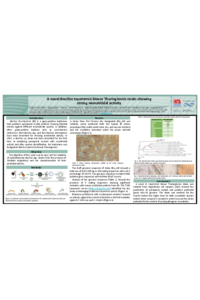
Bacillus thuringiensis (Bt) is a gram-positive bacterium that produces parasporal crystal proteins showing biocidal activity against different invertebrate species. In addition, other gram-positive bacteria such as Lysinibacillus sphaericus, Paenibacillus spp. and Brevibacillus laterosporus have been described for showing insecticidal activity. In 2022, a Bacillus toyonensis strain has been described for the first time as producing parasporal crystals with insecticidal activity and designated Bacillus toyonensis biovar Thuringiensis. In this study we report the isolation and characterization of another Bacillus toyonensis strain showing typical Bt colony morphology on nutrient agar plates and bipyramidal parasporal crystals under phase contrast microscopy. A major ca. 130 kDa protein band was revealed when the parasporal crystals were analyzed using SDS-PAGE gel electrophoresis. The strain was isolated from a soil sample obtained from Río Tercero city at the province of Córdoba, Argentina. The genome sequence was obtained and assembled into 93 contigs with a total genomic size of 6,072,356 bp and 34.9 % G+C. The genome analysis performed with the Type (Strain) Genome Server showed that this strain belongs to B. toyonensis species, and therefore was designated as Bacillus toyonensis biovar Thuringiensis strain Bto_100. Its genome sequence harbors five coding sequences showing homology with Cry7Bb1, Cry7Ga2, Cry73Aa1, Mpp2Aa4 and Xpp22Aa3 proteins. In order to determine the biocidal activity of this novel strain, bioassays were conducted with Cydia pomonella (Lepidoptera: Tortricidae), Anthonomus grandis (Coleoptera: Curculionidae), Spodoptera frugiperda (Lepidoptera: Noctuidae), Panagrellus redivivus (Nematoda: Panagrolaimidae) and Caenorhabditis elegans (Nematoda: Rhabditidae). Bioassays showed that this strain was very toxic for P. redivivus and C. elegans (100% mortality) but low toxic for C. pomonella (10% mortality) and A. grandis (14% mortality) showing no toxicity for S. frugiperda. Further studies need to be developed to determine the real biocidal potential of this novel strain.
Keywords
Bacillus toyonensis biovar Thuringiensis
insecticidal proteins
invertebrate pests
biological control
Manuscript
072666 Abstract.pdf
Poster
sciforum-072666.pdf
Environmental toxins and its risk factors contributing to the pathogenesis and prevention of diabetes mellitus.
INHIBITORY EFFECTS OF 6-O-PALMITOYL-L-ASCORBIC ACID (ASC16) ON Bothrops alternatus VENOM.