Event submissions
Published
This submission belongs to the session S2. Mechanism of action and/or pathophysiology of toxins of the event The 2nd International Electronic Conference on Toxins
Published date
14 Jul, 2023
Academic Editor
'%3e%3cpath%20d='M12.6657%2010.9104C12.4185%2010.325%2012.0599%209.79327%2011.6097%209.34482C11.1609%208.89508%2010.6293%208.5365%2010.0442%208.28888C10.0389%208.28626%2010.0337%208.28495%2010.0285%208.28233C10.8446%207.69279%2011.3752%206.73249%2011.3752%205.64904C11.3752%203.8542%209.92103%202.39999%208.1262%202.39999C6.33136%202.39999%204.87715%203.8542%204.87715%205.64904C4.87715%206.73249%205.40774%207.69279%206.22393%208.28364C6.21869%208.28626%206.21345%208.28757%206.20821%208.29019C5.62129%208.5378%205.09463%208.89284%204.64265%209.34613C4.1929%209.79493%203.83432%2010.3266%203.58671%2010.9117C3.34345%2011.4845%203.21226%2012.0987%203.20023%2012.7209C3.19988%2012.7349%203.20233%2012.7488%203.20744%2012.7619C3.21255%2012.7749%203.22022%2012.7867%203.22998%2012.7968C3.23975%2012.8068%203.25142%2012.8147%203.26431%2012.8202C3.2772%2012.8256%203.29105%2012.8284%203.30504%2012.8284H4.09109C4.14874%2012.8284%204.19459%2012.7825%204.1959%2012.7262C4.2221%2011.7148%204.62823%2010.7676%205.34617%2010.0497C6.08899%209.30683%207.0755%208.89808%208.1262%208.89808C9.17689%208.89808%2010.1634%209.30683%2010.9062%2010.0497C11.6242%2010.7676%2012.0303%2011.7148%2012.0565%2012.7262C12.0578%2012.7838%2012.1037%2012.8284%2012.1613%2012.8284H12.9474C12.9613%2012.8284%2012.9752%2012.8256%2012.9881%2012.8202C13.001%2012.8147%2013.0126%2012.8068%2013.0224%2012.7968C13.0322%2012.7867%2013.0398%2012.7749%2013.0449%2012.7619C13.0501%2012.7488%2013.0525%2012.7349%2013.0522%2012.7209C13.0391%2012.0947%2012.9094%2011.4855%2012.6657%2010.9104ZM8.1262%207.9024C7.52486%207.9024%206.9589%207.6679%206.53312%207.24211C6.10733%206.81633%205.87283%206.25037%205.87283%205.64904C5.87283%205.0477%206.10733%204.48174%206.53312%204.05596C6.9589%203.63018%207.52486%203.39567%208.1262%203.39567C8.72753%203.39567%209.29349%203.63018%209.71927%204.05596C10.1451%204.48174%2010.3796%205.0477%2010.3796%205.64904C10.3796%206.25037%2010.1451%206.81633%209.71927%207.24211C9.29349%207.6679%208.72753%207.9024%208.1262%207.9024Z'%20fill='%235D1EE1'/%3e%3c/g%3e%3c/svg%3e) Panagiota Katikou
Panagiota KatikouCitation
Sandra Raposo-Garcia, Ana M. Botana, Verónica Rey, Celia Costas, M.Carmen Louzao, Carmen Vale, Luis Botana, Cellular activity of paralytic shellfish samples extracted from Semele proficua and Senilia senilis, in Proceedings of The 2nd International Electronic Conference on Toxins, 14 July–28 July 2023, MDPI: Basel, Switzerland
Share
Email
Facebook
Twitter
LinkedIn
Cellular activity of paralytic shellfish samples extracted from Semele proficua and Senilia senilis
'%3e%3cpath%20d='M12.6647%2010.9104C12.4176%2010.325%2012.0589%209.7933%2011.6088%209.34485C11.16%208.89511%2010.6283%208.53653%2010.0432%208.28891C10.038%208.28629%2010.0327%208.28498%2010.0275%208.28236C10.8437%207.69282%2011.3743%206.73252%2011.3743%205.64907C11.3743%203.85423%209.92005%202.40002%208.12522%202.40002C6.33038%202.40002%204.87618%203.85423%204.87618%205.64907C4.87618%206.73252%205.40677%207.69282%206.22296%208.28367C6.21772%208.28629%206.21248%208.2876%206.20724%208.29022C5.62031%208.53783%205.09365%208.89287%204.64167%209.34616C4.19192%209.79496%203.83334%2010.3266%203.58573%2010.9117C3.34247%2011.4846%203.21128%2012.0987%203.19925%2012.721C3.1989%2012.735%203.20135%2012.7489%203.20646%2012.7619C3.21157%2012.7749%203.21924%2012.7868%203.22901%2012.7968C3.23877%2012.8068%203.25045%2012.8148%203.26334%2012.8202C3.27623%2012.8256%203.29007%2012.8284%203.30406%2012.8284H4.09012C4.14776%2012.8284%204.19362%2012.7825%204.19493%2012.7262C4.22113%2011.7148%204.62726%2010.7676%205.34519%2010.0497C6.08802%209.30686%207.07452%208.89811%208.12522%208.89811C9.17592%208.89811%2010.1624%209.30686%2010.9052%2010.0497C11.6232%2010.7676%2012.0293%2011.7148%2012.0555%2012.7262C12.0568%2012.7839%2012.1027%2012.8284%2012.1603%2012.8284H12.9464C12.9604%2012.8284%2012.9742%2012.8256%2012.9871%2012.8202C13%2012.8148%2013.0117%2012.8068%2013.0214%2012.7968C13.0312%2012.7868%2013.0389%2012.7749%2013.044%2012.7619C13.0491%2012.7489%2013.0515%2012.735%2013.0512%2012.721C13.0381%2012.0947%2012.9084%2011.4856%2012.6647%2010.9104ZM8.12522%207.90243C7.52388%207.90243%206.95792%207.66793%206.53214%207.24215C6.10636%206.81636%205.87185%206.2504%205.87185%205.64907C5.87185%205.04773%206.10636%204.48177%206.53214%204.05599C6.95792%203.63021%207.52388%203.3957%208.12522%203.3957C8.72655%203.3957%209.29252%203.63021%209.7183%204.05599C10.1441%204.48177%2010.3786%205.04773%2010.3786%205.64907C10.3786%206.2504%2010.1441%206.81636%209.7183%207.24215C9.29252%207.66793%208.72655%207.90243%208.12522%207.90243Z'%20fill='%235D1EE1'/%3e%3c/g%3e%3c/svg%3e)
Sandra Raposo-Garcia 1
Ana M. Botana 2
Verónica Rey 2
Celia Costas 1
M.Carmen Louzao 1
Carmen Vale 1

Luis Botana 1
1. Departamento de Farmacología, Facultad de Veterinaria, Universidad de Santiago de Compostela, Campus Universitario, 27002 Lugo, Spain
2. Departamento de Química Analítica, Facultad de Ciencias, Universidad de Santiago de Compostela, Campus Universitario, 27002 Lugo, Spain.
Abstract
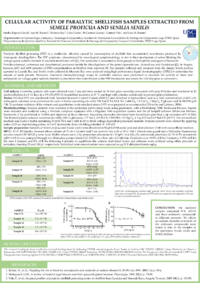
Paralytic shellfish poisoning (PSP) is the human illness associated with the consumption of contaminated seafood products with the toxins knows as saxitoxins. Saxitoxin (STX) are produced by dinoflagellates, generally by the genus Gymnodinium, Alexandrium and Pyrodinium. But between 2007 and 2008 episodes of PSPs contaminations in bivalves has occurred in Angola where there is not monitoring program for shellfish contamination with marine biotoxins. Ten samples extracted from the Semele proficua from Luanda Bay and Senilia senilis from Mussulo Bay, were analyzed by HPLC and STX, dcSTX and other four compounds that have an unusual profile different to the known hydrophilic PSP toxins were found in different amounts and combinations. These unknown compounds were not autofluorescent, and they presented much stronger response after peroxide oxidation than after periodate oxidation. Electrophysiological studies developed to elucidate their effects at cellular level lead to conclude that they have different activities, some of the isolated compounds bind to voltage-gated sodium channels and block the passage of sodium ions across the membrane, similarly to STX, thus, contributing to the STX activity while others did not show activity on sodium channels
Keywords
Saxitoxin
decarbamoylsaxitoxin
sodium channels
cerebellar neurons
high-performance liquid chromatography
Manuscript
sciforum-072411.pdf
Poster
PSP.pdf
Ubiquitous contamination with multiple mycotoxins and other fungal metabolites in dietary rations of dairy cattle in Punjab, Pakistan
Properties of Atto488-Agitoxin 2 As a Fluorescent Ligand of Kv1.3 Сhannel