Event submissions
Published

This submission belongs to the session S5. Impact of toxins on agriculture of the event The 2nd International Electronic Conference on Toxins
Published date
27 Sep, 2023
Academic Editor
'%3e%3cpath%20d='M12.6657%2010.9104C12.4185%2010.325%2012.0599%209.79327%2011.6097%209.34482C11.1609%208.89508%2010.6293%208.5365%2010.0442%208.28888C10.0389%208.28626%2010.0337%208.28495%2010.0285%208.28233C10.8446%207.69279%2011.3752%206.73249%2011.3752%205.64904C11.3752%203.8542%209.92103%202.39999%208.1262%202.39999C6.33136%202.39999%204.87715%203.8542%204.87715%205.64904C4.87715%206.73249%205.40774%207.69279%206.22393%208.28364C6.21869%208.28626%206.21345%208.28757%206.20821%208.29019C5.62129%208.5378%205.09463%208.89284%204.64265%209.34613C4.1929%209.79493%203.83432%2010.3266%203.58671%2010.9117C3.34345%2011.4845%203.21226%2012.0987%203.20023%2012.7209C3.19988%2012.7349%203.20233%2012.7488%203.20744%2012.7619C3.21255%2012.7749%203.22022%2012.7867%203.22998%2012.7968C3.23975%2012.8068%203.25142%2012.8147%203.26431%2012.8202C3.2772%2012.8256%203.29105%2012.8284%203.30504%2012.8284H4.09109C4.14874%2012.8284%204.19459%2012.7825%204.1959%2012.7262C4.2221%2011.7148%204.62823%2010.7676%205.34617%2010.0497C6.08899%209.30683%207.0755%208.89808%208.1262%208.89808C9.17689%208.89808%2010.1634%209.30683%2010.9062%2010.0497C11.6242%2010.7676%2012.0303%2011.7148%2012.0565%2012.7262C12.0578%2012.7838%2012.1037%2012.8284%2012.1613%2012.8284H12.9474C12.9613%2012.8284%2012.9752%2012.8256%2012.9881%2012.8202C13.001%2012.8147%2013.0126%2012.8068%2013.0224%2012.7968C13.0322%2012.7867%2013.0398%2012.7749%2013.0449%2012.7619C13.0501%2012.7488%2013.0525%2012.7349%2013.0522%2012.7209C13.0391%2012.0947%2012.9094%2011.4855%2012.6657%2010.9104ZM8.1262%207.9024C7.52486%207.9024%206.9589%207.6679%206.53312%207.24211C6.10733%206.81633%205.87283%206.25037%205.87283%205.64904C5.87283%205.0477%206.10733%204.48174%206.53312%204.05596C6.9589%203.63018%207.52486%203.39567%208.1262%203.39567C8.72753%203.39567%209.29349%203.63018%209.71927%204.05596C10.1451%204.48174%2010.3796%205.0477%2010.3796%205.64904C10.3796%206.25037%2010.1451%206.81633%209.71927%207.24211C9.29349%207.6679%208.72753%207.9024%208.1262%207.9024Z'%20fill='%235D1EE1'/%3e%3c/g%3e%3c/svg%3e) Marco Masi
Marco MasiCitation
Filipe Silva, Andreia Garcês, Catarina Magalhães, Isabel Pires, Diseases in ruminants associated with Pteridium aquilinum ingestion, in Proceedings of The 2nd International Electronic Conference on Toxins, 14 July–28 July 2023, MDPI: Basel, Switzerland, doi: 10.3390/IECT2023-14800
Share
Email
Facebook
Twitter
LinkedIn
Diseases in ruminants associated with Pteridium aquilinum ingestion

Filipe Silva 1

Andreia Garcês 2,3
'%3e%3cpath%20d='M12.6647%2010.9104C12.4176%2010.325%2012.0589%209.7933%2011.6088%209.34485C11.16%208.89511%2010.6283%208.53653%2010.0432%208.28891C10.038%208.28629%2010.0327%208.28498%2010.0275%208.28236C10.8437%207.69282%2011.3743%206.73252%2011.3743%205.64907C11.3743%203.85423%209.92005%202.40002%208.12522%202.40002C6.33038%202.40002%204.87618%203.85423%204.87618%205.64907C4.87618%206.73252%205.40677%207.69282%206.22296%208.28367C6.21772%208.28629%206.21248%208.2876%206.20724%208.29022C5.62031%208.53783%205.09365%208.89287%204.64167%209.34616C4.19192%209.79496%203.83334%2010.3266%203.58573%2010.9117C3.34247%2011.4846%203.21128%2012.0987%203.19925%2012.721C3.1989%2012.735%203.20135%2012.7489%203.20646%2012.7619C3.21157%2012.7749%203.21924%2012.7868%203.22901%2012.7968C3.23877%2012.8068%203.25045%2012.8148%203.26334%2012.8202C3.27623%2012.8256%203.29007%2012.8284%203.30406%2012.8284H4.09012C4.14776%2012.8284%204.19362%2012.7825%204.19493%2012.7262C4.22113%2011.7148%204.62726%2010.7676%205.34519%2010.0497C6.08802%209.30686%207.07452%208.89811%208.12522%208.89811C9.17592%208.89811%2010.1624%209.30686%2010.9052%2010.0497C11.6232%2010.7676%2012.0293%2011.7148%2012.0555%2012.7262C12.0568%2012.7839%2012.1027%2012.8284%2012.1603%2012.8284H12.9464C12.9604%2012.8284%2012.9742%2012.8256%2012.9871%2012.8202C13%2012.8148%2013.0117%2012.8068%2013.0214%2012.7968C13.0312%2012.7868%2013.0389%2012.7749%2013.044%2012.7619C13.0491%2012.7489%2013.0515%2012.735%2013.0512%2012.721C13.0381%2012.0947%2012.9084%2011.4856%2012.6647%2010.9104ZM8.12522%207.90243C7.52388%207.90243%206.95792%207.66793%206.53214%207.24215C6.10636%206.81636%205.87185%206.2504%205.87185%205.64907C5.87185%205.04773%206.10636%204.48177%206.53214%204.05599C6.95792%203.63021%207.52388%203.3957%208.12522%203.3957C8.72655%203.3957%209.29252%203.63021%209.7183%204.05599C10.1441%204.48177%2010.3786%205.04773%2010.3786%205.64907C10.3786%206.2504%2010.1441%206.81636%209.7183%207.24215C9.29252%207.66793%208.72655%207.90243%208.12522%207.90243Z'%20fill='%235D1EE1'/%3e%3c/g%3e%3c/svg%3e)
Catarina Magalhães 1

Isabel Pires 1
1. CECAV, University of Trás-os-Montes and Alto Douro, Vila Real, Portugal
2. CITAB, University of Trás-os-Montes and Alto Douro, Vila Real, Portugal
3. Wildlife Rehabilitation Center, University of Tras Os Montes e Alto Douro
Abstract
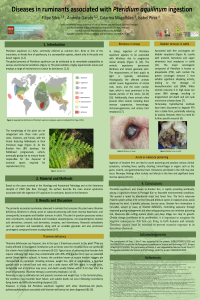
Pteridium aquilinum (L.) Kuhn, commonly known as bracken-fern, is a cosmopolitan plant species absent only from polar and desert regions. Worldwide, Pteridium aquilinum has been rapidly spreading due to the neglect of agricultural fields and the growing wave of forest fires. This plant has several toxic components such as thiaminases, brains, active glucosides, beta-glucopyranosides and ptaquloside in its constitution that can be lethal to animals. The animals do not normally choose it as food, except in situations of food shortage, in periods of drought, when the ferns are still green or when the animals graze in places with large amounts of the plant in question. In order to revisit the major syndromes caused be P. aquilinum major toxins, the authors present several cases of acute and chronic ruminant poisoning associated with ingesting P. aquilinum in Portugal in sheep and cattle. The primarily associated syndromes observed in animals that consume this plant were thiamine deficiency, blindness in sheep, acute or subacute poisoning with bone marrow depression, and consequently, leucopenia and bladder tumours in cattle. Given the economic impact of the diseases caused by the toxins of this plant, and possible public health implications, it is imperative to minimise the syndromes in animals and establish measures for their prevention.
Keywords
Pteridium aquilinum (L.) Kuhn
fern
toxins
thiamine deficiency
cattle
Manuscript
sciforum-072698.pdf
Poster
poster_feto.pdf
Snakebites in domestic animals
Sub-Chronic Toxicological Evaluation of the Sesquiterpene Lactone-enriched Fraction of Tithonia diversifolia (Hemsley) A. Gray in Experimental Rats