Event submissions
EventsThe 2nd International Electronic Conference on Chemical Sensors and Analytical Chemistry
Published
This submission belongs to the session S4. Applied Chemical Sensors of the event The 2nd International Electronic Conference on Chemical Sensors and Analytical Chemistry
Published date
18 Sep, 2023
Academic Editor
'%3e%3cpath%20d='M12.6657%2010.9104C12.4185%2010.325%2012.0599%209.79327%2011.6097%209.34482C11.1609%208.89508%2010.6293%208.5365%2010.0442%208.28888C10.0389%208.28626%2010.0337%208.28495%2010.0285%208.28233C10.8446%207.69279%2011.3752%206.73249%2011.3752%205.64904C11.3752%203.8542%209.92103%202.39999%208.1262%202.39999C6.33136%202.39999%204.87715%203.8542%204.87715%205.64904C4.87715%206.73249%205.40774%207.69279%206.22393%208.28364C6.21869%208.28626%206.21345%208.28757%206.20821%208.29019C5.62129%208.5378%205.09463%208.89284%204.64265%209.34613C4.1929%209.79493%203.83432%2010.3266%203.58671%2010.9117C3.34345%2011.4845%203.21226%2012.0987%203.20023%2012.7209C3.19988%2012.7349%203.20233%2012.7488%203.20744%2012.7619C3.21255%2012.7749%203.22022%2012.7867%203.22998%2012.7968C3.23975%2012.8068%203.25142%2012.8147%203.26431%2012.8202C3.2772%2012.8256%203.29105%2012.8284%203.30504%2012.8284H4.09109C4.14874%2012.8284%204.19459%2012.7825%204.1959%2012.7262C4.2221%2011.7148%204.62823%2010.7676%205.34617%2010.0497C6.08899%209.30683%207.0755%208.89808%208.1262%208.89808C9.17689%208.89808%2010.1634%209.30683%2010.9062%2010.0497C11.6242%2010.7676%2012.0303%2011.7148%2012.0565%2012.7262C12.0578%2012.7838%2012.1037%2012.8284%2012.1613%2012.8284H12.9474C12.9613%2012.8284%2012.9752%2012.8256%2012.9881%2012.8202C13.001%2012.8147%2013.0126%2012.8068%2013.0224%2012.7968C13.0322%2012.7867%2013.0398%2012.7749%2013.0449%2012.7619C13.0501%2012.7488%2013.0525%2012.7349%2013.0522%2012.7209C13.0391%2012.0947%2012.9094%2011.4855%2012.6657%2010.9104ZM8.1262%207.9024C7.52486%207.9024%206.9589%207.6679%206.53312%207.24211C6.10733%206.81633%205.87283%206.25037%205.87283%205.64904C5.87283%205.0477%206.10733%204.48174%206.53312%204.05596C6.9589%203.63018%207.52486%203.39567%208.1262%203.39567C8.72753%203.39567%209.29349%203.63018%209.71927%204.05596C10.1451%204.48174%2010.3796%205.0477%2010.3796%205.64904C10.3796%206.25037%2010.1451%206.81633%209.71927%207.24211C9.29349%207.6679%208.72753%207.9024%208.1262%207.9024Z'%20fill='%235D1EE1'/%3e%3c/g%3e%3c/svg%3e) Jose Vicente Ros-Lis
Jose Vicente Ros-LisCitation
Paula Barciela Álvarez, Maria Carpena, Hui Cao, Sepidar Seyyedi-Mansour, Ana Perez-Vazquez, Aurora Silva, M. Fátima Barroso, Maria Fraga-Corral, Jesus Simal-Gandara, Miguel Angel Prieto, Nanotechnology at its peak: flexibility and efficacy of nanosensors in food safety, in Proceedings of The 2nd International Electronic Conference on Chemical Sensors and Analytical Chemistry, 16 September–30 September 2023, MDPI: Basel, Switzerland
Share
Email
Facebook
Twitter
LinkedIn
Nanotechnology at its peak: flexibility and efficacy of nanosensors in food safety

Paula Barciela Álvarez 1

Maria Carpena 1
'%3e%3cpath%20d='M12.6647%2010.9104C12.4176%2010.325%2012.0589%209.7933%2011.6088%209.34485C11.16%208.89511%2010.6283%208.53653%2010.0432%208.28891C10.038%208.28629%2010.0327%208.28498%2010.0275%208.28236C10.8437%207.69282%2011.3743%206.73252%2011.3743%205.64907C11.3743%203.85423%209.92005%202.40002%208.12522%202.40002C6.33038%202.40002%204.87618%203.85423%204.87618%205.64907C4.87618%206.73252%205.40677%207.69282%206.22296%208.28367C6.21772%208.28629%206.21248%208.2876%206.20724%208.29022C5.62031%208.53783%205.09365%208.89287%204.64167%209.34616C4.19192%209.79496%203.83334%2010.3266%203.58573%2010.9117C3.34247%2011.4846%203.21128%2012.0987%203.19925%2012.721C3.1989%2012.735%203.20135%2012.7489%203.20646%2012.7619C3.21157%2012.7749%203.21924%2012.7868%203.22901%2012.7968C3.23877%2012.8068%203.25045%2012.8148%203.26334%2012.8202C3.27623%2012.8256%203.29007%2012.8284%203.30406%2012.8284H4.09012C4.14776%2012.8284%204.19362%2012.7825%204.19493%2012.7262C4.22113%2011.7148%204.62726%2010.7676%205.34519%2010.0497C6.08802%209.30686%207.07452%208.89811%208.12522%208.89811C9.17592%208.89811%2010.1624%209.30686%2010.9052%2010.0497C11.6232%2010.7676%2012.0293%2011.7148%2012.0555%2012.7262C12.0568%2012.7839%2012.1027%2012.8284%2012.1603%2012.8284H12.9464C12.9604%2012.8284%2012.9742%2012.8256%2012.9871%2012.8202C13%2012.8148%2013.0117%2012.8068%2013.0214%2012.7968C13.0312%2012.7868%2013.0389%2012.7749%2013.044%2012.7619C13.0491%2012.7489%2013.0515%2012.735%2013.0512%2012.721C13.0381%2012.0947%2012.9084%2011.4856%2012.6647%2010.9104ZM8.12522%207.90243C7.52388%207.90243%206.95792%207.66793%206.53214%207.24215C6.10636%206.81636%205.87185%206.2504%205.87185%205.64907C5.87185%205.04773%206.10636%204.48177%206.53214%204.05599C6.95792%203.63021%207.52388%203.3957%208.12522%203.3957C8.72655%203.3957%209.29252%203.63021%209.7183%204.05599C10.1441%204.48177%2010.3786%205.04773%2010.3786%205.64907C10.3786%206.2504%2010.1441%206.81636%209.7183%207.24215C9.29252%207.66793%208.72655%207.90243%208.12522%207.90243Z'%20fill='%235D1EE1'/%3e%3c/g%3e%3c/svg%3e)
Hui Cao 1
Sepidar Seyyedi-Mansour 1
Ana Perez-Vazquez 1

Aurora Silva 1,2

M. Fátima Barroso 2
Maria Fraga-Corral 1,3

Jesus Simal-Gandara 1

Miguel Angel Prieto 1,3
1. Universidade de Vigo, Nutrition and Bromatology Group, Department of Analytical Chemistry and Food Science, Faculty of Science, E32004 Ourense, Spain.
2. REQUIMTE/LAQV, Instituto Superior de Engenharia do Porto, Instituto Politécnico do Porto, Rua Dr António Bernardino de Almeida 431, 4200-072 Porto, Portugal.
3. Centro de Investigação de Montanha (CIMO), Instituto Politécnico de Bragança, Campus de Santa Apolonia, 5300-253 Bragança, Portugal.
Abstract
Food spoilage concerns from ethical, social, economic, and environmental points of view because of its direct link to food insecurity. At every stage of the value chain, food products are subject to spoilage due to the loss of freshness resulting from contamination caused by flaws in the traceability or adulteration events. The existing quality controls and detection methods are time-consuming, and need a significant amount of sample concentration, expertise, and expense. Nanotechnology, particularly nanosensors, could be a game-changer in identifying food contaminants such as pathogens, allergens, or pesticides. Nanosensors are a promising tool for food quality assessment, as they are selective, sensitive, and reliable devices capable of real-time monitoring. Nevertheless, we must consider the uncertainties surrounding nanotechnology, including the unawareness of nanomaterials and their toxicity. Also, consumers' perspectives, the feasibility of implementation, and cost-effectiveness must be considered for the future applications of these devices. Yet, intensive evaluation and validation by regulatory organizations responsible for food safety control and monitoring are crucial for their continuous development and implementation. It is essential to continue researching to ensure the growth of nanotechnology. This communication focuses on the most current research on the potential advantages of this cutting-edge technology of applying nanosensors to detect biological and chemical contaminants in food samples.
Keywords
nanosensor
nanotechnology
food safety
food spoilage
contaminants.
Manuscript
2023_CSAC_Paula Barciela_MCR.pdf
Poster
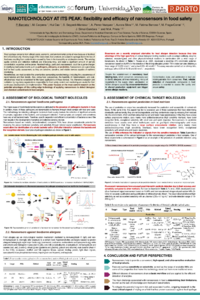
Poster CSAC2023_Paula Barciela.pdf
Food contact materials and their chemical risk for the consumer’s health
Synthesis of Copper Selenide Nanobelts for Electrochemical Detection of Hydrogen Peroxide