Event submissions
EventsThe 2nd International Electronic Conference on Chemical Sensors and Analytical Chemistry
Published
This submission belongs to the session S5. Analytical Methods, Instrumentation and Miniaturization of the event The 2nd International Electronic Conference on Chemical Sensors and Analytical Chemistry
Published date
25 Sep, 2023
Academic Editor
'%3e%3cpath%20d='M12.6657%2010.9104C12.4185%2010.325%2012.0599%209.79327%2011.6097%209.34482C11.1609%208.89508%2010.6293%208.5365%2010.0442%208.28888C10.0389%208.28626%2010.0337%208.28495%2010.0285%208.28233C10.8446%207.69279%2011.3752%206.73249%2011.3752%205.64904C11.3752%203.8542%209.92103%202.39999%208.1262%202.39999C6.33136%202.39999%204.87715%203.8542%204.87715%205.64904C4.87715%206.73249%205.40774%207.69279%206.22393%208.28364C6.21869%208.28626%206.21345%208.28757%206.20821%208.29019C5.62129%208.5378%205.09463%208.89284%204.64265%209.34613C4.1929%209.79493%203.83432%2010.3266%203.58671%2010.9117C3.34345%2011.4845%203.21226%2012.0987%203.20023%2012.7209C3.19988%2012.7349%203.20233%2012.7488%203.20744%2012.7619C3.21255%2012.7749%203.22022%2012.7867%203.22998%2012.7968C3.23975%2012.8068%203.25142%2012.8147%203.26431%2012.8202C3.2772%2012.8256%203.29105%2012.8284%203.30504%2012.8284H4.09109C4.14874%2012.8284%204.19459%2012.7825%204.1959%2012.7262C4.2221%2011.7148%204.62823%2010.7676%205.34617%2010.0497C6.08899%209.30683%207.0755%208.89808%208.1262%208.89808C9.17689%208.89808%2010.1634%209.30683%2010.9062%2010.0497C11.6242%2010.7676%2012.0303%2011.7148%2012.0565%2012.7262C12.0578%2012.7838%2012.1037%2012.8284%2012.1613%2012.8284H12.9474C12.9613%2012.8284%2012.9752%2012.8256%2012.9881%2012.8202C13.001%2012.8147%2013.0126%2012.8068%2013.0224%2012.7968C13.0322%2012.7867%2013.0398%2012.7749%2013.0449%2012.7619C13.0501%2012.7488%2013.0525%2012.7349%2013.0522%2012.7209C13.0391%2012.0947%2012.9094%2011.4855%2012.6657%2010.9104ZM8.1262%207.9024C7.52486%207.9024%206.9589%207.6679%206.53312%207.24211C6.10733%206.81633%205.87283%206.25037%205.87283%205.64904C5.87283%205.0477%206.10733%204.48174%206.53312%204.05596C6.9589%203.63018%207.52486%203.39567%208.1262%203.39567C8.72753%203.39567%209.29349%203.63018%209.71927%204.05596C10.1451%204.48174%2010.3796%205.0477%2010.3796%205.64904C10.3796%206.25037%2010.1451%206.81633%209.71927%207.24211C9.29349%207.6679%208.72753%207.9024%208.1262%207.9024Z'%20fill='%235D1EE1'/%3e%3c/g%3e%3c/svg%3e) Jin-Ming Lin
Jin-Ming LinCitation
Sylwia Smarzewska, Grażyna Chwatko, Monika Wypych, Michał Świderski, Łukasz Bogdański, Sylwia Grzondziel, Dariusz Guziejewski, Kamila Koszelska, INFLUENCE OF SEEDS ROASTING CONDITIONS ON THE CONTENT OF SESAMOL IN SESAME OIL, in Proceedings of The 2nd International Electronic Conference on Chemical Sensors and Analytical Chemistry, 16 September–30 September 2023, MDPI: Basel, Switzerland
Share
Email
Facebook
Twitter
LinkedIn
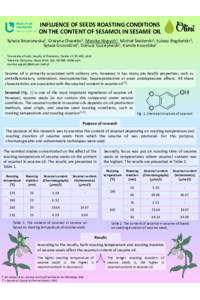
INFLUENCE OF SEEDS ROASTING CONDITIONS ON THE CONTENT OF SESAMOL IN SESAME OIL
'%3e%3cpath%20d='M12.6647%2010.9104C12.4176%2010.325%2012.0589%209.7933%2011.6088%209.34485C11.16%208.89511%2010.6283%208.53653%2010.0432%208.28891C10.038%208.28629%2010.0327%208.28498%2010.0275%208.28236C10.8437%207.69282%2011.3743%206.73252%2011.3743%205.64907C11.3743%203.85423%209.92005%202.40002%208.12522%202.40002C6.33038%202.40002%204.87618%203.85423%204.87618%205.64907C4.87618%206.73252%205.40677%207.69282%206.22296%208.28367C6.21772%208.28629%206.21248%208.2876%206.20724%208.29022C5.62031%208.53783%205.09365%208.89287%204.64167%209.34616C4.19192%209.79496%203.83334%2010.3266%203.58573%2010.9117C3.34247%2011.4846%203.21128%2012.0987%203.19925%2012.721C3.1989%2012.735%203.20135%2012.7489%203.20646%2012.7619C3.21157%2012.7749%203.21924%2012.7868%203.22901%2012.7968C3.23877%2012.8068%203.25045%2012.8148%203.26334%2012.8202C3.27623%2012.8256%203.29007%2012.8284%203.30406%2012.8284H4.09012C4.14776%2012.8284%204.19362%2012.7825%204.19493%2012.7262C4.22113%2011.7148%204.62726%2010.7676%205.34519%2010.0497C6.08802%209.30686%207.07452%208.89811%208.12522%208.89811C9.17592%208.89811%2010.1624%209.30686%2010.9052%2010.0497C11.6232%2010.7676%2012.0293%2011.7148%2012.0555%2012.7262C12.0568%2012.7839%2012.1027%2012.8284%2012.1603%2012.8284H12.9464C12.9604%2012.8284%2012.9742%2012.8256%2012.9871%2012.8202C13%2012.8148%2013.0117%2012.8068%2013.0214%2012.7968C13.0312%2012.7868%2013.0389%2012.7749%2013.044%2012.7619C13.0491%2012.7489%2013.0515%2012.735%2013.0512%2012.721C13.0381%2012.0947%2012.9084%2011.4856%2012.6647%2010.9104ZM8.12522%207.90243C7.52388%207.90243%206.95792%207.66793%206.53214%207.24215C6.10636%206.81636%205.87185%206.2504%205.87185%205.64907C5.87185%205.04773%206.10636%204.48177%206.53214%204.05599C6.95792%203.63021%207.52388%203.3957%208.12522%203.3957C8.72655%203.3957%209.29252%203.63021%209.7183%204.05599C10.1441%204.48177%2010.3786%205.04773%2010.3786%205.64907C10.3786%206.2504%2010.1441%206.81636%209.7183%207.24215C9.29252%207.66793%208.72655%207.90243%208.12522%207.90243Z'%20fill='%235D1EE1'/%3e%3c/g%3e%3c/svg%3e)
Sylwia Smarzewska 1
Grażyna Chwatko 1
Monika Wypych 1
Michał Świderski 1
Łukasz Bogdański 2
Sylwia Grzondziel 2
Dariusz Guziejewski 1
Kamila Koszelska 1
1. University of Lodz, Chemistry Department
2. Miramar Company
Abstract
Sesame (Sesamum indicum L.) is one of the oldest plants cultivated by human. Sesame has been used not only for culinary, but for cosmetic and medicinal purposes as well [1].
Sesame seeds are characterized by high amount of fats, which are contributing to 50% of seed mass. Additionally, sesame is a source of numerous essential amino acids, as well as lignans and tocopherols. Sesame oil, produced from roasted sesame seeds, exhibit an extraordinary antioxidant activity and is one of the most stable vegetable oils. Most of the pro-health properties are attributed to lignans, present in the sesame oil. These substances can be divided into two groups: found naturally in the oil and resulting from production of the oil. Sesamol, belonging to the second group is the compound recognized as the most important ingredient of sesame oil [2,3].
According to sesamol content, sesame oil exhibit many pro-health properties, such as antiinflammatory, antioxidant, antidepressive, neuroprotective or hepatoprotective, just to mention a few. Additionally, it contributes to lowering the risk of cardiovascular diseases. Sesamol content in sesame oils varies greatly – depends on oil production method, seeds origin and sesame seeds roasting conditions[3].
This research was focused on studying the sesamol content in sesame oils, using chromatographic and voltammetric techniques. The influence of roasting temperature and roasting duration of sesame seeds on sesamol content in the oil was examined.
[1] L.S. Hwang (et al.), Bailey’s Industrial Oil and Fat Products, 2020
[2] Y. Wan (et al.), Society of Chemical Industry, 2005
[3] J.M. Nzikou (et al.), Advance Journal of Food Science and Technology, 2009
Keywords
Sesame
Sesamol
Chromatography
Voltammetry
Manuscript
CSAC2023 (2).pdf
Poster
MDPI poster.pdf
Design and modelling of MEMS Resonators for Artificial Basilar Membrane
Indoor Air Measurements with a low-cost air quality sensor: A Preliminary Report