Event submissions
Published
 10.3390/ECMC2023-15616 (registering DOI)
 This submission belongs to the session S6. Novel and Sustainable approaches in Medicinal Chemistry of the event 9th International Electronic Conference on Medicinal Chemistry
Published date
01 Nov, 2023
Academic Editor
'%3e%3cpath%20d='M12.6657%2010.9104C12.4185%2010.325%2012.0599%209.79327%2011.6097%209.34482C11.1609%208.89508%2010.6293%208.5365%2010.0442%208.28888C10.0389%208.28626%2010.0337%208.28495%2010.0285%208.28233C10.8446%207.69279%2011.3752%206.73249%2011.3752%205.64904C11.3752%203.8542%209.92103%202.39999%208.1262%202.39999C6.33136%202.39999%204.87715%203.8542%204.87715%205.64904C4.87715%206.73249%205.40774%207.69279%206.22393%208.28364C6.21869%208.28626%206.21345%208.28757%206.20821%208.29019C5.62129%208.5378%205.09463%208.89284%204.64265%209.34613C4.1929%209.79493%203.83432%2010.3266%203.58671%2010.9117C3.34345%2011.4845%203.21226%2012.0987%203.20023%2012.7209C3.19988%2012.7349%203.20233%2012.7488%203.20744%2012.7619C3.21255%2012.7749%203.22022%2012.7867%203.22998%2012.7968C3.23975%2012.8068%203.25142%2012.8147%203.26431%2012.8202C3.2772%2012.8256%203.29105%2012.8284%203.30504%2012.8284H4.09109C4.14874%2012.8284%204.19459%2012.7825%204.1959%2012.7262C4.2221%2011.7148%204.62823%2010.7676%205.34617%2010.0497C6.08899%209.30683%207.0755%208.89808%208.1262%208.89808C9.17689%208.89808%2010.1634%209.30683%2010.9062%2010.0497C11.6242%2010.7676%2012.0303%2011.7148%2012.0565%2012.7262C12.0578%2012.7838%2012.1037%2012.8284%2012.1613%2012.8284H12.9474C12.9613%2012.8284%2012.9752%2012.8256%2012.9881%2012.8202C13.001%2012.8147%2013.0126%2012.8068%2013.0224%2012.7968C13.0322%2012.7867%2013.0398%2012.7749%2013.0449%2012.7619C13.0501%2012.7488%2013.0525%2012.7349%2013.0522%2012.7209C13.0391%2012.0947%2012.9094%2011.4855%2012.6657%2010.9104ZM8.1262%207.9024C7.52486%207.9024%206.9589%207.6679%206.53312%207.24211C6.10733%206.81633%205.87283%206.25037%205.87283%205.64904C5.87283%205.0477%206.10733%204.48174%206.53312%204.05596C6.9589%203.63018%207.52486%203.39567%208.1262%203.39567C8.72753%203.39567%209.29349%203.63018%209.71927%204.05596C10.1451%204.48174%2010.3796%205.0477%2010.3796%205.64904C10.3796%206.25037%2010.1451%206.81633%209.71927%207.24211C9.29349%207.6679%208.72753%207.9024%208.1262%207.9024Z'%20fill='%235D1EE1'/%3e%3c/g%3e%3c/svg%3e) Alfredo Berzal-Herranz
Alfredo Berzal-HerranzCitation
Sambit Pradhan, Surajit Sarker, Pakkirisamy Thilagar, New Insights into Proteasome Inhibition Strategy for Enhanced Specificity and Cellular Toxicity, in Proceedings of 9th International Electronic Conference on Medicinal Chemistry, 1 November–30 November 2023, MDPI: Basel, Switzerland, doi: 10.3390/ECMC2023-15616
Share
Email
Facebook
Twitter
LinkedIn
New Insights into Proteasome Inhibition Strategy for Enhanced Specificity and Cellular Toxicity
'%3e%3cpath%20d='M12.6647%2010.9104C12.4176%2010.325%2012.0589%209.7933%2011.6088%209.34485C11.16%208.89511%2010.6283%208.53653%2010.0432%208.28891C10.038%208.28629%2010.0327%208.28498%2010.0275%208.28236C10.8437%207.69282%2011.3743%206.73252%2011.3743%205.64907C11.3743%203.85423%209.92005%202.40002%208.12522%202.40002C6.33038%202.40002%204.87618%203.85423%204.87618%205.64907C4.87618%206.73252%205.40677%207.69282%206.22296%208.28367C6.21772%208.28629%206.21248%208.2876%206.20724%208.29022C5.62031%208.53783%205.09365%208.89287%204.64167%209.34616C4.19192%209.79496%203.83334%2010.3266%203.58573%2010.9117C3.34247%2011.4846%203.21128%2012.0987%203.19925%2012.721C3.1989%2012.735%203.20135%2012.7489%203.20646%2012.7619C3.21157%2012.7749%203.21924%2012.7868%203.22901%2012.7968C3.23877%2012.8068%203.25045%2012.8148%203.26334%2012.8202C3.27623%2012.8256%203.29007%2012.8284%203.30406%2012.8284H4.09012C4.14776%2012.8284%204.19362%2012.7825%204.19493%2012.7262C4.22113%2011.7148%204.62726%2010.7676%205.34519%2010.0497C6.08802%209.30686%207.07452%208.89811%208.12522%208.89811C9.17592%208.89811%2010.1624%209.30686%2010.9052%2010.0497C11.6232%2010.7676%2012.0293%2011.7148%2012.0555%2012.7262C12.0568%2012.7839%2012.1027%2012.8284%2012.1603%2012.8284H12.9464C12.9604%2012.8284%2012.9742%2012.8256%2012.9871%2012.8202C13%2012.8148%2013.0117%2012.8068%2013.0214%2012.7968C13.0312%2012.7868%2013.0389%2012.7749%2013.044%2012.7619C13.0491%2012.7489%2013.0515%2012.735%2013.0512%2012.721C13.0381%2012.0947%2012.9084%2011.4856%2012.6647%2010.9104ZM8.12522%207.90243C7.52388%207.90243%206.95792%207.66793%206.53214%207.24215C6.10636%206.81636%205.87185%206.2504%205.87185%205.64907C5.87185%205.04773%206.10636%204.48177%206.53214%204.05599C6.95792%203.63021%207.52388%203.3957%208.12522%203.3957C8.72655%203.3957%209.29252%203.63021%209.7183%204.05599C10.1441%204.48177%2010.3786%205.04773%2010.3786%205.64907C10.3786%206.2504%2010.1441%206.81636%209.7183%207.24215C9.29252%207.66793%208.72655%207.90243%208.12522%207.90243Z'%20fill='%235D1EE1'/%3e%3c/g%3e%3c/svg%3e)
Sambit Pradhan 1
Surajit Sarker 2
Pakkirisamy Thilagar 3
1. PhD Scholar
2. PhD scholar
3. Professor
Abstract
The Proteasome is a multi-catalytic enzyme complex found in the nucleus and cytoplasm of all eukaryotic cells. It is the primary intracellular proteolytic system involved in intracellular proteolysis. The ubiquitin-proteasome pathway is essential for the regulated degradation of intracellular proteins in eukaryotic cells. So, proteasome inhibition is a targeted therapy for cancer to promote cell cycle arrest or apoptosis. Bortezomib is the first selective proteasome inhibitor for treating multiple myeloma. But bortezomib displays severe side effects due to non-specific cytotoxicity towards healthy tissue. So, there is a clear need to develop new proteasome inhibitors with improved safety and efficacy profiles. In this research, we have developed a tripeptide vinyl sulfone based on azobenzene for proteasome inhibition studies. These proteasome inhibitors exhibit photo-switchable activity upon exposure to 365nm light irradiation. The photo-conversion from trans to cis configuration exceeded 90%, as verified by HPLC and proton NMR studies. After confirming the photoisomerization of our synthesized molecules, we conducted theoretical docking studies to assess the binding affinity of those molecules within the proteasome's active site. Subsequent proteasome inhibition assays demonstrated that cis-enriched isomers exhibited greater potency compared to their trans counterparts. Further investigation involved evaluating cell viability in various cancer cell lines, including A549, Hela, and MCF7, consistently revealing that cis isomers of the azobenzene compounds were more cytotoxic. Notably, our most potent compound displayed a nearly tenfold difference in activity between its trans and cis isomers across these cancer cell lines, which translating the proteasome inhibition into cancer cells.
Keywords
Proteasome inhibitors; Protein degradation pathway; sulfone based proteasome inhibitors; azobenzene; photo-switchable inhibitors; spatiotemporal control; cis-trans isomerization; proteasome beta-5 inhibition; cellular toxicity; cell viability in different cancer cell
AUTHORS INFORMATION
Corresponding Author
*Pakkirisamy Thilagar, Department of Inorganic and Physical Chemistry, Indian Institute of Science, Bangalore, India - 560012
Email: thilagar@iisc.ac.in
Author contributions
These authors contributed in the sequence as mentioned.
Institutional Review Board Statement
Not applicable
Information Consent Statement
Not applicable
Conflicts of Interest
The authors declare no conflict of interest.
Acknowledgement
Authors thankful to IISc Bangalore, DST and SERB for financial support. SS , SP and PT thanks to CSIR, IISc Bangalore.
Keywords
Proteasome inhibitors
Protein degradation pathway
sulfone based proteasome inhibitors
azobenzene
photo-switchable inhibitors
spatiotemporal control
cis-trans isomerization
proteasome beta-5 inhibition
cellular toxicity
cell viabilty in different
Manuscript
Sambit-Pradhan-9th-ECMC_Poster.pdf
Poster
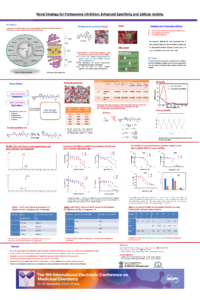
Sambit-Pradhan-9th-ECMC_Poster.pdf
Antibiofilm Activity of Ciprofloxacin and Sulfadiazine Combination Against Escherichia coli Biofilms: A Scanning Electron Microscopy Analysis
Exploring the Chemical Space of HDAC6 Inhibitors: A deep generative study using a Gradient Ascent Algorithm