Event submissions
Published
 10.3390/ECMC2023-15618 (registering DOI)
 This submission belongs to the session S5. Natural Products and Biopharmaceuticals of the event 9th International Electronic Conference on Medicinal Chemistry
Published date
01 Nov, 2023
Academic Editor
'%3e%3cpath%20d='M12.6657%2010.9104C12.4185%2010.325%2012.0599%209.79327%2011.6097%209.34482C11.1609%208.89508%2010.6293%208.5365%2010.0442%208.28888C10.0389%208.28626%2010.0337%208.28495%2010.0285%208.28233C10.8446%207.69279%2011.3752%206.73249%2011.3752%205.64904C11.3752%203.8542%209.92103%202.39999%208.1262%202.39999C6.33136%202.39999%204.87715%203.8542%204.87715%205.64904C4.87715%206.73249%205.40774%207.69279%206.22393%208.28364C6.21869%208.28626%206.21345%208.28757%206.20821%208.29019C5.62129%208.5378%205.09463%208.89284%204.64265%209.34613C4.1929%209.79493%203.83432%2010.3266%203.58671%2010.9117C3.34345%2011.4845%203.21226%2012.0987%203.20023%2012.7209C3.19988%2012.7349%203.20233%2012.7488%203.20744%2012.7619C3.21255%2012.7749%203.22022%2012.7867%203.22998%2012.7968C3.23975%2012.8068%203.25142%2012.8147%203.26431%2012.8202C3.2772%2012.8256%203.29105%2012.8284%203.30504%2012.8284H4.09109C4.14874%2012.8284%204.19459%2012.7825%204.1959%2012.7262C4.2221%2011.7148%204.62823%2010.7676%205.34617%2010.0497C6.08899%209.30683%207.0755%208.89808%208.1262%208.89808C9.17689%208.89808%2010.1634%209.30683%2010.9062%2010.0497C11.6242%2010.7676%2012.0303%2011.7148%2012.0565%2012.7262C12.0578%2012.7838%2012.1037%2012.8284%2012.1613%2012.8284H12.9474C12.9613%2012.8284%2012.9752%2012.8256%2012.9881%2012.8202C13.001%2012.8147%2013.0126%2012.8068%2013.0224%2012.7968C13.0322%2012.7867%2013.0398%2012.7749%2013.0449%2012.7619C13.0501%2012.7488%2013.0525%2012.7349%2013.0522%2012.7209C13.0391%2012.0947%2012.9094%2011.4855%2012.6657%2010.9104ZM8.1262%207.9024C7.52486%207.9024%206.9589%207.6679%206.53312%207.24211C6.10733%206.81633%205.87283%206.25037%205.87283%205.64904C5.87283%205.0477%206.10733%204.48174%206.53312%204.05596C6.9589%203.63018%207.52486%203.39567%208.1262%203.39567C8.72753%203.39567%209.29349%203.63018%209.71927%204.05596C10.1451%204.48174%2010.3796%205.0477%2010.3796%205.64904C10.3796%206.25037%2010.1451%206.81633%209.71927%207.24211C9.29349%207.6679%208.72753%207.9024%208.1262%207.9024Z'%20fill='%235D1EE1'/%3e%3c/g%3e%3c/svg%3e) Maria Emília Sousa
Maria Emília SousaCitation
maryam abdullahi, umar ndagi, Zainab Gambo Ibrahim, Quadri Abdulkabir Olalekan, monsurat motunrayo lawal, The prostate cancer-fighting powers of soursop fruit: in silico evaluation to give insight into binding affinity of selected bioactive compounds on selected prostate cancer targets., in Proceedings of 9th International Electronic Conference on Medicinal Chemistry, 1 November–30 November 2023, MDPI: Basel, Switzerland, doi: 10.3390/ECMC2023-15618
Share
Email
Facebook
Twitter
LinkedIn
The prostate cancer-fighting powers of soursop fruit: in silico evaluation to give insight into binding affinity of selected bioactive compounds on selected prostate cancer targets.
'%3e%3cpath%20d='M12.6647%2010.9104C12.4176%2010.325%2012.0589%209.7933%2011.6088%209.34485C11.16%208.89511%2010.6283%208.53653%2010.0432%208.28891C10.038%208.28629%2010.0327%208.28498%2010.0275%208.28236C10.8437%207.69282%2011.3743%206.73252%2011.3743%205.64907C11.3743%203.85423%209.92005%202.40002%208.12522%202.40002C6.33038%202.40002%204.87618%203.85423%204.87618%205.64907C4.87618%206.73252%205.40677%207.69282%206.22296%208.28367C6.21772%208.28629%206.21248%208.2876%206.20724%208.29022C5.62031%208.53783%205.09365%208.89287%204.64167%209.34616C4.19192%209.79496%203.83334%2010.3266%203.58573%2010.9117C3.34247%2011.4846%203.21128%2012.0987%203.19925%2012.721C3.1989%2012.735%203.20135%2012.7489%203.20646%2012.7619C3.21157%2012.7749%203.21924%2012.7868%203.22901%2012.7968C3.23877%2012.8068%203.25045%2012.8148%203.26334%2012.8202C3.27623%2012.8256%203.29007%2012.8284%203.30406%2012.8284H4.09012C4.14776%2012.8284%204.19362%2012.7825%204.19493%2012.7262C4.22113%2011.7148%204.62726%2010.7676%205.34519%2010.0497C6.08802%209.30686%207.07452%208.89811%208.12522%208.89811C9.17592%208.89811%2010.1624%209.30686%2010.9052%2010.0497C11.6232%2010.7676%2012.0293%2011.7148%2012.0555%2012.7262C12.0568%2012.7839%2012.1027%2012.8284%2012.1603%2012.8284H12.9464C12.9604%2012.8284%2012.9742%2012.8256%2012.9871%2012.8202C13%2012.8148%2013.0117%2012.8068%2013.0214%2012.7968C13.0312%2012.7868%2013.0389%2012.7749%2013.044%2012.7619C13.0491%2012.7489%2013.0515%2012.735%2013.0512%2012.721C13.0381%2012.0947%2012.9084%2011.4856%2012.6647%2010.9104ZM8.12522%207.90243C7.52388%207.90243%206.95792%207.66793%206.53214%207.24215C6.10636%206.81636%205.87185%206.2504%205.87185%205.64907C5.87185%205.04773%206.10636%204.48177%206.53214%204.05599C6.95792%203.63021%207.52388%203.3957%208.12522%203.3957C8.72655%203.3957%209.29252%203.63021%209.7183%204.05599C10.1441%204.48177%2010.3786%205.04773%2010.3786%205.64907C10.3786%206.2504%2010.1441%206.81636%209.7183%207.24215C9.29252%207.66793%208.72655%207.90243%208.12522%207.90243Z'%20fill='%235D1EE1'/%3e%3c/g%3e%3c/svg%3e)
maryam abdullahi 1
umar ndagi 2
Zainab Gambo Ibrahim 3
Quadri Abdulkabir Olalekan 1
monsurat motunrayo lawal 4
1. Department of Pharmaceutical and Medicinal Chemistry, Ahmadu Bello University Zaria, Nigeria
2. Africa Centre of Excellence for Mycotoxin and Food Safety, Federal University of Technology, Minna, Nigeria
3. College of medicine, Abubakar Tafawa Balewa University, Bauchi, Nigeria
4. Drug Discovery Lab, Gallaudet University, Washinton, DC United States of America
Abstract
Soursop plant, (Annona muricata) which is indigenous to the tropics belongs to the family Annonaceae. Parts of the plant has been used in traditional medicine to cure several diseases. The physiological, physicochemical and nutritional characteristics of soursop plant has been reported in several studies, alongside the presence of bioactive compounds in the pulp, seed, columella and peel. Prostate cancer is the most cancer diagnosis in men and is still the third-leading cause of cancer related death in males.
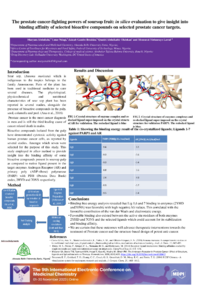
Bioactive compounds isolated from the pulp have demonstrated cytotoxic activity against human prostate cancer cells, as reported by several studies. Amongst which seven were selected for the purpose of this study. This study employed in silico method to provide insight into the binding affinity of some bioactive compounds present in soursop pulp as compared to native ligand present in the target enzymes Androgen Receptor (AR) and primary poly (ADP-ribose) polymerase (PARP) with PDB (Protein Data Bank) codes, 2HYD and 7ONS respectively.
The results from this study, showed that all the chosen bioactive compounds had comparable binding activity to the native ligand with the exception of annonacin. These findings could give insights into the development of new pharmaceutical drugs with more cytotoxic effect against prostate cancer or even serve as alternate method for treating prostate cancer.
Keywords
Soursop
bioactive compounds
binding affinity
Prostate cancer
Androgen Receptor (AR) and primary poly (ADP-ribose) polymerase (PARP)
Manuscript
corrected9th-ECMC_Presentation_ppt.pdf
Poster
corrected poster.pdf
Exploring the Chemical Space of HDAC6 Inhibitors: A deep generative study using a Gradient Ascent Algorithm
Fomes fomentarius (L.) Fr. 1849: natural antioxidant and novel inhibitor of aldo-keto reductase activity