Event submissions
Published
 10.3390/ECMC2023-15652 (registering DOI)
 This submission belongs to the session S4. New Small molecules as drug candidates of the event 9th International Electronic Conference on Medicinal Chemistry
Published date
01 Nov, 2023
Academic Editor
'%3e%3cpath%20d='M12.6657%2010.9104C12.4185%2010.325%2012.0599%209.79327%2011.6097%209.34482C11.1609%208.89508%2010.6293%208.5365%2010.0442%208.28888C10.0389%208.28626%2010.0337%208.28495%2010.0285%208.28233C10.8446%207.69279%2011.3752%206.73249%2011.3752%205.64904C11.3752%203.8542%209.92103%202.39999%208.1262%202.39999C6.33136%202.39999%204.87715%203.8542%204.87715%205.64904C4.87715%206.73249%205.40774%207.69279%206.22393%208.28364C6.21869%208.28626%206.21345%208.28757%206.20821%208.29019C5.62129%208.5378%205.09463%208.89284%204.64265%209.34613C4.1929%209.79493%203.83432%2010.3266%203.58671%2010.9117C3.34345%2011.4845%203.21226%2012.0987%203.20023%2012.7209C3.19988%2012.7349%203.20233%2012.7488%203.20744%2012.7619C3.21255%2012.7749%203.22022%2012.7867%203.22998%2012.7968C3.23975%2012.8068%203.25142%2012.8147%203.26431%2012.8202C3.2772%2012.8256%203.29105%2012.8284%203.30504%2012.8284H4.09109C4.14874%2012.8284%204.19459%2012.7825%204.1959%2012.7262C4.2221%2011.7148%204.62823%2010.7676%205.34617%2010.0497C6.08899%209.30683%207.0755%208.89808%208.1262%208.89808C9.17689%208.89808%2010.1634%209.30683%2010.9062%2010.0497C11.6242%2010.7676%2012.0303%2011.7148%2012.0565%2012.7262C12.0578%2012.7838%2012.1037%2012.8284%2012.1613%2012.8284H12.9474C12.9613%2012.8284%2012.9752%2012.8256%2012.9881%2012.8202C13.001%2012.8147%2013.0126%2012.8068%2013.0224%2012.7968C13.0322%2012.7867%2013.0398%2012.7749%2013.0449%2012.7619C13.0501%2012.7488%2013.0525%2012.7349%2013.0522%2012.7209C13.0391%2012.0947%2012.9094%2011.4855%2012.6657%2010.9104ZM8.1262%207.9024C7.52486%207.9024%206.9589%207.6679%206.53312%207.24211C6.10733%206.81633%205.87283%206.25037%205.87283%205.64904C5.87283%205.0477%206.10733%204.48174%206.53312%204.05596C6.9589%203.63018%207.52486%203.39567%208.1262%203.39567C8.72753%203.39567%209.29349%203.63018%209.71927%204.05596C10.1451%204.48174%2010.3796%205.0477%2010.3796%205.64904C10.3796%206.25037%2010.1451%206.81633%209.71927%207.24211C9.29349%207.6679%208.72753%207.9024%208.1262%207.9024Z'%20fill='%235D1EE1'/%3e%3c/g%3e%3c/svg%3e) Alfredo Berzal-Herranz
Alfredo Berzal-HerranzCitation
Viktor Sirotenko, Alexander Spasov, Aida Kucheryavenko, Kseniya Gaidukova, Yury Glukhov, Sergey Lukyanov, Ferkat Khaliullin, Angipur is a new blocker of platelet receptors IIb/IIIa, in Proceedings of 9th International Electronic Conference on Medicinal Chemistry, 1 November–30 November 2023, MDPI: Basel, Switzerland, doi: 10.3390/ECMC2023-15652
Share
Email
Facebook
Twitter
LinkedIn
Angipur is a new blocker of platelet receptors IIb/IIIa

Viktor Sirotenko 1

Alexander Spasov 1
'%3e%3cpath%20d='M12.6647%2010.9104C12.4176%2010.325%2012.0589%209.7933%2011.6088%209.34485C11.16%208.89511%2010.6283%208.53653%2010.0432%208.28891C10.038%208.28629%2010.0327%208.28498%2010.0275%208.28236C10.8437%207.69282%2011.3743%206.73252%2011.3743%205.64907C11.3743%203.85423%209.92005%202.40002%208.12522%202.40002C6.33038%202.40002%204.87618%203.85423%204.87618%205.64907C4.87618%206.73252%205.40677%207.69282%206.22296%208.28367C6.21772%208.28629%206.21248%208.2876%206.20724%208.29022C5.62031%208.53783%205.09365%208.89287%204.64167%209.34616C4.19192%209.79496%203.83334%2010.3266%203.58573%2010.9117C3.34247%2011.4846%203.21128%2012.0987%203.19925%2012.721C3.1989%2012.735%203.20135%2012.7489%203.20646%2012.7619C3.21157%2012.7749%203.21924%2012.7868%203.22901%2012.7968C3.23877%2012.8068%203.25045%2012.8148%203.26334%2012.8202C3.27623%2012.8256%203.29007%2012.8284%203.30406%2012.8284H4.09012C4.14776%2012.8284%204.19362%2012.7825%204.19493%2012.7262C4.22113%2011.7148%204.62726%2010.7676%205.34519%2010.0497C6.08802%209.30686%207.07452%208.89811%208.12522%208.89811C9.17592%208.89811%2010.1624%209.30686%2010.9052%2010.0497C11.6232%2010.7676%2012.0293%2011.7148%2012.0555%2012.7262C12.0568%2012.7839%2012.1027%2012.8284%2012.1603%2012.8284H12.9464C12.9604%2012.8284%2012.9742%2012.8256%2012.9871%2012.8202C13%2012.8148%2013.0117%2012.8068%2013.0214%2012.7968C13.0312%2012.7868%2013.0389%2012.7749%2013.044%2012.7619C13.0491%2012.7489%2013.0515%2012.735%2013.0512%2012.721C13.0381%2012.0947%2012.9084%2011.4856%2012.6647%2010.9104ZM8.12522%207.90243C7.52388%207.90243%206.95792%207.66793%206.53214%207.24215C6.10636%206.81636%205.87185%206.2504%205.87185%205.64907C5.87185%205.04773%206.10636%204.48177%206.53214%204.05599C6.95792%203.63021%207.52388%203.3957%208.12522%203.3957C8.72655%203.3957%209.29252%203.63021%209.7183%204.05599C10.1441%204.48177%2010.3786%205.04773%2010.3786%205.64907C10.3786%206.2504%2010.1441%206.81636%209.7183%207.24215C9.29252%207.66793%208.72655%207.90243%208.12522%207.90243Z'%20fill='%235D1EE1'/%3e%3c/g%3e%3c/svg%3e)
Aida Kucheryavenko 1
Kseniya Gaidukova 1
Yury Glukhov 2
Sergey Lukyanov 2
Ferkat Khaliullin 3
1. Volgograd State Medical Univercity, Volgograd, Russia
2. LLC "Company "ELTA"
3. Bashkir State Medical University, Ufa, Russia
Abstract
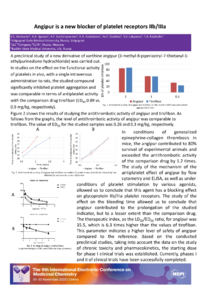
A preclinical study of a new derivative of xanthine angipur (3-methyl-8-piperiazinyl-7-thietanyl-1-ethylpurinedione hydrochloride) was carried out. In studies on the effect on the functional activity of platelets in vivo, with a single intravenous administration to rats, the studied compound significantly inhibited platelet aggregation and was comparable in terms of antiplatelet activity with the comparison drug tirofiban (ED50 0.89 vs. 0.9 mg/kg, respectively). When studying the antithrombotic effect, it was found that angipur on models of carotid artery thrombosis induced by ferric (III) chloride and electric current was also comparable to tirofiban. In conditions of generalized epinephrine-collagen thrombosis in mice, the angipur contributed to 80% survival of experimental animals and exceeded the antithrombotic activity of the comparison drug by 1.2 times. In the group of animals with experimental myocardial infarction, it was recorded that the level of antithrombotic activity of angipur was 1.7 times higher than that of tirofiban. The study of the mechanism of the antiplatelet effect of angipur by flow cytometry and ELISA, as well as under conditions of platelet stimulation by various agonists, allowed us to conclude that this agent has a blocking effect on glycoprotein IIb/IIIa platelet receptors. The study of the effect on the bleeding time allowed us to conclude that with a single intravenous injection, angipur contributed to the prolongation of the studied indicator, but to a lesser extent than the comparison drug. The therapeutic index, as the LD50/ED50 ratio, for angipur was 35.5, which is 6.3 times higher than the values of tirofiban. This parameter indicates a higher level of safety of angipur compared to the reference. Based on the conducted preclinical studies, taking into account the data on the study of chronic toxicity and pharmacokinetics, the starting dose for phase I clinical trials was established. Currently, phases I and II of clinical trials have been successfully completed.
Keywords
angipur
tirofiban
antiplatelet activity
antithrombotic effect
Manuscript
9th-ECMC_Abstract_angipur.pdf
Poster
9th-ECMC_Poster_template.pdf
Clitorin and manghaslin from Carica papaya leaf juice: characterisation and antioxidant properties
Eco-Friendly Approach to Craft High-Demand Cyclic Carbonates for the Pharmaceutical Industry