Event submissions
Published
 10.3390/ECMC2023-15666 (registering DOI)
 This submission belongs to the session S4. New Small molecules as drug candidates of the event 9th International Electronic Conference on Medicinal Chemistry
Published date
01 Nov, 2023
Academic Editor
'%3e%3cpath%20d='M12.6657%2010.9104C12.4185%2010.325%2012.0599%209.79327%2011.6097%209.34482C11.1609%208.89508%2010.6293%208.5365%2010.0442%208.28888C10.0389%208.28626%2010.0337%208.28495%2010.0285%208.28233C10.8446%207.69279%2011.3752%206.73249%2011.3752%205.64904C11.3752%203.8542%209.92103%202.39999%208.1262%202.39999C6.33136%202.39999%204.87715%203.8542%204.87715%205.64904C4.87715%206.73249%205.40774%207.69279%206.22393%208.28364C6.21869%208.28626%206.21345%208.28757%206.20821%208.29019C5.62129%208.5378%205.09463%208.89284%204.64265%209.34613C4.1929%209.79493%203.83432%2010.3266%203.58671%2010.9117C3.34345%2011.4845%203.21226%2012.0987%203.20023%2012.7209C3.19988%2012.7349%203.20233%2012.7488%203.20744%2012.7619C3.21255%2012.7749%203.22022%2012.7867%203.22998%2012.7968C3.23975%2012.8068%203.25142%2012.8147%203.26431%2012.8202C3.2772%2012.8256%203.29105%2012.8284%203.30504%2012.8284H4.09109C4.14874%2012.8284%204.19459%2012.7825%204.1959%2012.7262C4.2221%2011.7148%204.62823%2010.7676%205.34617%2010.0497C6.08899%209.30683%207.0755%208.89808%208.1262%208.89808C9.17689%208.89808%2010.1634%209.30683%2010.9062%2010.0497C11.6242%2010.7676%2012.0303%2011.7148%2012.0565%2012.7262C12.0578%2012.7838%2012.1037%2012.8284%2012.1613%2012.8284H12.9474C12.9613%2012.8284%2012.9752%2012.8256%2012.9881%2012.8202C13.001%2012.8147%2013.0126%2012.8068%2013.0224%2012.7968C13.0322%2012.7867%2013.0398%2012.7749%2013.0449%2012.7619C13.0501%2012.7488%2013.0525%2012.7349%2013.0522%2012.7209C13.0391%2012.0947%2012.9094%2011.4855%2012.6657%2010.9104ZM8.1262%207.9024C7.52486%207.9024%206.9589%207.6679%206.53312%207.24211C6.10733%206.81633%205.87283%206.25037%205.87283%205.64904C5.87283%205.0477%206.10733%204.48174%206.53312%204.05596C6.9589%203.63018%207.52486%203.39567%208.1262%203.39567C8.72753%203.39567%209.29349%203.63018%209.71927%204.05596C10.1451%204.48174%2010.3796%205.0477%2010.3796%205.64904C10.3796%206.25037%2010.1451%206.81633%209.71927%207.24211C9.29349%207.6679%208.72753%207.9024%208.1262%207.9024Z'%20fill='%235D1EE1'/%3e%3c/g%3e%3c/svg%3e) Alfredo Berzal-Herranz
Alfredo Berzal-HerranzCitation
Nabila Bourebaba, Krzysztof Marycz, Sex hormone-binding globulin (SHBG) enhances mitochondrial dynamics and biogenesis while attenuating inflammation in adipose-derived mesenchymal stem cells (ASCs) derived from equine metabolic syndrome (EMS)-affected horses., in Proceedings of 9th International Electronic Conference on Medicinal Chemistry, 1 November–30 November 2023, MDPI: Basel, Switzerland, doi: 10.3390/ECMC2023-15666
Share
Email
Facebook
Twitter
LinkedIn
Sex hormone-binding globulin (SHBG) enhances mitochondrial dynamics and biogenesis while attenuating inflammation in adipose-derived mesenchymal stem cells (ASCs) derived from equine metabolic syndrome (EMS)-affected horses.
'%3e%3cpath%20d='M12.6647%2010.9104C12.4176%2010.325%2012.0589%209.7933%2011.6088%209.34485C11.16%208.89511%2010.6283%208.53653%2010.0432%208.28891C10.038%208.28629%2010.0327%208.28498%2010.0275%208.28236C10.8437%207.69282%2011.3743%206.73252%2011.3743%205.64907C11.3743%203.85423%209.92005%202.40002%208.12522%202.40002C6.33038%202.40002%204.87618%203.85423%204.87618%205.64907C4.87618%206.73252%205.40677%207.69282%206.22296%208.28367C6.21772%208.28629%206.21248%208.2876%206.20724%208.29022C5.62031%208.53783%205.09365%208.89287%204.64167%209.34616C4.19192%209.79496%203.83334%2010.3266%203.58573%2010.9117C3.34247%2011.4846%203.21128%2012.0987%203.19925%2012.721C3.1989%2012.735%203.20135%2012.7489%203.20646%2012.7619C3.21157%2012.7749%203.21924%2012.7868%203.22901%2012.7968C3.23877%2012.8068%203.25045%2012.8148%203.26334%2012.8202C3.27623%2012.8256%203.29007%2012.8284%203.30406%2012.8284H4.09012C4.14776%2012.8284%204.19362%2012.7825%204.19493%2012.7262C4.22113%2011.7148%204.62726%2010.7676%205.34519%2010.0497C6.08802%209.30686%207.07452%208.89811%208.12522%208.89811C9.17592%208.89811%2010.1624%209.30686%2010.9052%2010.0497C11.6232%2010.7676%2012.0293%2011.7148%2012.0555%2012.7262C12.0568%2012.7839%2012.1027%2012.8284%2012.1603%2012.8284H12.9464C12.9604%2012.8284%2012.9742%2012.8256%2012.9871%2012.8202C13%2012.8148%2013.0117%2012.8068%2013.0214%2012.7968C13.0312%2012.7868%2013.0389%2012.7749%2013.044%2012.7619C13.0491%2012.7489%2013.0515%2012.735%2013.0512%2012.721C13.0381%2012.0947%2012.9084%2011.4856%2012.6647%2010.9104ZM8.12522%207.90243C7.52388%207.90243%206.95792%207.66793%206.53214%207.24215C6.10636%206.81636%205.87185%206.2504%205.87185%205.64907C5.87185%205.04773%206.10636%204.48177%206.53214%204.05599C6.95792%203.63021%207.52388%203.3957%208.12522%203.3957C8.72655%203.3957%209.29252%203.63021%209.7183%204.05599C10.1441%204.48177%2010.3786%205.04773%2010.3786%205.64907C10.3786%206.2504%2010.1441%206.81636%209.7183%207.24215C9.29252%207.66793%208.72655%207.90243%208.12522%207.90243Z'%20fill='%235D1EE1'/%3e%3c/g%3e%3c/svg%3e)
Nabila Bourebaba 1
Krzysztof Marycz 1
1. Wrocław University of Environmental and Life Sciences
Abstract
Equine metabolic syndrome (EMS) is a prevalent endocrine disorder affecting horses, ponies and donkeys, characterized by dysregulated mitochondrial dynamics, chronic low-grade inflammation, and an increased susceptibility to laminitis. EMS poses significant health risks and is associated with obesity, insulin resistance, and diabetes. Recent studies have shown that low serum levels of sex hormone-binding globulin (SHBG) are linked to these metabolic dysregulations. To investigate whether exogenous SHBG could ameliorate mitochondrial dysfunction and inflammation in adipose-derived stromal stem cells from EMS-affected horses (EqASCEMS), we conducted a comprehensive study. EqASCEMS cultures were treated with 50 nM of SHBG for 24 hours. We evaluated various parameters including mitochondrial dynamics and biogenesis as well as the expression of pro-inflammatory and anti-inflammatory markers. Our findings demonstrated that exogenous SHBG treatment significantly enhanced mitochondrial biogenesis. This enhancement was evidenced by increased expression of key genes and proteins associated with mitochondrial dynamics, such as MFN, PARKIN, PINK, Cytochrome C, as well as genes related to mitoribosomes and the mitochondrial oxidative phosphorylation system (NDUFA9, COX4L1, COX4L2 and MTERF4). Furthermore, SHBG exhibited anti-inflammatory properties by reducing the expression of pro-inflammatory cytokine genes (IL-1β, IL-6, TNF-α) and promoting the expression of anti-inflammatory markers (IL-4, IL-10, IL-13) in EqASCEMS. Our study highlights the potential therapeutic value of SHBG in modulating ASC metabolic activities and suggests its importance as a target for the development of effective treatment protocols for EMS. These findings provide valuable insights into mitigating the metabolic and inflammatory consequences of EMS in horses, potentially improving their overall health and well-being.
Keywords
ASC
EMS
SHBG
mitochondria
Inflammation.
Manuscript
9th-ECMC_Abstract_Nabila Bourebaba.pdf
Poster
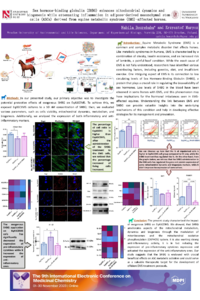
9th-ECMC_Poster_Nabila Bourebaba.pdf
FBXW7 E3 ubiquitin ligase ameliorates insulin sensitivity in equine metabolic syndrome-affected liver by targeting Fetuin-A hepatokine
How safe are gold nanoparticles? A case study in marine organisms