Event submissions
Published

This submission belongs to the session S9. Crop Production; of the event 2nd International Online Conference on Agriculture
Published date
06 Nov, 2023
Academic Editor
'%3e%3cpath%20d='M12.6657%2010.9104C12.4185%2010.325%2012.0599%209.79327%2011.6097%209.34482C11.1609%208.89508%2010.6293%208.5365%2010.0442%208.28888C10.0389%208.28626%2010.0337%208.28495%2010.0285%208.28233C10.8446%207.69279%2011.3752%206.73249%2011.3752%205.64904C11.3752%203.8542%209.92103%202.39999%208.1262%202.39999C6.33136%202.39999%204.87715%203.8542%204.87715%205.64904C4.87715%206.73249%205.40774%207.69279%206.22393%208.28364C6.21869%208.28626%206.21345%208.28757%206.20821%208.29019C5.62129%208.5378%205.09463%208.89284%204.64265%209.34613C4.1929%209.79493%203.83432%2010.3266%203.58671%2010.9117C3.34345%2011.4845%203.21226%2012.0987%203.20023%2012.7209C3.19988%2012.7349%203.20233%2012.7488%203.20744%2012.7619C3.21255%2012.7749%203.22022%2012.7867%203.22998%2012.7968C3.23975%2012.8068%203.25142%2012.8147%203.26431%2012.8202C3.2772%2012.8256%203.29105%2012.8284%203.30504%2012.8284H4.09109C4.14874%2012.8284%204.19459%2012.7825%204.1959%2012.7262C4.2221%2011.7148%204.62823%2010.7676%205.34617%2010.0497C6.08899%209.30683%207.0755%208.89808%208.1262%208.89808C9.17689%208.89808%2010.1634%209.30683%2010.9062%2010.0497C11.6242%2010.7676%2012.0303%2011.7148%2012.0565%2012.7262C12.0578%2012.7838%2012.1037%2012.8284%2012.1613%2012.8284H12.9474C12.9613%2012.8284%2012.9752%2012.8256%2012.9881%2012.8202C13.001%2012.8147%2013.0126%2012.8068%2013.0224%2012.7968C13.0322%2012.7867%2013.0398%2012.7749%2013.0449%2012.7619C13.0501%2012.7488%2013.0525%2012.7349%2013.0522%2012.7209C13.0391%2012.0947%2012.9094%2011.4855%2012.6657%2010.9104ZM8.1262%207.9024C7.52486%207.9024%206.9589%207.6679%206.53312%207.24211C6.10733%206.81633%205.87283%206.25037%205.87283%205.64904C5.87283%205.0477%206.10733%204.48174%206.53312%204.05596C6.9589%203.63018%207.52486%203.39567%208.1262%203.39567C8.72753%203.39567%209.29349%203.63018%209.71927%204.05596C10.1451%204.48174%2010.3796%205.0477%2010.3796%205.64904C10.3796%206.25037%2010.1451%206.81633%209.71927%207.24211C9.29349%207.6679%208.72753%207.9024%208.1262%207.9024Z'%20fill='%235D1EE1'/%3e%3c/g%3e%3c/svg%3e) Daniel Tan
Daniel TanCitation
Karina Batista, Alessandra Aparecida Giacomini, Luciana Gerdes, Waldssimiler Teixeira Mattos, Cropping system and nitrogen supply interfere in sustainability of maize production in the dry season, in Proceedings of 2nd International Online Conference on Agriculture, 1 November–15 November 2023, MDPI: Basel, Switzerland, doi: 10.3390/IOCAG2023-15828
Share
Email
Facebook
Twitter
LinkedIn
Cropping system and nitrogen supply interfere in sustainability of maize production in the dry season
'%3e%3cpath%20d='M12.6647%2010.9104C12.4176%2010.325%2012.0589%209.7933%2011.6088%209.34485C11.16%208.89511%2010.6283%208.53653%2010.0432%208.28891C10.038%208.28629%2010.0327%208.28498%2010.0275%208.28236C10.8437%207.69282%2011.3743%206.73252%2011.3743%205.64907C11.3743%203.85423%209.92005%202.40002%208.12522%202.40002C6.33038%202.40002%204.87618%203.85423%204.87618%205.64907C4.87618%206.73252%205.40677%207.69282%206.22296%208.28367C6.21772%208.28629%206.21248%208.2876%206.20724%208.29022C5.62031%208.53783%205.09365%208.89287%204.64167%209.34616C4.19192%209.79496%203.83334%2010.3266%203.58573%2010.9117C3.34247%2011.4846%203.21128%2012.0987%203.19925%2012.721C3.1989%2012.735%203.20135%2012.7489%203.20646%2012.7619C3.21157%2012.7749%203.21924%2012.7868%203.22901%2012.7968C3.23877%2012.8068%203.25045%2012.8148%203.26334%2012.8202C3.27623%2012.8256%203.29007%2012.8284%203.30406%2012.8284H4.09012C4.14776%2012.8284%204.19362%2012.7825%204.19493%2012.7262C4.22113%2011.7148%204.62726%2010.7676%205.34519%2010.0497C6.08802%209.30686%207.07452%208.89811%208.12522%208.89811C9.17592%208.89811%2010.1624%209.30686%2010.9052%2010.0497C11.6232%2010.7676%2012.0293%2011.7148%2012.0555%2012.7262C12.0568%2012.7839%2012.1027%2012.8284%2012.1603%2012.8284H12.9464C12.9604%2012.8284%2012.9742%2012.8256%2012.9871%2012.8202C13%2012.8148%2013.0117%2012.8068%2013.0214%2012.7968C13.0312%2012.7868%2013.0389%2012.7749%2013.044%2012.7619C13.0491%2012.7489%2013.0515%2012.735%2013.0512%2012.721C13.0381%2012.0947%2012.9084%2011.4856%2012.6647%2010.9104ZM8.12522%207.90243C7.52388%207.90243%206.95792%207.66793%206.53214%207.24215C6.10636%206.81636%205.87185%206.2504%205.87185%205.64907C5.87185%205.04773%206.10636%204.48177%206.53214%204.05599C6.95792%203.63021%207.52388%203.3957%208.12522%203.3957C8.72655%203.3957%209.29252%203.63021%209.7183%204.05599C10.1441%204.48177%2010.3786%205.04773%2010.3786%205.64907C10.3786%206.2504%2010.1441%206.81636%209.7183%207.24215C9.29252%207.66793%208.72655%207.90243%208.12522%207.90243Z'%20fill='%235D1EE1'/%3e%3c/g%3e%3c/svg%3e)
Karina Batista 1
Alessandra Aparecida Giacomini 1
Luciana Gerdes 1
Waldssimiler Teixeira Mattos 1
1. Instituto de Zootecnia/APTA/SAA-SP
Abstract
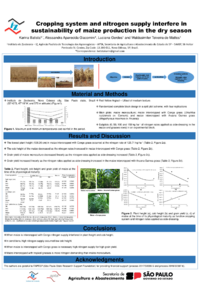
Diversification in cropping systems can increase crop production and reduce environmental impacts. The use of tropical grasses intercropped with maize crop during the dry season as a strategy to increase the diversity of plant in tillage and to recover areas of grassland has been adopted in Brazil. Tropical grasses and maize are nitrogen demanding plants, and low nitrogen availability can result in variations in grains production. Thus, we aimed to study the maize production as a functional cropping system and nitrogen rates applied as side-dressing. The experimental design was randomized blocks with four replications in a split-plot scheme. The main plots were: maize monoculture; maize intercropped with Congo grass (Urochloa ruziziensis cv. Comum); and maize intercropped with Aruana Guinea grass (Megathyrsus maximus cv. Aruana). The subplots were nitrogen rates applied as side-dressing in the maize and grasses rows: 0; 50; 100 and 150 kg/ha. There were evaluated for plant height and height of the first ear of maize, and grain production of maize. Plant height and height of the first ear of maize showed significance for the interaction between maize intercropped with Congo grass and nitrogen rates. While the grain production of maize showed significance for the interaction between maize monoculture and nitrogen rates, and for maize intercropped with Aruana Guinea grass and nitrogen rates. We concluded that the heights of maize intercropped with Congo grass depends on an adequate nitrogen supply and Aruana Guinea grass intercropped with maize associated with the increase in nitrogen supply which promotes the increase in grain production of maize.
Keywords
Aruana Guinea grass
Congo grass
diversification practices
environmental impacts
intercropping system
sustanaible agriculture
Manuscript
sciforum-074495- 30 oct 2023 (2).pdf
Poster
Karina Batista Template_Poster_IOCAG 2023.pdf
Qualities and origins of out-of-home food products: midday meal in the cities of southeastern Gabon
Impact of Planting Techniques and Nutrient Management on Crop Productivity and Profitability of Rice (Oryza sativa L.)