Event submissions
Published

This submission belongs to the session S6. Horticultural and floricultural crops of the event The 3rd International Electronic Conference on Agronomy
Published date
14 Nov, 2023
Academic Editor
'%3e%3cpath%20d='M12.6657%2010.9104C12.4185%2010.325%2012.0599%209.79327%2011.6097%209.34482C11.1609%208.89508%2010.6293%208.5365%2010.0442%208.28888C10.0389%208.28626%2010.0337%208.28495%2010.0285%208.28233C10.8446%207.69279%2011.3752%206.73249%2011.3752%205.64904C11.3752%203.8542%209.92103%202.39999%208.1262%202.39999C6.33136%202.39999%204.87715%203.8542%204.87715%205.64904C4.87715%206.73249%205.40774%207.69279%206.22393%208.28364C6.21869%208.28626%206.21345%208.28757%206.20821%208.29019C5.62129%208.5378%205.09463%208.89284%204.64265%209.34613C4.1929%209.79493%203.83432%2010.3266%203.58671%2010.9117C3.34345%2011.4845%203.21226%2012.0987%203.20023%2012.7209C3.19988%2012.7349%203.20233%2012.7488%203.20744%2012.7619C3.21255%2012.7749%203.22022%2012.7867%203.22998%2012.7968C3.23975%2012.8068%203.25142%2012.8147%203.26431%2012.8202C3.2772%2012.8256%203.29105%2012.8284%203.30504%2012.8284H4.09109C4.14874%2012.8284%204.19459%2012.7825%204.1959%2012.7262C4.2221%2011.7148%204.62823%2010.7676%205.34617%2010.0497C6.08899%209.30683%207.0755%208.89808%208.1262%208.89808C9.17689%208.89808%2010.1634%209.30683%2010.9062%2010.0497C11.6242%2010.7676%2012.0303%2011.7148%2012.0565%2012.7262C12.0578%2012.7838%2012.1037%2012.8284%2012.1613%2012.8284H12.9474C12.9613%2012.8284%2012.9752%2012.8256%2012.9881%2012.8202C13.001%2012.8147%2013.0126%2012.8068%2013.0224%2012.7968C13.0322%2012.7867%2013.0398%2012.7749%2013.0449%2012.7619C13.0501%2012.7488%2013.0525%2012.7349%2013.0522%2012.7209C13.0391%2012.0947%2012.9094%2011.4855%2012.6657%2010.9104ZM8.1262%207.9024C7.52486%207.9024%206.9589%207.6679%206.53312%207.24211C6.10733%206.81633%205.87283%206.25037%205.87283%205.64904C5.87283%205.0477%206.10733%204.48174%206.53312%204.05596C6.9589%203.63018%207.52486%203.39567%208.1262%203.39567C8.72753%203.39567%209.29349%203.63018%209.71927%204.05596C10.1451%204.48174%2010.3796%205.0477%2010.3796%205.64904C10.3796%206.25037%2010.1451%206.81633%209.71927%207.24211C9.29349%207.6679%208.72753%207.9024%208.1262%207.9024Z'%20fill='%235D1EE1'/%3e%3c/g%3e%3c/svg%3e) Gianni Bellocchi
Gianni BellocchiCitation
María Rita Guzman, Isabel Marques, Effects of salinity on the antioxidant response of marigold flowers (Tagetes L.), in Proceedings of The 3rd International Electronic Conference on Agronomy, 15 October–30 October 2023, MDPI: Basel, Switzerland, doi: 10.3390/IECAG2023-15986
Share
Email
Facebook
Twitter
LinkedIn
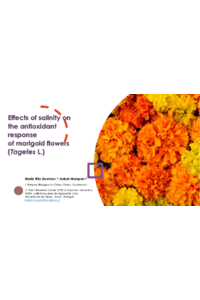
Effects of salinity on the antioxidant response of marigold flowers (Tagetes L.)
'%3e%3cpath%20d='M12.6647%2010.9104C12.4176%2010.325%2012.0589%209.7933%2011.6088%209.34485C11.16%208.89511%2010.6283%208.53653%2010.0432%208.28891C10.038%208.28629%2010.0327%208.28498%2010.0275%208.28236C10.8437%207.69282%2011.3743%206.73252%2011.3743%205.64907C11.3743%203.85423%209.92005%202.40002%208.12522%202.40002C6.33038%202.40002%204.87618%203.85423%204.87618%205.64907C4.87618%206.73252%205.40677%207.69282%206.22296%208.28367C6.21772%208.28629%206.21248%208.2876%206.20724%208.29022C5.62031%208.53783%205.09365%208.89287%204.64167%209.34616C4.19192%209.79496%203.83334%2010.3266%203.58573%2010.9117C3.34247%2011.4846%203.21128%2012.0987%203.19925%2012.721C3.1989%2012.735%203.20135%2012.7489%203.20646%2012.7619C3.21157%2012.7749%203.21924%2012.7868%203.22901%2012.7968C3.23877%2012.8068%203.25045%2012.8148%203.26334%2012.8202C3.27623%2012.8256%203.29007%2012.8284%203.30406%2012.8284H4.09012C4.14776%2012.8284%204.19362%2012.7825%204.19493%2012.7262C4.22113%2011.7148%204.62726%2010.7676%205.34519%2010.0497C6.08802%209.30686%207.07452%208.89811%208.12522%208.89811C9.17592%208.89811%2010.1624%209.30686%2010.9052%2010.0497C11.6232%2010.7676%2012.0293%2011.7148%2012.0555%2012.7262C12.0568%2012.7839%2012.1027%2012.8284%2012.1603%2012.8284H12.9464C12.9604%2012.8284%2012.9742%2012.8256%2012.9871%2012.8202C13%2012.8148%2013.0117%2012.8068%2013.0214%2012.7968C13.0312%2012.7868%2013.0389%2012.7749%2013.044%2012.7619C13.0491%2012.7489%2013.0515%2012.735%2013.0512%2012.721C13.0381%2012.0947%2012.9084%2011.4856%2012.6647%2010.9104ZM8.12522%207.90243C7.52388%207.90243%206.95792%207.66793%206.53214%207.24215C6.10636%206.81636%205.87185%206.2504%205.87185%205.64907C5.87185%205.04773%206.10636%204.48177%206.53214%204.05599C6.95792%203.63021%207.52388%203.3957%208.12522%203.3957C8.72655%203.3957%209.29252%203.63021%209.7183%204.05599C10.1441%204.48177%2010.3786%205.04773%2010.3786%205.64907C10.3786%206.2504%2010.1441%206.81636%209.7183%207.24215C9.29252%207.66793%208.72655%207.90243%208.12522%207.90243Z'%20fill='%235D1EE1'/%3e%3c/g%3e%3c/svg%3e)
María Rita Guzman 1

Isabel Marques 2
1. Estacion Biológica La Ceiba, Chisec, Guatemala
2. Forest Research Center (CEF) & Associate Laboratory TERRA, Instituto Superior de Agronomia (ISA), Universidade de Lisboa (UL), Tapada da Ajuda, 1349-017 Lisbon, Portugal
Abstract
Salinization is an increasing problem worldwide, limiting crop production. Soil salinity causes ion toxicity, osmotic stress, nutrient deficiency and oxidative stress on plants, leading to the overproduction of reactive oxygen species (ROS). To counterbalance these effects, plants activate a complex detoxification system through the action of antioxidant pigments, carotenoids, phenolics and flavonoids, and the accumulation of minerals, that play an important role in human health against several diseases.
In this study, we investigated the impacts of salinity (0, 50, 100, 300 mM NaCl) on the flowers of three Tagetes patula cultivars harvested after 14 days, recording total carotenoids, minerals, carotenoids, ascorbic acid, total polyphenol content, and total flavonoid content. Results showed an overall increase in all compounds with the increase in salinity levels, in comparison with control conditions. Nevertheless, salinity (most especially 100 and 300 mM) strongly affected plant size and flower production.
Results showed that edible marigold flowers are a promising crop with enriched nutritional contents and antioxidant activity that can be a new source of source of nutraceuticals. However, this study also reports, for the first time, the harsh effects of high salinity in the production of flowers, limiting its production in high-salinity soils. We recommend its production in a short exposure to salinity up to 100mM NaCl to achieve a high production of nutraceuticals without compromising the viability of flower production.
Keywords
edible flowers
antioxidant
nutraceutical food
salinity
tolerance
Manuscript
sciforum-078971-2.pdf
Poster
tagetes_out_v2.pdf
Sentinel data and machine learning algorithms for soil moisture land classification
Urban Agriculture in Morocco: Which Model is Adaptable to Socio-economic and Environmental Challenges? (The Case of Marrakech)