Event submissions
Published

This submission belongs to the session D. Sensor Data Analytics of the event 10th International Electronic Conference on Sensors and Applications
Published date
15 Nov, 2023
Academic Editor
'%3e%3cpath%20d='M12.6657%2010.9104C12.4185%2010.325%2012.0599%209.79327%2011.6097%209.34482C11.1609%208.89508%2010.6293%208.5365%2010.0442%208.28888C10.0389%208.28626%2010.0337%208.28495%2010.0285%208.28233C10.8446%207.69279%2011.3752%206.73249%2011.3752%205.64904C11.3752%203.8542%209.92103%202.39999%208.1262%202.39999C6.33136%202.39999%204.87715%203.8542%204.87715%205.64904C4.87715%206.73249%205.40774%207.69279%206.22393%208.28364C6.21869%208.28626%206.21345%208.28757%206.20821%208.29019C5.62129%208.5378%205.09463%208.89284%204.64265%209.34613C4.1929%209.79493%203.83432%2010.3266%203.58671%2010.9117C3.34345%2011.4845%203.21226%2012.0987%203.20023%2012.7209C3.19988%2012.7349%203.20233%2012.7488%203.20744%2012.7619C3.21255%2012.7749%203.22022%2012.7867%203.22998%2012.7968C3.23975%2012.8068%203.25142%2012.8147%203.26431%2012.8202C3.2772%2012.8256%203.29105%2012.8284%203.30504%2012.8284H4.09109C4.14874%2012.8284%204.19459%2012.7825%204.1959%2012.7262C4.2221%2011.7148%204.62823%2010.7676%205.34617%2010.0497C6.08899%209.30683%207.0755%208.89808%208.1262%208.89808C9.17689%208.89808%2010.1634%209.30683%2010.9062%2010.0497C11.6242%2010.7676%2012.0303%2011.7148%2012.0565%2012.7262C12.0578%2012.7838%2012.1037%2012.8284%2012.1613%2012.8284H12.9474C12.9613%2012.8284%2012.9752%2012.8256%2012.9881%2012.8202C13.001%2012.8147%2013.0126%2012.8068%2013.0224%2012.7968C13.0322%2012.7867%2013.0398%2012.7749%2013.0449%2012.7619C13.0501%2012.7488%2013.0525%2012.7349%2013.0522%2012.7209C13.0391%2012.0947%2012.9094%2011.4855%2012.6657%2010.9104ZM8.1262%207.9024C7.52486%207.9024%206.9589%207.6679%206.53312%207.24211C6.10733%206.81633%205.87283%206.25037%205.87283%205.64904C5.87283%205.0477%206.10733%204.48174%206.53312%204.05596C6.9589%203.63018%207.52486%203.39567%208.1262%203.39567C8.72753%203.39567%209.29349%203.63018%209.71927%204.05596C10.1451%204.48174%2010.3796%205.0477%2010.3796%205.64904C10.3796%206.25037%2010.1451%206.81633%209.71927%207.24211C9.29349%207.6679%208.72753%207.9024%208.1262%207.9024Z'%20fill='%235D1EE1'/%3e%3c/g%3e%3c/svg%3e) Stefano Mariani
Stefano MarianiCitation
Alexander Isiani, Kelly Blayne Crittenden, Leland Weiss, Statistical analysis of Gyroscopic data to determine machine health in Additive Manufacturing., in Proceedings of 10th International Electronic Conference on Sensors and Applications, 15 November–30 November 2023, MDPI: Basel, Switzerland, doi: 10.3390/ecsa-10-16218
Share
Email
Facebook
Twitter
LinkedIn
Statistical analysis of Gyroscopic data to determine machine health in Additive Manufacturing.
'%3e%3cpath%20d='M12.6647%2010.9104C12.4176%2010.325%2012.0589%209.7933%2011.6088%209.34485C11.16%208.89511%2010.6283%208.53653%2010.0432%208.28891C10.038%208.28629%2010.0327%208.28498%2010.0275%208.28236C10.8437%207.69282%2011.3743%206.73252%2011.3743%205.64907C11.3743%203.85423%209.92005%202.40002%208.12522%202.40002C6.33038%202.40002%204.87618%203.85423%204.87618%205.64907C4.87618%206.73252%205.40677%207.69282%206.22296%208.28367C6.21772%208.28629%206.21248%208.2876%206.20724%208.29022C5.62031%208.53783%205.09365%208.89287%204.64167%209.34616C4.19192%209.79496%203.83334%2010.3266%203.58573%2010.9117C3.34247%2011.4846%203.21128%2012.0987%203.19925%2012.721C3.1989%2012.735%203.20135%2012.7489%203.20646%2012.7619C3.21157%2012.7749%203.21924%2012.7868%203.22901%2012.7968C3.23877%2012.8068%203.25045%2012.8148%203.26334%2012.8202C3.27623%2012.8256%203.29007%2012.8284%203.30406%2012.8284H4.09012C4.14776%2012.8284%204.19362%2012.7825%204.19493%2012.7262C4.22113%2011.7148%204.62726%2010.7676%205.34519%2010.0497C6.08802%209.30686%207.07452%208.89811%208.12522%208.89811C9.17592%208.89811%2010.1624%209.30686%2010.9052%2010.0497C11.6232%2010.7676%2012.0293%2011.7148%2012.0555%2012.7262C12.0568%2012.7839%2012.1027%2012.8284%2012.1603%2012.8284H12.9464C12.9604%2012.8284%2012.9742%2012.8256%2012.9871%2012.8202C13%2012.8148%2013.0117%2012.8068%2013.0214%2012.7968C13.0312%2012.7868%2013.0389%2012.7749%2013.044%2012.7619C13.0491%2012.7489%2013.0515%2012.735%2013.0512%2012.721C13.0381%2012.0947%2012.9084%2011.4856%2012.6647%2010.9104ZM8.12522%207.90243C7.52388%207.90243%206.95792%207.66793%206.53214%207.24215C6.10636%206.81636%205.87185%206.2504%205.87185%205.64907C5.87185%205.04773%206.10636%204.48177%206.53214%204.05599C6.95792%203.63021%207.52388%203.3957%208.12522%203.3957C8.72655%203.3957%209.29252%203.63021%209.7183%204.05599C10.1441%204.48177%2010.3786%205.04773%2010.3786%205.64907C10.3786%206.2504%2010.1441%206.81636%209.7183%207.24215C9.29252%207.66793%208.72655%207.90243%208.12522%207.90243Z'%20fill='%235D1EE1'/%3e%3c/g%3e%3c/svg%3e)
Alexander Isiani 1
Kelly Blayne Crittenden 1
Leland Weiss 1
1. Louisiana Tech University
Abstract
Additive manufacturing, commonly known as 3D printing, has significantly advanced part fabrication in various industries. Despite its numerous benefits, including reduced lead times and complex geometries, a few obstacles still prevent widespread adoption. Current research efforts have predominantly focused on in-situ monitoring and investigating the mechanical properties of 3D printed materials, with limited attention given to the sources of skewness in the fabricated products. To address this gap, our study aims to explore the factors contributing to skewness in 3D-printed objects. Specifically, we examine the influence of the belt and carriage wheel conditions within the 3D printer on the shape of the fabricated products, resulting from potential distortions in the orientation of the print head carriage during the printing process. A comprehensive analysis was employed, utilizing One-Way ANOVA, Tukey, Fisher Least Significant Difference Method, and Friedman Rank test, to establish statistically significant evidence supporting the notion that the mechanical components, namely the belt, and wheel, have a substantial impact on the orientation of the print head, consequently leading to skewness in the final 3D printed products. Through rigorous analysis and experimentation, the findings of this study indicate that the condition of the belt and the wheel play a pivotal role in influencing skewness. This conclusion was derived from both parametric and non-parametric statistical analyses, which further underscore the significance of these factors. Overall, these results shed light on the key contributors to skewness in 3D printed products, providing valuable insights for improving such components' dynamic reliability and structural integrity. Further research and development in this area can help in devising strategies and interventions to mitigate skewness and enhance the overall quality of additively manufactured structures in real-time.
Keywords
Print head carriage
Gyroscope
Skewness
Additive Manufacturing
Manuscript
sciforum-077369-clean.pdf
Poster
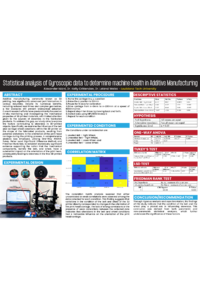
Poster.pdf
Electrospun nano- and microfiber mesh based transducer for electrochemical biosensing applications
IMPLEMENTATION OF A LORA AND IOT- BASED HEALTH MONITORING AND ALARM SYSTEM FOR THE ELDERLY