Event submissions
Published
This submission belongs to the session S1. Ecosystem, Environment and Climate Change in Agriculture; of the event 2nd International Online Conference on Agriculture
Published date
21 Nov, 2023
Academic Editor
'%3e%3cpath%20d='M12.6657%2010.9104C12.4185%2010.325%2012.0599%209.79327%2011.6097%209.34482C11.1609%208.89508%2010.6293%208.5365%2010.0442%208.28888C10.0389%208.28626%2010.0337%208.28495%2010.0285%208.28233C10.8446%207.69279%2011.3752%206.73249%2011.3752%205.64904C11.3752%203.8542%209.92103%202.39999%208.1262%202.39999C6.33136%202.39999%204.87715%203.8542%204.87715%205.64904C4.87715%206.73249%205.40774%207.69279%206.22393%208.28364C6.21869%208.28626%206.21345%208.28757%206.20821%208.29019C5.62129%208.5378%205.09463%208.89284%204.64265%209.34613C4.1929%209.79493%203.83432%2010.3266%203.58671%2010.9117C3.34345%2011.4845%203.21226%2012.0987%203.20023%2012.7209C3.19988%2012.7349%203.20233%2012.7488%203.20744%2012.7619C3.21255%2012.7749%203.22022%2012.7867%203.22998%2012.7968C3.23975%2012.8068%203.25142%2012.8147%203.26431%2012.8202C3.2772%2012.8256%203.29105%2012.8284%203.30504%2012.8284H4.09109C4.14874%2012.8284%204.19459%2012.7825%204.1959%2012.7262C4.2221%2011.7148%204.62823%2010.7676%205.34617%2010.0497C6.08899%209.30683%207.0755%208.89808%208.1262%208.89808C9.17689%208.89808%2010.1634%209.30683%2010.9062%2010.0497C11.6242%2010.7676%2012.0303%2011.7148%2012.0565%2012.7262C12.0578%2012.7838%2012.1037%2012.8284%2012.1613%2012.8284H12.9474C12.9613%2012.8284%2012.9752%2012.8256%2012.9881%2012.8202C13.001%2012.8147%2013.0126%2012.8068%2013.0224%2012.7968C13.0322%2012.7867%2013.0398%2012.7749%2013.0449%2012.7619C13.0501%2012.7488%2013.0525%2012.7349%2013.0522%2012.7209C13.0391%2012.0947%2012.9094%2011.4855%2012.6657%2010.9104ZM8.1262%207.9024C7.52486%207.9024%206.9589%207.6679%206.53312%207.24211C6.10733%206.81633%205.87283%206.25037%205.87283%205.64904C5.87283%205.0477%206.10733%204.48174%206.53312%204.05596C6.9589%203.63018%207.52486%203.39567%208.1262%203.39567C8.72753%203.39567%209.29349%203.63018%209.71927%204.05596C10.1451%204.48174%2010.3796%205.0477%2010.3796%205.64904C10.3796%206.25037%2010.1451%206.81633%209.71927%207.24211C9.29349%207.6679%208.72753%207.9024%208.1262%207.9024Z'%20fill='%235D1EE1'/%3e%3c/g%3e%3c/svg%3e) Piebiep Goufo
Piebiep GoufoCitation
Rūta Sutulienė, Ausra Brazaityte, Giedrė Samuolienė, Molybdenum Trioxide Nanoparticles Enhance Drought Tolerance in Pea Plants, in Proceedings of 2nd International Online Conference on Agriculture, 1 November–15 November 2023, MDPI: Basel, Switzerland
Share
Email
Facebook
Twitter
LinkedIn
Molybdenum Trioxide Nanoparticles Enhance Drought Tolerance in Pea Plants
'%3e%3cpath%20d='M12.6647%2010.9104C12.4176%2010.325%2012.0589%209.7933%2011.6088%209.34485C11.16%208.89511%2010.6283%208.53653%2010.0432%208.28891C10.038%208.28629%2010.0327%208.28498%2010.0275%208.28236C10.8437%207.69282%2011.3743%206.73252%2011.3743%205.64907C11.3743%203.85423%209.92005%202.40002%208.12522%202.40002C6.33038%202.40002%204.87618%203.85423%204.87618%205.64907C4.87618%206.73252%205.40677%207.69282%206.22296%208.28367C6.21772%208.28629%206.21248%208.2876%206.20724%208.29022C5.62031%208.53783%205.09365%208.89287%204.64167%209.34616C4.19192%209.79496%203.83334%2010.3266%203.58573%2010.9117C3.34247%2011.4846%203.21128%2012.0987%203.19925%2012.721C3.1989%2012.735%203.20135%2012.7489%203.20646%2012.7619C3.21157%2012.7749%203.21924%2012.7868%203.22901%2012.7968C3.23877%2012.8068%203.25045%2012.8148%203.26334%2012.8202C3.27623%2012.8256%203.29007%2012.8284%203.30406%2012.8284H4.09012C4.14776%2012.8284%204.19362%2012.7825%204.19493%2012.7262C4.22113%2011.7148%204.62726%2010.7676%205.34519%2010.0497C6.08802%209.30686%207.07452%208.89811%208.12522%208.89811C9.17592%208.89811%2010.1624%209.30686%2010.9052%2010.0497C11.6232%2010.7676%2012.0293%2011.7148%2012.0555%2012.7262C12.0568%2012.7839%2012.1027%2012.8284%2012.1603%2012.8284H12.9464C12.9604%2012.8284%2012.9742%2012.8256%2012.9871%2012.8202C13%2012.8148%2013.0117%2012.8068%2013.0214%2012.7968C13.0312%2012.7868%2013.0389%2012.7749%2013.044%2012.7619C13.0491%2012.7489%2013.0515%2012.735%2013.0512%2012.721C13.0381%2012.0947%2012.9084%2011.4856%2012.6647%2010.9104ZM8.12522%207.90243C7.52388%207.90243%206.95792%207.66793%206.53214%207.24215C6.10636%206.81636%205.87185%206.2504%205.87185%205.64907C5.87185%205.04773%206.10636%204.48177%206.53214%204.05599C6.95792%203.63021%207.52388%203.3957%208.12522%203.3957C8.72655%203.3957%209.29252%203.63021%209.7183%204.05599C10.1441%204.48177%2010.3786%205.04773%2010.3786%205.64907C10.3786%206.2504%2010.1441%206.81636%209.7183%207.24215C9.29252%207.66793%208.72655%207.90243%208.12522%207.90243Z'%20fill='%235D1EE1'/%3e%3c/g%3e%3c/svg%3e)
Rūta Sutulienė 1
Ausra Brazaityte 1

Giedrė Samuolienė 1
1. Lithuanian Research Centre for Agriculture and Forestry, Institute of Horticulture, Kaunas str. 30, Babtai, LT-54333, Lithuania.
Abstract
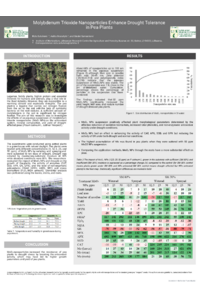
Legumes family plants, high in protein and essential minerals for humans and animals, play a vital role in the food industry. However, they are susceptible to a warming climate and especially droughts. The pea plant is a legume that carries out nitrogen fixation from the air to the soil with the help of symbiotic bacteria on the root nodules. A sufficient amount of molybdenum in the soil is significant for nitrogen fixation. The aim of this research was to investigate the effects of an aqueous suspension of molybdenum trioxide nanoparticles (MoO3 NPs) on the antioxidant system, mineral composition, and yield of drought-affected peas (Pisum sativum L. cultivar 'Respect'). The experiments were conducted using potted plants in a greenhouse with natural daylight. Pea plants were treated with different concentrations (0, 12.5, 25, and 50 ppm) of MoO3 NPs by watering and spraying and were subjected to ten days of drought. Drought was initiated by maintaining substrate moisture at 30% while standard conditions were 80%. The researchers evaluated the impact of MoO3 NPs and drought on the growth of the plants, the activity of enzymes (CAT, SOD, APX, GR, GPX), and the level of non-enzymatic antioxidants (FRAP, DPPH, ABTS, TPC) and stress biomarkers (H2O2, MDA amount). Elemental analysis was performed using the leaves, stems, and roots. The findings indicated that 50 ppm MoO3 NPs significantly increased the yield, height, leaf area, and nodule number of drought-stressed pea plants. MoO3 nanoparticles increased the activity of CAT, APX, SOD, and GPX. The highest Mo accumulation was found in pea roots when the plants were watered with NPs suspensions. MoO3 nanoparticles increased the resistance of pea plants to drought stress by boosting the antioxidant activity, which may have led to higher growth parameters and yield of pea plants.
Keywords
Pea plants
Nanoparticles
Molybdenum
Growth
Antioxidant system
Oxidative stress
Manuscript
2nd IEC on Agriculture 2023 (2) (4).pdf
Poster
2nd IEC on Agriculture 2023 (2).pdf
Influence of harvest date on physicochemical properties and flesh image parameters of red-fleshed apples
Effect of CuO nanoparticles and two lightning intensities on growth parameters of Swiss Chard (Beta vulgaris ssp. cicla L.), Kale (Brassica oleracea), and Lettuce (Lactuca sativa)