Event submissions
Published
This submission belongs to the session S7. Poster Session of the event The 3rd International Electronic Conference on Antibiotics
Published date
30 Nov, 2023
Academic Editor
'%3e%3cpath%20d='M12.6657%2010.9104C12.4185%2010.325%2012.0599%209.79327%2011.6097%209.34482C11.1609%208.89508%2010.6293%208.5365%2010.0442%208.28888C10.0389%208.28626%2010.0337%208.28495%2010.0285%208.28233C10.8446%207.69279%2011.3752%206.73249%2011.3752%205.64904C11.3752%203.8542%209.92103%202.39999%208.1262%202.39999C6.33136%202.39999%204.87715%203.8542%204.87715%205.64904C4.87715%206.73249%205.40774%207.69279%206.22393%208.28364C6.21869%208.28626%206.21345%208.28757%206.20821%208.29019C5.62129%208.5378%205.09463%208.89284%204.64265%209.34613C4.1929%209.79493%203.83432%2010.3266%203.58671%2010.9117C3.34345%2011.4845%203.21226%2012.0987%203.20023%2012.7209C3.19988%2012.7349%203.20233%2012.7488%203.20744%2012.7619C3.21255%2012.7749%203.22022%2012.7867%203.22998%2012.7968C3.23975%2012.8068%203.25142%2012.8147%203.26431%2012.8202C3.2772%2012.8256%203.29105%2012.8284%203.30504%2012.8284H4.09109C4.14874%2012.8284%204.19459%2012.7825%204.1959%2012.7262C4.2221%2011.7148%204.62823%2010.7676%205.34617%2010.0497C6.08899%209.30683%207.0755%208.89808%208.1262%208.89808C9.17689%208.89808%2010.1634%209.30683%2010.9062%2010.0497C11.6242%2010.7676%2012.0303%2011.7148%2012.0565%2012.7262C12.0578%2012.7838%2012.1037%2012.8284%2012.1613%2012.8284H12.9474C12.9613%2012.8284%2012.9752%2012.8256%2012.9881%2012.8202C13.001%2012.8147%2013.0126%2012.8068%2013.0224%2012.7968C13.0322%2012.7867%2013.0398%2012.7749%2013.0449%2012.7619C13.0501%2012.7488%2013.0525%2012.7349%2013.0522%2012.7209C13.0391%2012.0947%2012.9094%2011.4855%2012.6657%2010.9104ZM8.1262%207.9024C7.52486%207.9024%206.9589%207.6679%206.53312%207.24211C6.10733%206.81633%205.87283%206.25037%205.87283%205.64904C5.87283%205.0477%206.10733%204.48174%206.53312%204.05596C6.9589%203.63018%207.52486%203.39567%208.1262%203.39567C8.72753%203.39567%209.29349%203.63018%209.71927%204.05596C10.1451%204.48174%2010.3796%205.0477%2010.3796%205.64904C10.3796%206.25037%2010.1451%206.81633%209.71927%207.24211C9.29349%207.6679%208.72753%207.9024%208.1262%207.9024Z'%20fill='%235D1EE1'/%3e%3c/g%3e%3c/svg%3e) Marc Maresca
Marc MarescaCitation
Lubaba S. Eisa, Rehab Ahmed, β-lactamase producing Pseudomonas aeruginosa recovered from disinfectants frequently used in Tertiary Care Hospitals in Khartoum, in Proceedings of The 3rd International Electronic Conference on Antibiotics, 1 December–15 December 2023, MDPI: Basel, Switzerland
Share
Email
Facebook
Twitter
LinkedIn
β-lactamase producing Pseudomonas aeruginosa recovered from disinfectants frequently used in Tertiary Care Hospitals in Khartoum
'%3e%3cpath%20d='M12.6647%2010.9104C12.4176%2010.325%2012.0589%209.7933%2011.6088%209.34485C11.16%208.89511%2010.6283%208.53653%2010.0432%208.28891C10.038%208.28629%2010.0327%208.28498%2010.0275%208.28236C10.8437%207.69282%2011.3743%206.73252%2011.3743%205.64907C11.3743%203.85423%209.92005%202.40002%208.12522%202.40002C6.33038%202.40002%204.87618%203.85423%204.87618%205.64907C4.87618%206.73252%205.40677%207.69282%206.22296%208.28367C6.21772%208.28629%206.21248%208.2876%206.20724%208.29022C5.62031%208.53783%205.09365%208.89287%204.64167%209.34616C4.19192%209.79496%203.83334%2010.3266%203.58573%2010.9117C3.34247%2011.4846%203.21128%2012.0987%203.19925%2012.721C3.1989%2012.735%203.20135%2012.7489%203.20646%2012.7619C3.21157%2012.7749%203.21924%2012.7868%203.22901%2012.7968C3.23877%2012.8068%203.25045%2012.8148%203.26334%2012.8202C3.27623%2012.8256%203.29007%2012.8284%203.30406%2012.8284H4.09012C4.14776%2012.8284%204.19362%2012.7825%204.19493%2012.7262C4.22113%2011.7148%204.62726%2010.7676%205.34519%2010.0497C6.08802%209.30686%207.07452%208.89811%208.12522%208.89811C9.17592%208.89811%2010.1624%209.30686%2010.9052%2010.0497C11.6232%2010.7676%2012.0293%2011.7148%2012.0555%2012.7262C12.0568%2012.7839%2012.1027%2012.8284%2012.1603%2012.8284H12.9464C12.9604%2012.8284%2012.9742%2012.8256%2012.9871%2012.8202C13%2012.8148%2013.0117%2012.8068%2013.0214%2012.7968C13.0312%2012.7868%2013.0389%2012.7749%2013.044%2012.7619C13.0491%2012.7489%2013.0515%2012.735%2013.0512%2012.721C13.0381%2012.0947%2012.9084%2011.4856%2012.6647%2010.9104ZM8.12522%207.90243C7.52388%207.90243%206.95792%207.66793%206.53214%207.24215C6.10636%206.81636%205.87185%206.2504%205.87185%205.64907C5.87185%205.04773%206.10636%204.48177%206.53214%204.05599C6.95792%203.63021%207.52388%203.3957%208.12522%203.3957C8.72655%203.3957%209.29252%203.63021%209.7183%204.05599C10.1441%204.48177%2010.3786%205.04773%2010.3786%205.64907C10.3786%206.2504%2010.1441%206.81636%209.7183%207.24215C9.29252%207.66793%208.72655%207.90243%208.12522%207.90243Z'%20fill='%235D1EE1'/%3e%3c/g%3e%3c/svg%3e)
Lubaba S. Eisa 1
Rehab Ahmed 2
1. Pharmaceutical biotechnology master program, Faculty of Pharmacy, University of Khartoum, Khartoum, Sudan
2. Department of Natural Products and Alternative Medicine, University of Tabuk, Tabuk, Saudi Arabia
Abstract
Abstract
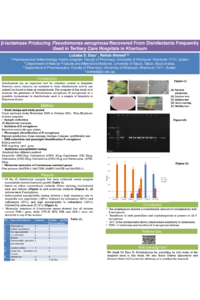
Background: Disinfectants are an important tool for infection control in hospitals. However, some bacteria are resistant to these disinfectants and/or can indeed be found in them as contaminants. The purpose of this study is to examine the presence of Pseudomonas aeruginosa (P. aeruginosa) as a possible contaminant in disinfectants used in a sample of hospitals in Khartoum, Sudan.
Methods: This cross-sectional study was carried out between November 2020 and October 2021. A total of 45 disinfectant samples from nine hospitals in Khartoum were analyzed. Phenotypic methods including gram staining, culture and biochemical tests along with genotypic methods based on Polymerase Chain Reaction (PCR) were utilized to detect the presence of P. aeruginosa. The disc diffusion method was used to test the antibiotic susceptibility of bacterial isolates. Several ß-lactamase genes were also identified using PCR.
Results: Seven samples (15.5%) of the 45 disinfectant samples were found to be contaminated with P. aeruginosa. These samples were from different types of disinfectants. Samples of chloroxylenol type were found to be predominantly contaminated. P. aeruginosa was also detected in sodium hypochlorite and chlorhexidine gluconate-cetrimide types of disinfectants. Several P. aeruginosa isolates exhibited resistance to agents of both the penicillins and cephalosporins groups of antibiotics and many strains were found to be positive for blaTEM-1 resistance gene.
Conclusions: The investigation showed a considerable amount of contamination with P.aeruginosa. Microbial contamination of disinfectants with P. aeruginosa is considered a matter of concern and poses a great risk to patients in hospitals. It is essential to use different strategies to monitor the spread of this pathogen.
Keywords
Disinfectants
Pseudomonas aeruginosa
Infection control
Antimicrobial resistance
β-lactamase
Manuscript
Poster R & L.pdf
Poster
Poster R & L.pdf
Nanoemulsions: a promising strategy in the fight against bacterial infections
The Potential of Phellinus hartigii Methanol Extract as an Inhibitor of Efflux Pumps in Multidrug Resistant E. coli