Event submissions
Published
This submission belongs to the session S7. Poster Session of the event The 3rd International Electronic Conference on Antibiotics
Published date
30 Nov, 2023
Academic Editor
'%3e%3cpath%20d='M12.6657%2010.9104C12.4185%2010.325%2012.0599%209.79327%2011.6097%209.34482C11.1609%208.89508%2010.6293%208.5365%2010.0442%208.28888C10.0389%208.28626%2010.0337%208.28495%2010.0285%208.28233C10.8446%207.69279%2011.3752%206.73249%2011.3752%205.64904C11.3752%203.8542%209.92103%202.39999%208.1262%202.39999C6.33136%202.39999%204.87715%203.8542%204.87715%205.64904C4.87715%206.73249%205.40774%207.69279%206.22393%208.28364C6.21869%208.28626%206.21345%208.28757%206.20821%208.29019C5.62129%208.5378%205.09463%208.89284%204.64265%209.34613C4.1929%209.79493%203.83432%2010.3266%203.58671%2010.9117C3.34345%2011.4845%203.21226%2012.0987%203.20023%2012.7209C3.19988%2012.7349%203.20233%2012.7488%203.20744%2012.7619C3.21255%2012.7749%203.22022%2012.7867%203.22998%2012.7968C3.23975%2012.8068%203.25142%2012.8147%203.26431%2012.8202C3.2772%2012.8256%203.29105%2012.8284%203.30504%2012.8284H4.09109C4.14874%2012.8284%204.19459%2012.7825%204.1959%2012.7262C4.2221%2011.7148%204.62823%2010.7676%205.34617%2010.0497C6.08899%209.30683%207.0755%208.89808%208.1262%208.89808C9.17689%208.89808%2010.1634%209.30683%2010.9062%2010.0497C11.6242%2010.7676%2012.0303%2011.7148%2012.0565%2012.7262C12.0578%2012.7838%2012.1037%2012.8284%2012.1613%2012.8284H12.9474C12.9613%2012.8284%2012.9752%2012.8256%2012.9881%2012.8202C13.001%2012.8147%2013.0126%2012.8068%2013.0224%2012.7968C13.0322%2012.7867%2013.0398%2012.7749%2013.0449%2012.7619C13.0501%2012.7488%2013.0525%2012.7349%2013.0522%2012.7209C13.0391%2012.0947%2012.9094%2011.4855%2012.6657%2010.9104ZM8.1262%207.9024C7.52486%207.9024%206.9589%207.6679%206.53312%207.24211C6.10733%206.81633%205.87283%206.25037%205.87283%205.64904C5.87283%205.0477%206.10733%204.48174%206.53312%204.05596C6.9589%203.63018%207.52486%203.39567%208.1262%203.39567C8.72753%203.39567%209.29349%203.63018%209.71927%204.05596C10.1451%204.48174%2010.3796%205.0477%2010.3796%205.64904C10.3796%206.25037%2010.1451%206.81633%209.71927%207.24211C9.29349%207.6679%208.72753%207.9024%208.1262%207.9024Z'%20fill='%235D1EE1'/%3e%3c/g%3e%3c/svg%3e) Marc Maresca
Marc MarescaCitation
Maciej Saar, Filip Bielec, Dorota Pastuszak-Lewandoska, Cefiderocol – a challenge for disc diffusion antimicrobial susceptibility testing, in Proceedings of The 3rd International Electronic Conference on Antibiotics, 1 December–15 December 2023, MDPI: Basel, Switzerland
Share
Email
Facebook
Twitter
LinkedIn
Cefiderocol – a challenge for disc diffusion antimicrobial susceptibility testing
'%3e%3cpath%20d='M12.6647%2010.9104C12.4176%2010.325%2012.0589%209.7933%2011.6088%209.34485C11.16%208.89511%2010.6283%208.53653%2010.0432%208.28891C10.038%208.28629%2010.0327%208.28498%2010.0275%208.28236C10.8437%207.69282%2011.3743%206.73252%2011.3743%205.64907C11.3743%203.85423%209.92005%202.40002%208.12522%202.40002C6.33038%202.40002%204.87618%203.85423%204.87618%205.64907C4.87618%206.73252%205.40677%207.69282%206.22296%208.28367C6.21772%208.28629%206.21248%208.2876%206.20724%208.29022C5.62031%208.53783%205.09365%208.89287%204.64167%209.34616C4.19192%209.79496%203.83334%2010.3266%203.58573%2010.9117C3.34247%2011.4846%203.21128%2012.0987%203.19925%2012.721C3.1989%2012.735%203.20135%2012.7489%203.20646%2012.7619C3.21157%2012.7749%203.21924%2012.7868%203.22901%2012.7968C3.23877%2012.8068%203.25045%2012.8148%203.26334%2012.8202C3.27623%2012.8256%203.29007%2012.8284%203.30406%2012.8284H4.09012C4.14776%2012.8284%204.19362%2012.7825%204.19493%2012.7262C4.22113%2011.7148%204.62726%2010.7676%205.34519%2010.0497C6.08802%209.30686%207.07452%208.89811%208.12522%208.89811C9.17592%208.89811%2010.1624%209.30686%2010.9052%2010.0497C11.6232%2010.7676%2012.0293%2011.7148%2012.0555%2012.7262C12.0568%2012.7839%2012.1027%2012.8284%2012.1603%2012.8284H12.9464C12.9604%2012.8284%2012.9742%2012.8256%2012.9871%2012.8202C13%2012.8148%2013.0117%2012.8068%2013.0214%2012.7968C13.0312%2012.7868%2013.0389%2012.7749%2013.044%2012.7619C13.0491%2012.7489%2013.0515%2012.735%2013.0512%2012.721C13.0381%2012.0947%2012.9084%2011.4856%2012.6647%2010.9104ZM8.12522%207.90243C7.52388%207.90243%206.95792%207.66793%206.53214%207.24215C6.10636%206.81636%205.87185%206.2504%205.87185%205.64907C5.87185%205.04773%206.10636%204.48177%206.53214%204.05599C6.95792%203.63021%207.52388%203.3957%208.12522%203.3957C8.72655%203.3957%209.29252%203.63021%209.7183%204.05599C10.1441%204.48177%2010.3786%205.04773%2010.3786%205.64907C10.3786%206.2504%2010.1441%206.81636%209.7183%207.24215C9.29252%207.66793%208.72655%207.90243%208.12522%207.90243Z'%20fill='%235D1EE1'/%3e%3c/g%3e%3c/svg%3e)
Maciej Saar 1

Filip Bielec 1

Dorota Pastuszak-Lewandoska 1
1. Department of Microbiology and Laboratory Medical Immunology, Medical University of Lodz
Abstract
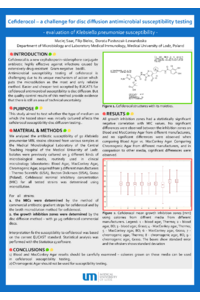
Cefiderocol is a new cephalosporin–siderophore conjugate antibiotic highly effective against infections caused by extensively-drug-resistant Gram-negative bacilli. Antimicrobial susceptibility testing of cefiderocol is challenging due to its unique mechanism of action which puts the microdilution as the most and only reliable method. Easier and cheaper test accepted by EUCATS for cefiderocol antimicrobial susceptibility is disc diffusion. But the quality control results of this method provide evidence that there is still an area of technical uncertainty.
This study aimed to test whether the type of medium on which the tested strain was initially cultured affects the cefiderocol susceptibility disc diffusion testing.
The disk diffusion susceptibility test for cefiderocol was performed on 50 clinical Klebsiella pneumoniae MBL isolates following the EUCAST methodology. Isolates were previously cultured on 3 different kinds of microbiological media, routinely used in clinical microbiology laboratories: Blood Agar, MacConkey Agar, Chromogenic Agar; acquired from 3 different manufacturers. Cefiderocol minimal inhibitory concentration (MIC) for all tested strains was determined using microdilution.
All growth inhibition zones had a statistically significant negative correlation with MIC values. No significant differences were observed between the inhibition zones on Blood and MacConkey Agar from different manufacturers, and no significant differences were observed when comparing Blood Agar vs. MacConkey Agar. Comparing Chromogenic Agar from different manufacturers, and in comparison to other media, significant differences were observed.
Blood and MacConkey Agar results should be carefully examined – colonies grown on these media can be used in cefiderocol susceptibility testing. Chromogenic Agar should not be used for susceptibility testing.
Keywords
cefiderocol
antimicrobial susceptibility testing
Klebsiella pneumoniae
metallo-β-Lactamase
disc diffusion method
Manuscript
cefi_abstract.pdf
Poster
poster-pdf.pdf
Comprehensive typing and genetic analysis of L. monocytogenes isolates: implication for food safety and antibiotic resistance surveillance
Biotransformation of Beta-lactam Antibiotics pollutants into nontoxic form