Event submissions
Published
This submission belongs to the session S7. Poster Session of the event The 3rd International Electronic Conference on Antibiotics
Published date
30 Nov, 2023
Academic Editor
'%3e%3cpath%20d='M12.6657%2010.9104C12.4185%2010.325%2012.0599%209.79327%2011.6097%209.34482C11.1609%208.89508%2010.6293%208.5365%2010.0442%208.28888C10.0389%208.28626%2010.0337%208.28495%2010.0285%208.28233C10.8446%207.69279%2011.3752%206.73249%2011.3752%205.64904C11.3752%203.8542%209.92103%202.39999%208.1262%202.39999C6.33136%202.39999%204.87715%203.8542%204.87715%205.64904C4.87715%206.73249%205.40774%207.69279%206.22393%208.28364C6.21869%208.28626%206.21345%208.28757%206.20821%208.29019C5.62129%208.5378%205.09463%208.89284%204.64265%209.34613C4.1929%209.79493%203.83432%2010.3266%203.58671%2010.9117C3.34345%2011.4845%203.21226%2012.0987%203.20023%2012.7209C3.19988%2012.7349%203.20233%2012.7488%203.20744%2012.7619C3.21255%2012.7749%203.22022%2012.7867%203.22998%2012.7968C3.23975%2012.8068%203.25142%2012.8147%203.26431%2012.8202C3.2772%2012.8256%203.29105%2012.8284%203.30504%2012.8284H4.09109C4.14874%2012.8284%204.19459%2012.7825%204.1959%2012.7262C4.2221%2011.7148%204.62823%2010.7676%205.34617%2010.0497C6.08899%209.30683%207.0755%208.89808%208.1262%208.89808C9.17689%208.89808%2010.1634%209.30683%2010.9062%2010.0497C11.6242%2010.7676%2012.0303%2011.7148%2012.0565%2012.7262C12.0578%2012.7838%2012.1037%2012.8284%2012.1613%2012.8284H12.9474C12.9613%2012.8284%2012.9752%2012.8256%2012.9881%2012.8202C13.001%2012.8147%2013.0126%2012.8068%2013.0224%2012.7968C13.0322%2012.7867%2013.0398%2012.7749%2013.0449%2012.7619C13.0501%2012.7488%2013.0525%2012.7349%2013.0522%2012.7209C13.0391%2012.0947%2012.9094%2011.4855%2012.6657%2010.9104ZM8.1262%207.9024C7.52486%207.9024%206.9589%207.6679%206.53312%207.24211C6.10733%206.81633%205.87283%206.25037%205.87283%205.64904C5.87283%205.0477%206.10733%204.48174%206.53312%204.05596C6.9589%203.63018%207.52486%203.39567%208.1262%203.39567C8.72753%203.39567%209.29349%203.63018%209.71927%204.05596C10.1451%204.48174%2010.3796%205.0477%2010.3796%205.64904C10.3796%206.25037%2010.1451%206.81633%209.71927%207.24211C9.29349%207.6679%208.72753%207.9024%208.1262%207.9024Z'%20fill='%235D1EE1'/%3e%3c/g%3e%3c/svg%3e) Marc Maresca
Marc MarescaCitation
Mateusz Ossowski, Martyna Kasela, Maria Malm, Sylwia Andrzejczuk, Weronika Słotwińska, Species distribution and antimicrobial susceptibility of Staphylococcus spp. in the porcine nasal microbiota, in Proceedings of The 3rd International Electronic Conference on Antibiotics, 1 December–15 December 2023, MDPI: Basel, Switzerland
Share
Email
Facebook
Twitter
LinkedIn
Species distribution and antimicrobial susceptibility of Staphylococcus spp. in the porcine nasal microbiota
'%3e%3cpath%20d='M12.6647%2010.9104C12.4176%2010.325%2012.0589%209.7933%2011.6088%209.34485C11.16%208.89511%2010.6283%208.53653%2010.0432%208.28891C10.038%208.28629%2010.0327%208.28498%2010.0275%208.28236C10.8437%207.69282%2011.3743%206.73252%2011.3743%205.64907C11.3743%203.85423%209.92005%202.40002%208.12522%202.40002C6.33038%202.40002%204.87618%203.85423%204.87618%205.64907C4.87618%206.73252%205.40677%207.69282%206.22296%208.28367C6.21772%208.28629%206.21248%208.2876%206.20724%208.29022C5.62031%208.53783%205.09365%208.89287%204.64167%209.34616C4.19192%209.79496%203.83334%2010.3266%203.58573%2010.9117C3.34247%2011.4846%203.21128%2012.0987%203.19925%2012.721C3.1989%2012.735%203.20135%2012.7489%203.20646%2012.7619C3.21157%2012.7749%203.21924%2012.7868%203.22901%2012.7968C3.23877%2012.8068%203.25045%2012.8148%203.26334%2012.8202C3.27623%2012.8256%203.29007%2012.8284%203.30406%2012.8284H4.09012C4.14776%2012.8284%204.19362%2012.7825%204.19493%2012.7262C4.22113%2011.7148%204.62726%2010.7676%205.34519%2010.0497C6.08802%209.30686%207.07452%208.89811%208.12522%208.89811C9.17592%208.89811%2010.1624%209.30686%2010.9052%2010.0497C11.6232%2010.7676%2012.0293%2011.7148%2012.0555%2012.7262C12.0568%2012.7839%2012.1027%2012.8284%2012.1603%2012.8284H12.9464C12.9604%2012.8284%2012.9742%2012.8256%2012.9871%2012.8202C13%2012.8148%2013.0117%2012.8068%2013.0214%2012.7968C13.0312%2012.7868%2013.0389%2012.7749%2013.044%2012.7619C13.0491%2012.7489%2013.0515%2012.735%2013.0512%2012.721C13.0381%2012.0947%2012.9084%2011.4856%2012.6647%2010.9104ZM8.12522%207.90243C7.52388%207.90243%206.95792%207.66793%206.53214%207.24215C6.10636%206.81636%205.87185%206.2504%205.87185%205.64907C5.87185%205.04773%206.10636%204.48177%206.53214%204.05599C6.95792%203.63021%207.52388%203.3957%208.12522%203.3957C8.72655%203.3957%209.29252%203.63021%209.7183%204.05599C10.1441%204.48177%2010.3786%205.04773%2010.3786%205.64907C10.3786%206.2504%2010.1441%206.81636%209.7183%207.24215C9.29252%207.66793%208.72655%207.90243%208.12522%207.90243Z'%20fill='%235D1EE1'/%3e%3c/g%3e%3c/svg%3e)
Mateusz Ossowski 1
Martyna Kasela 2
Maria Malm 3

Sylwia Andrzejczuk 2
Weronika Słotwińska 4
1. Department of Animal Hygiene and Environmental Hazards, University of Life Sciences in Lublin, 20-950 Lublin, Poland
2. Department of Pharmaceutical Microbiology, Medical University of Lublin, 20-093 Lublin, Poland
3. Department of Medical Informatics and Statistics with E-Learning Lab, Medical University of Lublin, 20-090 Lublin, Poland
4. Student’s Scientific Circle at the Department of Pharmaceutical Microbiology, Medical University of Lublin, 20-093 Lublin, Poland
Abstract
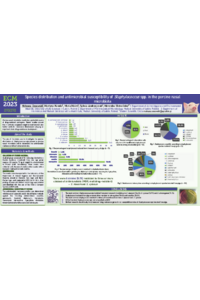
Porcine nasal microbiota constitutes a potential source of drug-resistant pathogens. Although studies have focused mainly on the Staphylococcus aureus pathogenicity, other staphylococci species also harbor antibiotic resistance determinants playing an important role in drug-resistance development. We aimed at determining the species profile of staphylococci isolated from porcine nasal microbiota and at evaluation of their antimicrobial susceptibility.
Nasal swabs were collected from 50 pigs from one age group located on a single farm in Poland. After plating, colonies with distinct morphology were isolated and identified with the use of the Vitek 2 Compact System. The antimicrobial resistance was determined with the use of automatic or disc diffusion method against oxacillin, gentamycin, linezolid, daptomycin, teicoplanin, vancomycin, tetracycline, tigecycline, rifampicin, trimethoprim/sulfamethoxazole, and tobramycin.
In total, we identified 71 strains of staphylococci represented by 12 different species: S. equorum (36.6%), S. xylosus (16.9%), S. chromogenes (14.1%), S. arlettae (7%), S. lentus (4.2%), S. hyicus (4.2%), S. kloosii (4.2%), S. simulans (4.2%), S. gallinarum (2.9%), S. saprophyticus (2.9%), S. haemolyticus (1.4%) and S. carnosus ssp. carnosus (1.4%). Among 42 (84%) pigs colonized with the above-mentioned staphylococci, 21 (50%) were colonized by one strain, 13 (30.1%) by two strains, and 8 (19.1%) by three strains. We detected resistance against tetracycline (70.4%), oxacillin (29.6%), rifampicin (9.9%), tobramycin (4.2%), and linezolid (1.4%).
The high share of resistance to tetracycline and oxacillin in staphylococci from porcine nasal microbiota is alarming and requires further investigation of the resistome.
Keywords
Staphylococcus
antibiotics
swine
microbiota
Manuscript
Abstract.pdf
Poster
poster eca.pdf
Patent-pending antimicotic activity of a protein-rich aqueous extract of oyster mushroom (Pleurotus ostreatus) against Aspergillus spp. and Penicillium spp. moulds
Application of phages for the inactivation of Escherichia coli in ham