Event submissions
Published
This submission belongs to the session S7. Poster Session of the event The 3rd International Electronic Conference on Antibiotics
Published date
30 Nov, 2023
Academic Editor
'%3e%3cpath%20d='M12.6657%2010.9104C12.4185%2010.325%2012.0599%209.79327%2011.6097%209.34482C11.1609%208.89508%2010.6293%208.5365%2010.0442%208.28888C10.0389%208.28626%2010.0337%208.28495%2010.0285%208.28233C10.8446%207.69279%2011.3752%206.73249%2011.3752%205.64904C11.3752%203.8542%209.92103%202.39999%208.1262%202.39999C6.33136%202.39999%204.87715%203.8542%204.87715%205.64904C4.87715%206.73249%205.40774%207.69279%206.22393%208.28364C6.21869%208.28626%206.21345%208.28757%206.20821%208.29019C5.62129%208.5378%205.09463%208.89284%204.64265%209.34613C4.1929%209.79493%203.83432%2010.3266%203.58671%2010.9117C3.34345%2011.4845%203.21226%2012.0987%203.20023%2012.7209C3.19988%2012.7349%203.20233%2012.7488%203.20744%2012.7619C3.21255%2012.7749%203.22022%2012.7867%203.22998%2012.7968C3.23975%2012.8068%203.25142%2012.8147%203.26431%2012.8202C3.2772%2012.8256%203.29105%2012.8284%203.30504%2012.8284H4.09109C4.14874%2012.8284%204.19459%2012.7825%204.1959%2012.7262C4.2221%2011.7148%204.62823%2010.7676%205.34617%2010.0497C6.08899%209.30683%207.0755%208.89808%208.1262%208.89808C9.17689%208.89808%2010.1634%209.30683%2010.9062%2010.0497C11.6242%2010.7676%2012.0303%2011.7148%2012.0565%2012.7262C12.0578%2012.7838%2012.1037%2012.8284%2012.1613%2012.8284H12.9474C12.9613%2012.8284%2012.9752%2012.8256%2012.9881%2012.8202C13.001%2012.8147%2013.0126%2012.8068%2013.0224%2012.7968C13.0322%2012.7867%2013.0398%2012.7749%2013.0449%2012.7619C13.0501%2012.7488%2013.0525%2012.7349%2013.0522%2012.7209C13.0391%2012.0947%2012.9094%2011.4855%2012.6657%2010.9104ZM8.1262%207.9024C7.52486%207.9024%206.9589%207.6679%206.53312%207.24211C6.10733%206.81633%205.87283%206.25037%205.87283%205.64904C5.87283%205.0477%206.10733%204.48174%206.53312%204.05596C6.9589%203.63018%207.52486%203.39567%208.1262%203.39567C8.72753%203.39567%209.29349%203.63018%209.71927%204.05596C10.1451%204.48174%2010.3796%205.0477%2010.3796%205.64904C10.3796%206.25037%2010.1451%206.81633%209.71927%207.24211C9.29349%207.6679%208.72753%207.9024%208.1262%207.9024Z'%20fill='%235D1EE1'/%3e%3c/g%3e%3c/svg%3e) Marc Maresca
Marc MarescaCitation
Andreia Garces, Isabel Pires, Antibiotic-Resistant in Sea Turtles, in Proceedings of The 3rd International Electronic Conference on Antibiotics, 1 December–15 December 2023, MDPI: Basel, Switzerland
Share
Email
Facebook
Twitter
LinkedIn
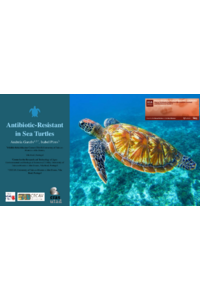
Antibiotic-Resistant in Sea Turtles

Andreia Garces 1

Isabel Pires 2
1. Wildlife Rehabilitation Centre (CRAS), Veterinary Teaching Hospital, University of Trás-os-Montes e AltoDouro (UTAD), 5000-801 Vila Real, Portugal
2. CECAV, University of Trás-os-Montes and Alto Douro, Vila Real, Portugal
Abstract
Dissemination of antibiotic resistance is a major concern, especially in aquatic environments. These resistant bacteria may have serious health implications, especially for endangered species, where are included six species of sea turtles. Data on the worldwide incidence of antibiotic resistance among wildlife is still very scarce, especially concerning sea turtles. The present study aims to compile the latest studies that describe the presence of AMR in sea turtles and determine how they can impact the ecosystem and human health under the concept of One Health Sea turtles play a vital role in maintaining the health of marine ecosystems. The present study presents a total of 18 works, between the years 2006 to 2021. Of the 19 papers the majority, 47.4 % (9/19) were performed in Caretta caretta, 21% (4/19) Chelonia mydas, 5.3 % (1/19) Lepidochelys olivacea, 5.3 % (1/18) Dermochelys coriacea. The remaining 4 studies were performed on several species simultaneously These animals have been proposed as sentinel species to determine pollution levels in marine environments including antibiotic resistance since they are hosts of resistant antibiotic bacteria. They have undoubtedly an important biological indicator of environmental health, particularly in the case of AMR in marine environments. Nevertheless, there are still gaps in knowledge about the dynamics and mechanisms routes of these agents. Often, wild animals such as sea turtles are not included in epidemiological surveillance disease control. In the future, further studies are needed under the One Health system to determine the role of sea turtles in the dissemination and acquisition of AMR in the marine ecosystem.
Keywords
sea turtle
AMR
reptiles
marine
bacteria
Manuscript
abstract_turtles.pdf
Poster
Turtle presentation.pdf
Complete genome of a methicillin-resistant Staphylococcus aureus strain isolated from the pharynx
ROVANCE – Resistance Overcoming Antibiotics New Chemical Entities: A Platform Technology to Overcome Bacterial Resistance