Event submissions
Published
This submission belongs to the session S8. Poster Session of the event The 2nd International Electronic Conference on Microbiology
Published date
26 Dec, 2023
Academic Editor
'%3e%3cpath%20d='M12.6657%2010.9104C12.4185%2010.325%2012.0599%209.79327%2011.6097%209.34482C11.1609%208.89508%2010.6293%208.5365%2010.0442%208.28888C10.0389%208.28626%2010.0337%208.28495%2010.0285%208.28233C10.8446%207.69279%2011.3752%206.73249%2011.3752%205.64904C11.3752%203.8542%209.92103%202.39999%208.1262%202.39999C6.33136%202.39999%204.87715%203.8542%204.87715%205.64904C4.87715%206.73249%205.40774%207.69279%206.22393%208.28364C6.21869%208.28626%206.21345%208.28757%206.20821%208.29019C5.62129%208.5378%205.09463%208.89284%204.64265%209.34613C4.1929%209.79493%203.83432%2010.3266%203.58671%2010.9117C3.34345%2011.4845%203.21226%2012.0987%203.20023%2012.7209C3.19988%2012.7349%203.20233%2012.7488%203.20744%2012.7619C3.21255%2012.7749%203.22022%2012.7867%203.22998%2012.7968C3.23975%2012.8068%203.25142%2012.8147%203.26431%2012.8202C3.2772%2012.8256%203.29105%2012.8284%203.30504%2012.8284H4.09109C4.14874%2012.8284%204.19459%2012.7825%204.1959%2012.7262C4.2221%2011.7148%204.62823%2010.7676%205.34617%2010.0497C6.08899%209.30683%207.0755%208.89808%208.1262%208.89808C9.17689%208.89808%2010.1634%209.30683%2010.9062%2010.0497C11.6242%2010.7676%2012.0303%2011.7148%2012.0565%2012.7262C12.0578%2012.7838%2012.1037%2012.8284%2012.1613%2012.8284H12.9474C12.9613%2012.8284%2012.9752%2012.8256%2012.9881%2012.8202C13.001%2012.8147%2013.0126%2012.8068%2013.0224%2012.7968C13.0322%2012.7867%2013.0398%2012.7749%2013.0449%2012.7619C13.0501%2012.7488%2013.0525%2012.7349%2013.0522%2012.7209C13.0391%2012.0947%2012.9094%2011.4855%2012.6657%2010.9104ZM8.1262%207.9024C7.52486%207.9024%206.9589%207.6679%206.53312%207.24211C6.10733%206.81633%205.87283%206.25037%205.87283%205.64904C5.87283%205.0477%206.10733%204.48174%206.53312%204.05596C6.9589%203.63018%207.52486%203.39567%208.1262%203.39567C8.72753%203.39567%209.29349%203.63018%209.71927%204.05596C10.1451%204.48174%2010.3796%205.0477%2010.3796%205.64904C10.3796%206.25037%2010.1451%206.81633%209.71927%207.24211C9.29349%207.6679%208.72753%207.9024%208.1262%207.9024Z'%20fill='%235D1EE1'/%3e%3c/g%3e%3c/svg%3e) Nico Jehmlich
Nico JehmlichCitation
Sara Conceição, Maria Cristina Queiroga, Marta Laranjo, Antimicrobial resistance of foodborne pathogens in pork sausages – A review, in Proceedings of The 2nd International Electronic Conference on Microbiology, 1 December–15 December 2023, MDPI: Basel, Switzerland
Share
Email
Facebook
Twitter
LinkedIn
Antimicrobial resistance of foodborne pathogens in pork sausages – A review
'%3e%3cpath%20d='M12.6647%2010.9104C12.4176%2010.325%2012.0589%209.7933%2011.6088%209.34485C11.16%208.89511%2010.6283%208.53653%2010.0432%208.28891C10.038%208.28629%2010.0327%208.28498%2010.0275%208.28236C10.8437%207.69282%2011.3743%206.73252%2011.3743%205.64907C11.3743%203.85423%209.92005%202.40002%208.12522%202.40002C6.33038%202.40002%204.87618%203.85423%204.87618%205.64907C4.87618%206.73252%205.40677%207.69282%206.22296%208.28367C6.21772%208.28629%206.21248%208.2876%206.20724%208.29022C5.62031%208.53783%205.09365%208.89287%204.64167%209.34616C4.19192%209.79496%203.83334%2010.3266%203.58573%2010.9117C3.34247%2011.4846%203.21128%2012.0987%203.19925%2012.721C3.1989%2012.735%203.20135%2012.7489%203.20646%2012.7619C3.21157%2012.7749%203.21924%2012.7868%203.22901%2012.7968C3.23877%2012.8068%203.25045%2012.8148%203.26334%2012.8202C3.27623%2012.8256%203.29007%2012.8284%203.30406%2012.8284H4.09012C4.14776%2012.8284%204.19362%2012.7825%204.19493%2012.7262C4.22113%2011.7148%204.62726%2010.7676%205.34519%2010.0497C6.08802%209.30686%207.07452%208.89811%208.12522%208.89811C9.17592%208.89811%2010.1624%209.30686%2010.9052%2010.0497C11.6232%2010.7676%2012.0293%2011.7148%2012.0555%2012.7262C12.0568%2012.7839%2012.1027%2012.8284%2012.1603%2012.8284H12.9464C12.9604%2012.8284%2012.9742%2012.8256%2012.9871%2012.8202C13%2012.8148%2013.0117%2012.8068%2013.0214%2012.7968C13.0312%2012.7868%2013.0389%2012.7749%2013.044%2012.7619C13.0491%2012.7489%2013.0515%2012.735%2013.0512%2012.721C13.0381%2012.0947%2012.9084%2011.4856%2012.6647%2010.9104ZM8.12522%207.90243C7.52388%207.90243%206.95792%207.66793%206.53214%207.24215C6.10636%206.81636%205.87185%206.2504%205.87185%205.64907C5.87185%205.04773%206.10636%204.48177%206.53214%204.05599C6.95792%203.63021%207.52388%203.3957%208.12522%203.3957C8.72655%203.3957%209.29252%203.63021%209.7183%204.05599C10.1441%204.48177%2010.3786%205.04773%2010.3786%205.64907C10.3786%206.2504%2010.1441%206.81636%209.7183%207.24215C9.29252%207.66793%208.72655%207.90243%208.12522%207.90243Z'%20fill='%235D1EE1'/%3e%3c/g%3e%3c/svg%3e)
Sara Conceição 1
Maria Cristina Queiroga 1,2

Marta Laranjo 1
1. MED – Mediterranean Institute for Agriculture, Environment and Development & CHANGE – Global 5 Change and Sustainability Institute, Institute for Advanced Studies and Research, Universidade de Évora, Pólo 6 da Mitra, Ap. 94, 7006-554 Évora, Portugal
2. Departamento de Medicina Veterinária, Escola de Ciências e Tecnologia, Universidade de Évora, Pólo 8 da Mitra, Ap. 94, 7006-554 Évora
Abstract
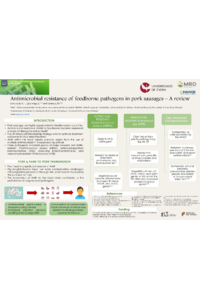
In Europe, there is a high consumption of meat products like sausages, especially in the Mediterranean countries. Studies into this type of product are therefore increasing, to improve food safety. In this area, the most recent focus has been on antimicrobial resistance (AMR) by food-borne bacteria. To this end, the Antimicrobial Stewardship strategy was developed in 2007, so that better results can be achieved through a careful choice of antimicrobials to be administered in the treatment of bacterial infections. The increase in antimicrobial resistance in food is mainly due to selective pressure since several antimicrobials were used in food-producing animals as growth promoters. In the meat industry, pork is the most consumed meat and is also considered to be one of the largest reservoirs of AMR. This study aims to review AMR in the three main pathogenic microbial groups.
One of the most worrying types of resistance in the food industry is methicillin-resistant Staphylococcus aureus, which is responsible for several foodborne outbreaks. In addition to being resistant to methicillin, these bacteria are resistant to almost all β-lactams, as well as vancomycin and fluoroquinolones. In addition to S. aureus, there is a group of enterobacteria that produce the enzyme extended-spectrum beta-lactamase (ESBL) which confers resistance to β-lactams, such as penicillin and 1st to 3rd generation cephalosporins. Finally, vancomycin-resistant Enterococcus spp. have also been recorded in the food industry, being pathogenic species commonly found in the gastrointestinal tract. These bacteria can also exhibit resistance to other antimicrobials, such as ampicillin and oxazolidinones.
Keywords
antimicrobial resistance
pork sausages
Staphylococcus aureus
ESBL-producing Enterobacteriaceae
Enterococcus
Manuscript
Poster_SC.pdf
Poster
Poster_SC.pdf
Emerging Foodborne Pathogens: Challenges and Strategies for Ensuring Food Safety
GESTATIONAL COVID19: MORPHOLOGICAL ALTERATIONS AND DECREASED HLA-G EXPRESSION CAUSED BY SARS-COV-2 INFECTION