Event submissions
Published

This submission belongs to the session S4. Emerging Infectious Diseases of the event The 2nd International Electronic Conference on Microbiology
Published date
09 Jan, 2024
Academic Editor
'%3e%3cpath%20d='M12.6657%2010.9104C12.4185%2010.325%2012.0599%209.79327%2011.6097%209.34482C11.1609%208.89508%2010.6293%208.5365%2010.0442%208.28888C10.0389%208.28626%2010.0337%208.28495%2010.0285%208.28233C10.8446%207.69279%2011.3752%206.73249%2011.3752%205.64904C11.3752%203.8542%209.92103%202.39999%208.1262%202.39999C6.33136%202.39999%204.87715%203.8542%204.87715%205.64904C4.87715%206.73249%205.40774%207.69279%206.22393%208.28364C6.21869%208.28626%206.21345%208.28757%206.20821%208.29019C5.62129%208.5378%205.09463%208.89284%204.64265%209.34613C4.1929%209.79493%203.83432%2010.3266%203.58671%2010.9117C3.34345%2011.4845%203.21226%2012.0987%203.20023%2012.7209C3.19988%2012.7349%203.20233%2012.7488%203.20744%2012.7619C3.21255%2012.7749%203.22022%2012.7867%203.22998%2012.7968C3.23975%2012.8068%203.25142%2012.8147%203.26431%2012.8202C3.2772%2012.8256%203.29105%2012.8284%203.30504%2012.8284H4.09109C4.14874%2012.8284%204.19459%2012.7825%204.1959%2012.7262C4.2221%2011.7148%204.62823%2010.7676%205.34617%2010.0497C6.08899%209.30683%207.0755%208.89808%208.1262%208.89808C9.17689%208.89808%2010.1634%209.30683%2010.9062%2010.0497C11.6242%2010.7676%2012.0303%2011.7148%2012.0565%2012.7262C12.0578%2012.7838%2012.1037%2012.8284%2012.1613%2012.8284H12.9474C12.9613%2012.8284%2012.9752%2012.8256%2012.9881%2012.8202C13.001%2012.8147%2013.0126%2012.8068%2013.0224%2012.7968C13.0322%2012.7867%2013.0398%2012.7749%2013.0449%2012.7619C13.0501%2012.7488%2013.0525%2012.7349%2013.0522%2012.7209C13.0391%2012.0947%2012.9094%2011.4855%2012.6657%2010.9104ZM8.1262%207.9024C7.52486%207.9024%206.9589%207.6679%206.53312%207.24211C6.10733%206.81633%205.87283%206.25037%205.87283%205.64904C5.87283%205.0477%206.10733%204.48174%206.53312%204.05596C6.9589%203.63018%207.52486%203.39567%208.1262%203.39567C8.72753%203.39567%209.29349%203.63018%209.71927%204.05596C10.1451%204.48174%2010.3796%205.0477%2010.3796%205.64904C10.3796%206.25037%2010.1451%206.81633%209.71927%207.24211C9.29349%207.6679%208.72753%207.9024%208.1262%207.9024Z'%20fill='%235D1EE1'/%3e%3c/g%3e%3c/svg%3e) Nico Jehmlich
Nico JehmlichCitation
Andreia Garcês, Isabel Pires, Pseudogymnoascus destructans as the Agent of White-Nose Syndrome (WNS) in Bat Populations , in Proceedings of The 2nd International Electronic Conference on Microbiology, 1 December–15 December 2023, MDPI: Basel, Switzerland, doi: 10.3390/ECM2023-16696
Share
Email
Facebook
Twitter
LinkedIn
Pseudogymnoascus destructans as the Agent of White-Nose Syndrome (WNS) in Bat Populations

Andreia Garcês 1,2

Isabel Pires 3
1. CITAB, University of Trás-os-Montes and Alto Douro, Vila Real, Portugal
2. Wildlife Rehabilitation Center, University of Tras Os Montes e Alto Douro
3. CECAV, University of Trás-os-Montes and Alto Douro, Vila Real, Portugal
Abstract
Pseudogymnoascus destructans is a psychrophilic fungus that causes white-nose syndrome (WNS), an emerging disease in North America. This fungus has caused unprecedented population declines. It has been described also in Europe and Asia, where has not caused significant mortality. The first evidence of WNS in North America is from a photograph of a hibernating bat taken during the winter of 2005-2006 in a cave near Albany, New York. P. destructans develops when body temperature decreases during winter hibernation. This fungus thrives in humid and cold conditions characteristic of caves. Infected bats can develop visible white fungal growth on the nose, ear, and wings, and awaken more frequently from torpor. It leads to physiologic changes that result in weight loss, dehydration, electrolyte imbalances, and the death of bats. The fungi can persist in the environments of underground bat hibernation sites and are believed to spread primarily by the natural movements of infected bats. Also, there is a strong possibility that it may also be transmitted by humans inadvertently carrying the fungus from cave to cave on their clothing and gear. WNS has a big impact on bat populations with high levels of mortality, particularly endangered species. Some populations will take many years to recover. The decline of bats also has an impact on the spread of diseases, since many species of bat feed on insects carriers of several pathogens.
Keywords
Pseudogymnoascus destructans
fungi
bats
mortality
Manuscript
sciforum-070838-manuscript bats.pdf
Poster
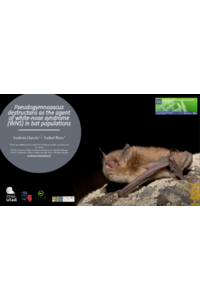
presentation_bats.pdf
A prospect on the antimicrobial activity of algae extract: The Fucales order case.
Organic and Regenerative Farms are a Gold Mine for Potentially Novel Species of Soil Bacteria