Event submissions
Published
This submission belongs to the session Session D. Phytochemistry, Phytoremediation, and Plants in Urban Ecosystems of the event The 3rd International Electronic Conference on Plant Sciences
Published date
19 Jan, 2024
Academic Editor
'%3e%3cpath%20d='M12.6657%2010.9104C12.4185%2010.325%2012.0599%209.79327%2011.6097%209.34482C11.1609%208.89508%2010.6293%208.5365%2010.0442%208.28888C10.0389%208.28626%2010.0337%208.28495%2010.0285%208.28233C10.8446%207.69279%2011.3752%206.73249%2011.3752%205.64904C11.3752%203.8542%209.92103%202.39999%208.1262%202.39999C6.33136%202.39999%204.87715%203.8542%204.87715%205.64904C4.87715%206.73249%205.40774%207.69279%206.22393%208.28364C6.21869%208.28626%206.21345%208.28757%206.20821%208.29019C5.62129%208.5378%205.09463%208.89284%204.64265%209.34613C4.1929%209.79493%203.83432%2010.3266%203.58671%2010.9117C3.34345%2011.4845%203.21226%2012.0987%203.20023%2012.7209C3.19988%2012.7349%203.20233%2012.7488%203.20744%2012.7619C3.21255%2012.7749%203.22022%2012.7867%203.22998%2012.7968C3.23975%2012.8068%203.25142%2012.8147%203.26431%2012.8202C3.2772%2012.8256%203.29105%2012.8284%203.30504%2012.8284H4.09109C4.14874%2012.8284%204.19459%2012.7825%204.1959%2012.7262C4.2221%2011.7148%204.62823%2010.7676%205.34617%2010.0497C6.08899%209.30683%207.0755%208.89808%208.1262%208.89808C9.17689%208.89808%2010.1634%209.30683%2010.9062%2010.0497C11.6242%2010.7676%2012.0303%2011.7148%2012.0565%2012.7262C12.0578%2012.7838%2012.1037%2012.8284%2012.1613%2012.8284H12.9474C12.9613%2012.8284%2012.9752%2012.8256%2012.9881%2012.8202C13.001%2012.8147%2013.0126%2012.8068%2013.0224%2012.7968C13.0322%2012.7867%2013.0398%2012.7749%2013.0449%2012.7619C13.0501%2012.7488%2013.0525%2012.7349%2013.0522%2012.7209C13.0391%2012.0947%2012.9094%2011.4855%2012.6657%2010.9104ZM8.1262%207.9024C7.52486%207.9024%206.9589%207.6679%206.53312%207.24211C6.10733%206.81633%205.87283%206.25037%205.87283%205.64904C5.87283%205.0477%206.10733%204.48174%206.53312%204.05596C6.9589%203.63018%207.52486%203.39567%208.1262%203.39567C8.72753%203.39567%209.29349%203.63018%209.71927%204.05596C10.1451%204.48174%2010.3796%205.0477%2010.3796%205.64904C10.3796%206.25037%2010.1451%206.81633%209.71927%207.24211C9.29349%207.6679%208.72753%207.9024%208.1262%207.9024Z'%20fill='%235D1EE1'/%3e%3c/g%3e%3c/svg%3e) Suresh Awale
Suresh AwaleCitation
Zaira Khalid, Bhaskar Singh, Impact of Heavy Metal Contamination on Taxiphyllum Barbieri: A Comprehensive Study of Physiological and Biochemical Responses, in Proceedings of The 3rd International Electronic Conference on Plant Sciences, 15 January–17 January 2024, MDPI: Basel, Switzerland
Share
Email
Facebook
Twitter
LinkedIn
Impact of Heavy Metal Contamination on Taxiphyllum Barbieri: A Comprehensive Study of Physiological and Biochemical Responses
'%3e%3cpath%20d='M12.6647%2010.9104C12.4176%2010.325%2012.0589%209.7933%2011.6088%209.34485C11.16%208.89511%2010.6283%208.53653%2010.0432%208.28891C10.038%208.28629%2010.0327%208.28498%2010.0275%208.28236C10.8437%207.69282%2011.3743%206.73252%2011.3743%205.64907C11.3743%203.85423%209.92005%202.40002%208.12522%202.40002C6.33038%202.40002%204.87618%203.85423%204.87618%205.64907C4.87618%206.73252%205.40677%207.69282%206.22296%208.28367C6.21772%208.28629%206.21248%208.2876%206.20724%208.29022C5.62031%208.53783%205.09365%208.89287%204.64167%209.34616C4.19192%209.79496%203.83334%2010.3266%203.58573%2010.9117C3.34247%2011.4846%203.21128%2012.0987%203.19925%2012.721C3.1989%2012.735%203.20135%2012.7489%203.20646%2012.7619C3.21157%2012.7749%203.21924%2012.7868%203.22901%2012.7968C3.23877%2012.8068%203.25045%2012.8148%203.26334%2012.8202C3.27623%2012.8256%203.29007%2012.8284%203.30406%2012.8284H4.09012C4.14776%2012.8284%204.19362%2012.7825%204.19493%2012.7262C4.22113%2011.7148%204.62726%2010.7676%205.34519%2010.0497C6.08802%209.30686%207.07452%208.89811%208.12522%208.89811C9.17592%208.89811%2010.1624%209.30686%2010.9052%2010.0497C11.6232%2010.7676%2012.0293%2011.7148%2012.0555%2012.7262C12.0568%2012.7839%2012.1027%2012.8284%2012.1603%2012.8284H12.9464C12.9604%2012.8284%2012.9742%2012.8256%2012.9871%2012.8202C13%2012.8148%2013.0117%2012.8068%2013.0214%2012.7968C13.0312%2012.7868%2013.0389%2012.7749%2013.044%2012.7619C13.0491%2012.7489%2013.0515%2012.735%2013.0512%2012.721C13.0381%2012.0947%2012.9084%2011.4856%2012.6647%2010.9104ZM8.12522%207.90243C7.52388%207.90243%206.95792%207.66793%206.53214%207.24215C6.10636%206.81636%205.87185%206.2504%205.87185%205.64907C5.87185%205.04773%206.10636%204.48177%206.53214%204.05599C6.95792%203.63021%207.52388%203.3957%208.12522%203.3957C8.72655%203.3957%209.29252%203.63021%209.7183%204.05599C10.1441%204.48177%2010.3786%205.04773%2010.3786%205.64907C10.3786%206.2504%2010.1441%206.81636%209.7183%207.24215C9.29252%207.66793%208.72655%207.90243%208.12522%207.90243Z'%20fill='%235D1EE1'/%3e%3c/g%3e%3c/svg%3e)
Zaira Khalid 1
Bhaskar Singh 1
1. Central University of Jharkhand
Abstract
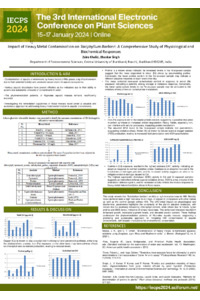
Contamination of aquatic environments by heavy metals (HMs) poses a significant concern due to their potential toxicity and persistent accumulation in aquatic ecosystems. Various aquatic bryophytes have proven effective as bioindicators due to their ability to accumulate substantial amounts of contaminants in water. Despite this, the phytoremediation potential of Hypnales aquatic mosses remains insufficiently explored, especially when compared to their macrophyte counterparts. Investigating the remediation capabilities of these mosses could unveil a valuable and sustainable approach to addressing HM contamination in aquatic environments. This paper presents a comprehensive investigation involving the replication of elevated HM conditions to explore the physiological and biochemical effects of HM contamination on Taxiphyllum barbieri. A thorough review of the available literature was conducted to identify the maximum concentrations of HM discharged in effluents by various industries. The moss was exposed to the HMs (Fe-25 mg/L, Cu-6.5 mg/L, Zn-56 mg/L, Ni-6.5 mg/L, Cd-6.5 mg/L, Cr-4.9 mg/L) for a period of three months. To assess the impact, comparative analyses were conducted between moss samples exposed to HMs and those without exposure. The moss’ responses were analyzed with respect to total chlorophyll, carotenoid, protein, carbohydrate, proline, superoxide dismutase (SOD), malondialdehyde (MDA), and catalase (CAT). This study reveals that Taxiphyllum barbieri exhibits a high tolerance towards HMs. Notably, the moss demonstrated a high tolerance to 4.5 mg/L of copper compared with other metals and the control sample without HM. This enhanced tolerance resulted in enhanced growth, increased pigment levels, and elevated protein content. These findings underscore the phytoremediation potential of Hypnales aquatic mosses, suggesting a promising and sustainable approach for mitigating HM contamination in aquatic environments, with broader implications for environmental conservation.
Keywords
Moss
Heavy Metal Uptake
Phytofiltration
Physiology
Taxiphyllum barbieri
Poster
IECPS.pdf
Induced xylem ontogenesis in cotyledons of the fra2 katanin mutant of the Arabidopsis thaliana plant
Impact of soil microbiota and tillage practices on the long-term sustainability of agroecosystems in climate change