Event submissions
Published
This submission belongs to the session A. Environmental Contaminants and Health of the event The 1st International Electronic Conference on Toxics
Published date
03 Apr, 2024
Academic Editor
'%3e%3cpath%20d='M12.6657%2010.9104C12.4185%2010.325%2012.0599%209.79327%2011.6097%209.34482C11.1609%208.89508%2010.6293%208.5365%2010.0442%208.28888C10.0389%208.28626%2010.0337%208.28495%2010.0285%208.28233C10.8446%207.69279%2011.3752%206.73249%2011.3752%205.64904C11.3752%203.8542%209.92103%202.39999%208.1262%202.39999C6.33136%202.39999%204.87715%203.8542%204.87715%205.64904C4.87715%206.73249%205.40774%207.69279%206.22393%208.28364C6.21869%208.28626%206.21345%208.28757%206.20821%208.29019C5.62129%208.5378%205.09463%208.89284%204.64265%209.34613C4.1929%209.79493%203.83432%2010.3266%203.58671%2010.9117C3.34345%2011.4845%203.21226%2012.0987%203.20023%2012.7209C3.19988%2012.7349%203.20233%2012.7488%203.20744%2012.7619C3.21255%2012.7749%203.22022%2012.7867%203.22998%2012.7968C3.23975%2012.8068%203.25142%2012.8147%203.26431%2012.8202C3.2772%2012.8256%203.29105%2012.8284%203.30504%2012.8284H4.09109C4.14874%2012.8284%204.19459%2012.7825%204.1959%2012.7262C4.2221%2011.7148%204.62823%2010.7676%205.34617%2010.0497C6.08899%209.30683%207.0755%208.89808%208.1262%208.89808C9.17689%208.89808%2010.1634%209.30683%2010.9062%2010.0497C11.6242%2010.7676%2012.0303%2011.7148%2012.0565%2012.7262C12.0578%2012.7838%2012.1037%2012.8284%2012.1613%2012.8284H12.9474C12.9613%2012.8284%2012.9752%2012.8256%2012.9881%2012.8202C13.001%2012.8147%2013.0126%2012.8068%2013.0224%2012.7968C13.0322%2012.7867%2013.0398%2012.7749%2013.0449%2012.7619C13.0501%2012.7488%2013.0525%2012.7349%2013.0522%2012.7209C13.0391%2012.0947%2012.9094%2011.4855%2012.6657%2010.9104ZM8.1262%207.9024C7.52486%207.9024%206.9589%207.6679%206.53312%207.24211C6.10733%206.81633%205.87283%206.25037%205.87283%205.64904C5.87283%205.0477%206.10733%204.48174%206.53312%204.05596C6.9589%203.63018%207.52486%203.39567%208.1262%203.39567C8.72753%203.39567%209.29349%203.63018%209.71927%204.05596C10.1451%204.48174%2010.3796%205.0477%2010.3796%205.64904C10.3796%206.25037%2010.1451%206.81633%209.71927%207.24211C9.29349%207.6679%208.72753%207.9024%208.1262%207.9024Z'%20fill='%235D1EE1'/%3e%3c/g%3e%3c/svg%3e) Yankai Xia
Yankai XiaCitation
Clara Naccari, Vincenzo Ferrantelli, Roberto Bava, Ernesto Palma, TOXIC AND ESSENTIAL METALS IN Stenella coeruleoalba: ASSESSMENT OF MARINE ENVIRONMENTAL POLLUTION AND DOLPHIN HEALTH STATUS, in Proceedings of The 1st International Electronic Conference on Toxics, 20 March–22 March 2024, MDPI: Basel, Switzerland
Share
Email
Facebook
Twitter
LinkedIn
TOXIC AND ESSENTIAL METALS IN Stenella coeruleoalba: ASSESSMENT OF MARINE ENVIRONMENTAL POLLUTION AND DOLPHIN HEALTH STATUS
'%3e%3cpath%20d='M12.6647%2010.9104C12.4176%2010.325%2012.0589%209.7933%2011.6088%209.34485C11.16%208.89511%2010.6283%208.53653%2010.0432%208.28891C10.038%208.28629%2010.0327%208.28498%2010.0275%208.28236C10.8437%207.69282%2011.3743%206.73252%2011.3743%205.64907C11.3743%203.85423%209.92005%202.40002%208.12522%202.40002C6.33038%202.40002%204.87618%203.85423%204.87618%205.64907C4.87618%206.73252%205.40677%207.69282%206.22296%208.28367C6.21772%208.28629%206.21248%208.2876%206.20724%208.29022C5.62031%208.53783%205.09365%208.89287%204.64167%209.34616C4.19192%209.79496%203.83334%2010.3266%203.58573%2010.9117C3.34247%2011.4846%203.21128%2012.0987%203.19925%2012.721C3.1989%2012.735%203.20135%2012.7489%203.20646%2012.7619C3.21157%2012.7749%203.21924%2012.7868%203.22901%2012.7968C3.23877%2012.8068%203.25045%2012.8148%203.26334%2012.8202C3.27623%2012.8256%203.29007%2012.8284%203.30406%2012.8284H4.09012C4.14776%2012.8284%204.19362%2012.7825%204.19493%2012.7262C4.22113%2011.7148%204.62726%2010.7676%205.34519%2010.0497C6.08802%209.30686%207.07452%208.89811%208.12522%208.89811C9.17592%208.89811%2010.1624%209.30686%2010.9052%2010.0497C11.6232%2010.7676%2012.0293%2011.7148%2012.0555%2012.7262C12.0568%2012.7839%2012.1027%2012.8284%2012.1603%2012.8284H12.9464C12.9604%2012.8284%2012.9742%2012.8256%2012.9871%2012.8202C13%2012.8148%2013.0117%2012.8068%2013.0214%2012.7968C13.0312%2012.7868%2013.0389%2012.7749%2013.044%2012.7619C13.0491%2012.7489%2013.0515%2012.735%2013.0512%2012.721C13.0381%2012.0947%2012.9084%2011.4856%2012.6647%2010.9104ZM8.12522%207.90243C7.52388%207.90243%206.95792%207.66793%206.53214%207.24215C6.10636%206.81636%205.87185%206.2504%205.87185%205.64907C5.87185%205.04773%206.10636%204.48177%206.53214%204.05599C6.95792%203.63021%207.52388%203.3957%208.12522%203.3957C8.72655%203.3957%209.29252%203.63021%209.7183%204.05599C10.1441%204.48177%2010.3786%205.04773%2010.3786%205.64907C10.3786%206.2504%2010.1441%206.81636%209.7183%207.24215C9.29252%207.66793%208.72655%207.90243%208.12522%207.90243Z'%20fill='%235D1EE1'/%3e%3c/g%3e%3c/svg%3e)
Clara Naccari 1
Vincenzo Ferrantelli 2

Roberto Bava 3
Ernesto Palma 3
1. Department of Health Sciences, Univerisity "Magna Graecia", Catanzaro, Italy
2. Istituto Zooprofilattico Sperimentale della Sicilia "A. Mirri", Palermo , Italy
3. Department of Health Sciences, Univerisity "Magna Graecia" of Catanzaro, Italy
Abstract
Introduction
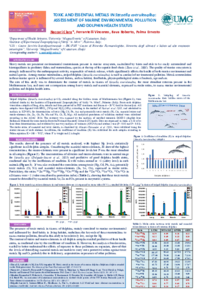
Heavy metals are environmental contaminants and can easily accumulate and biomagnificate in various species (fishes and mammalians) at the top of the aquatic food chain. Among marine mammalians, the common dolphin (Stenella coeruleoalba) is used as a sentinel species of environmental pollution. The aim of this study was to determine the content of toxic metals in organs of Stenella coeruleoalba in comparison with essential elements, and to assess marine environmental pollution and dolphin health status.
Materials and Methods
Samples of liver, lung, muscle, and skin of Stenella coeruleoalba (n= 18 dolphins) were digested with HNO3 (70%) and H2O2 (30%) and submitted to analysis in ICP-MS for the determination of toxic (Hg, Cd, Pb, and As) and potentially toxic (Cr and Ni) metals and essential micro (Se, Zn, Cu, Fe, and Mn) and macro (Na, Ca, K, and Mg) elements .
Results
The results showed the presence of all analyzed metals, with the highest Hg levels in all dolphin samples. The correlation between toxic (Hg, Cd, Pb, and As) and potentially toxic (Cr and Ni) metals and essential micro-elements (Zn, Se, and Cu) was expressed as molar ratios. The ratios were <1 (value considered as a protection index) for 66Zn/201Hg, 82Se/201Hg, and 63Cu/201Hg and for 66Zn/52Cr, 82Se/52Cr, and 63Cu/52Cr in all organs, showing that toxic metals cannot be detoxified by these essential metals. However, the concentrations of all micro and macro elements were normal and predictive of dolphins' health status.
Conclusions
The presence of toxic metals in organs of dolphins is correlated to marine environmental pollution and influenced by their food habits. The content of micro and macro elements, introduced through diet, informs dolphins' health status, although detoxifying essential metals are unable to carry out protective action against toxic metals, probably due to the deficiency, sequestration, or presence of other pollutants.
Keywords
Toxic and essential metals
Stenella coeruleoalba
marine environmental pollution
Poster
Poster Dr NACCARI CLARA- 1 IECTO 24 pdf.pdf
Plant-Based Approaches for Wastewater Management: A Comprehensive Review of Phytoremediation Techniques
Human health risks due to copper in urban and rural topsoils from East Midlands, England