Event submissions
Published
This submission belongs to the session A. Environmental Contaminants and Health of the event The 1st International Electronic Conference on Toxics
Published date
03 Apr, 2024
Academic Editor
'%3e%3cpath%20d='M12.6657%2010.9104C12.4185%2010.325%2012.0599%209.79327%2011.6097%209.34482C11.1609%208.89508%2010.6293%208.5365%2010.0442%208.28888C10.0389%208.28626%2010.0337%208.28495%2010.0285%208.28233C10.8446%207.69279%2011.3752%206.73249%2011.3752%205.64904C11.3752%203.8542%209.92103%202.39999%208.1262%202.39999C6.33136%202.39999%204.87715%203.8542%204.87715%205.64904C4.87715%206.73249%205.40774%207.69279%206.22393%208.28364C6.21869%208.28626%206.21345%208.28757%206.20821%208.29019C5.62129%208.5378%205.09463%208.89284%204.64265%209.34613C4.1929%209.79493%203.83432%2010.3266%203.58671%2010.9117C3.34345%2011.4845%203.21226%2012.0987%203.20023%2012.7209C3.19988%2012.7349%203.20233%2012.7488%203.20744%2012.7619C3.21255%2012.7749%203.22022%2012.7867%203.22998%2012.7968C3.23975%2012.8068%203.25142%2012.8147%203.26431%2012.8202C3.2772%2012.8256%203.29105%2012.8284%203.30504%2012.8284H4.09109C4.14874%2012.8284%204.19459%2012.7825%204.1959%2012.7262C4.2221%2011.7148%204.62823%2010.7676%205.34617%2010.0497C6.08899%209.30683%207.0755%208.89808%208.1262%208.89808C9.17689%208.89808%2010.1634%209.30683%2010.9062%2010.0497C11.6242%2010.7676%2012.0303%2011.7148%2012.0565%2012.7262C12.0578%2012.7838%2012.1037%2012.8284%2012.1613%2012.8284H12.9474C12.9613%2012.8284%2012.9752%2012.8256%2012.9881%2012.8202C13.001%2012.8147%2013.0126%2012.8068%2013.0224%2012.7968C13.0322%2012.7867%2013.0398%2012.7749%2013.0449%2012.7619C13.0501%2012.7488%2013.0525%2012.7349%2013.0522%2012.7209C13.0391%2012.0947%2012.9094%2011.4855%2012.6657%2010.9104ZM8.1262%207.9024C7.52486%207.9024%206.9589%207.6679%206.53312%207.24211C6.10733%206.81633%205.87283%206.25037%205.87283%205.64904C5.87283%205.0477%206.10733%204.48174%206.53312%204.05596C6.9589%203.63018%207.52486%203.39567%208.1262%203.39567C8.72753%203.39567%209.29349%203.63018%209.71927%204.05596C10.1451%204.48174%2010.3796%205.0477%2010.3796%205.64904C10.3796%206.25037%2010.1451%206.81633%209.71927%207.24211C9.29349%207.6679%208.72753%207.9024%208.1262%207.9024Z'%20fill='%235D1EE1'/%3e%3c/g%3e%3c/svg%3e) Yankai Xia
Yankai XiaCitation
Joana Teixeira, Cristina Delerue-Matos, Simone Morais, Marta Oliveira, Impact of polycyclic aromatic hydrocarbons on the environment and human health: evidence retrieved from biomonitoring studies, in Proceedings of The 1st International Electronic Conference on Toxics, 20 March–22 March 2024, MDPI: Basel, Switzerland
Share
Email
Facebook
Twitter
LinkedIn
Impact of polycyclic aromatic hydrocarbons on the environment and human health: evidence retrieved from biomonitoring studies
'%3e%3cpath%20d='M12.6647%2010.9104C12.4176%2010.325%2012.0589%209.7933%2011.6088%209.34485C11.16%208.89511%2010.6283%208.53653%2010.0432%208.28891C10.038%208.28629%2010.0327%208.28498%2010.0275%208.28236C10.8437%207.69282%2011.3743%206.73252%2011.3743%205.64907C11.3743%203.85423%209.92005%202.40002%208.12522%202.40002C6.33038%202.40002%204.87618%203.85423%204.87618%205.64907C4.87618%206.73252%205.40677%207.69282%206.22296%208.28367C6.21772%208.28629%206.21248%208.2876%206.20724%208.29022C5.62031%208.53783%205.09365%208.89287%204.64167%209.34616C4.19192%209.79496%203.83334%2010.3266%203.58573%2010.9117C3.34247%2011.4846%203.21128%2012.0987%203.19925%2012.721C3.1989%2012.735%203.20135%2012.7489%203.20646%2012.7619C3.21157%2012.7749%203.21924%2012.7868%203.22901%2012.7968C3.23877%2012.8068%203.25045%2012.8148%203.26334%2012.8202C3.27623%2012.8256%203.29007%2012.8284%203.30406%2012.8284H4.09012C4.14776%2012.8284%204.19362%2012.7825%204.19493%2012.7262C4.22113%2011.7148%204.62726%2010.7676%205.34519%2010.0497C6.08802%209.30686%207.07452%208.89811%208.12522%208.89811C9.17592%208.89811%2010.1624%209.30686%2010.9052%2010.0497C11.6232%2010.7676%2012.0293%2011.7148%2012.0555%2012.7262C12.0568%2012.7839%2012.1027%2012.8284%2012.1603%2012.8284H12.9464C12.9604%2012.8284%2012.9742%2012.8256%2012.9871%2012.8202C13%2012.8148%2013.0117%2012.8068%2013.0214%2012.7968C13.0312%2012.7868%2013.0389%2012.7749%2013.044%2012.7619C13.0491%2012.7489%2013.0515%2012.735%2013.0512%2012.721C13.0381%2012.0947%2012.9084%2011.4856%2012.6647%2010.9104ZM8.12522%207.90243C7.52388%207.90243%206.95792%207.66793%206.53214%207.24215C6.10636%206.81636%205.87185%206.2504%205.87185%205.64907C5.87185%205.04773%206.10636%204.48177%206.53214%204.05599C6.95792%203.63021%207.52388%203.3957%208.12522%203.3957C8.72655%203.3957%209.29252%203.63021%209.7183%204.05599C10.1441%204.48177%2010.3786%205.04773%2010.3786%205.64907C10.3786%206.2504%2010.1441%206.81636%209.7183%207.24215C9.29252%207.66793%208.72655%207.90243%208.12522%207.90243Z'%20fill='%235D1EE1'/%3e%3c/g%3e%3c/svg%3e)
Joana Teixeira 1

Cristina Delerue-Matos 2

Simone Morais 2

Marta Oliveira 3
1. REQUIMTE/LAQV-Instituto Superior de Engenharia, Instituto Politécnico do Porto; REQUIMTE/UCIBIO, Unidade Biociências Moleculares Aplicadas, Departamento de Ciências Biológicas, Faculdade de Farmácia da Universidade do Porto
2. REQUIMTE/LAQV-Instituto Superior de Engenharia, Instituto Politécnico do Porto
3. REQUIMTE-LAQV-Instituto Superior de Engenharia do Porto
Abstract
The presence of polycyclic aromatic hydrocarbons (PAHs) in different environmental matrices has significant repercussions on ecosystems and human health. There is a need to reunite and revise the available literature to improve the evaluation of the impact of PAHs on the environment and human health. This work compiles, for the first time, the concentrations of PAHs in the air, aquatic ecosystems, and soils, with a global overview of the results from environmental and human biomonitoring studies. The higher incidence of anthropogenic occupancy is directly associated with the presence of PAHs in the environmental matrices (1344.4 – 12300 ng/m3 versus 0.03-0.60 ng/m3 in the air in industrial/urban and rural areas, respectively; 2.00 – 1.66 × 10⁷ ng/L and 7.00 × 10⁻⁴ – 1.00× 10⁹ ng/g in the water systems and aquatic sediments from coastal areas, respectively; 0.14 – 1.77 × 10⁶ ng/g and 1.59 – 5.87 × 10³ ng/g in urban and rural soils, respectively). Benzo(a)pyrene, a carcinogenic PAH, was found in all the environmental matrices. The potential of some sentinel species (e.g., mosses, lichens, tree leaves, bivalves, and cephalopods) used as biomonitors in environmental biomonitoring studies is described. Despite the growing concern about the negative impacts of PAH exposure, more biomonitoring studies are crucial to characterize the impact of PAHs on the environment and human health and estimate the associated risks for wildlife and humans. Mitigation and preventive measures for PAH exposure can be beneficial to protect human health due to the improvement in the human–animal–environment interface.
Funding: This work was funded by project PCIF/SSO/0090/2019 by the Fundação para a Ciência e a Tecnologia, Ministério da Ciência, Tecnologia e Ensino Superior (FCT-MCTES) through national funds.
Acknowledgements: This work received support from UIDB/50006/2020, UIDP/50006/2020, LA/P/0008/2020, 2022.05381.PTDC, and PCIF/SSO/0017/2018 by FCT-MCTES. M. Oliveira thanks to the scientific contract CEEC – Individual 2017 Program Contract CEECIND/03666/2017.
Keywords
Environmental pollution
Wildfires
Sentinel species
Biomonitors
Human exposure
One Health.
Poster
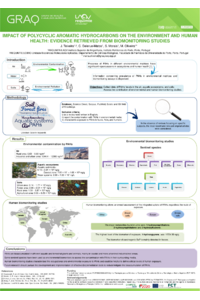
Poster_vf.pdf
Removal of Uranium (VI) from the Water Environment Using Mechanochemical-Activated Organoclay
Oxidative Potential as a Health Risk Estimation of Ambient PM2.5 in Chiang Mai City, Northern Thailand: A Study in 2021