Event submissions
Published
This submission belongs to the session D. Chemical Processes and Systems of the event The 3rd International Electronic Conference on Processes
Published date
27 May, 2024
Academic Editor
'%3e%3cpath%20d='M12.6657%2010.9104C12.4185%2010.325%2012.0599%209.79327%2011.6097%209.34482C11.1609%208.89508%2010.6293%208.5365%2010.0442%208.28888C10.0389%208.28626%2010.0337%208.28495%2010.0285%208.28233C10.8446%207.69279%2011.3752%206.73249%2011.3752%205.64904C11.3752%203.8542%209.92103%202.39999%208.1262%202.39999C6.33136%202.39999%204.87715%203.8542%204.87715%205.64904C4.87715%206.73249%205.40774%207.69279%206.22393%208.28364C6.21869%208.28626%206.21345%208.28757%206.20821%208.29019C5.62129%208.5378%205.09463%208.89284%204.64265%209.34613C4.1929%209.79493%203.83432%2010.3266%203.58671%2010.9117C3.34345%2011.4845%203.21226%2012.0987%203.20023%2012.7209C3.19988%2012.7349%203.20233%2012.7488%203.20744%2012.7619C3.21255%2012.7749%203.22022%2012.7867%203.22998%2012.7968C3.23975%2012.8068%203.25142%2012.8147%203.26431%2012.8202C3.2772%2012.8256%203.29105%2012.8284%203.30504%2012.8284H4.09109C4.14874%2012.8284%204.19459%2012.7825%204.1959%2012.7262C4.2221%2011.7148%204.62823%2010.7676%205.34617%2010.0497C6.08899%209.30683%207.0755%208.89808%208.1262%208.89808C9.17689%208.89808%2010.1634%209.30683%2010.9062%2010.0497C11.6242%2010.7676%2012.0303%2011.7148%2012.0565%2012.7262C12.0578%2012.7838%2012.1037%2012.8284%2012.1613%2012.8284H12.9474C12.9613%2012.8284%2012.9752%2012.8256%2012.9881%2012.8202C13.001%2012.8147%2013.0126%2012.8068%2013.0224%2012.7968C13.0322%2012.7867%2013.0398%2012.7749%2013.0449%2012.7619C13.0501%2012.7488%2013.0525%2012.7349%2013.0522%2012.7209C13.0391%2012.0947%2012.9094%2011.4855%2012.6657%2010.9104ZM8.1262%207.9024C7.52486%207.9024%206.9589%207.6679%206.53312%207.24211C6.10733%206.81633%205.87283%206.25037%205.87283%205.64904C5.87283%205.0477%206.10733%204.48174%206.53312%204.05596C6.9589%203.63018%207.52486%203.39567%208.1262%203.39567C8.72753%203.39567%209.29349%203.63018%209.71927%204.05596C10.1451%204.48174%2010.3796%205.0477%2010.3796%205.64904C10.3796%206.25037%2010.1451%206.81633%209.71927%207.24211C9.29349%207.6679%208.72753%207.9024%208.1262%207.9024Z'%20fill='%235D1EE1'/%3e%3c/g%3e%3c/svg%3e) Blaž Likozar
Blaž LikozarCitation
Luana May Rosendo, Mónica Antunes, Ana Y. Simão, Ana Teresa Brinca, Gonçalo Catarro, Rodrigo Pelixo, João Martinho, Bruno Pires, Sofia Soares, José Francisco Cascalheira, Luís Passarinha, Tiago Rosado, Mário Barroso, Eugenia Gallardo, Sensors in Alternative Samples: A Powerful Tool in Forensic Toxicology, in Proceedings of The 3rd International Electronic Conference on Processes, 29 May–31 May 2024, MDPI: Basel, Switzerland
Share
Email
Facebook
Twitter
LinkedIn
Sensors in Alternative Samples: A Powerful Tool in Forensic Toxicology

Luana May Rosendo 1,2
'%3e%3cpath%20d='M12.6647%2010.9104C12.4176%2010.325%2012.0589%209.7933%2011.6088%209.34485C11.16%208.89511%2010.6283%208.53653%2010.0432%208.28891C10.038%208.28629%2010.0327%208.28498%2010.0275%208.28236C10.8437%207.69282%2011.3743%206.73252%2011.3743%205.64907C11.3743%203.85423%209.92005%202.40002%208.12522%202.40002C6.33038%202.40002%204.87618%203.85423%204.87618%205.64907C4.87618%206.73252%205.40677%207.69282%206.22296%208.28367C6.21772%208.28629%206.21248%208.2876%206.20724%208.29022C5.62031%208.53783%205.09365%208.89287%204.64167%209.34616C4.19192%209.79496%203.83334%2010.3266%203.58573%2010.9117C3.34247%2011.4846%203.21128%2012.0987%203.19925%2012.721C3.1989%2012.735%203.20135%2012.7489%203.20646%2012.7619C3.21157%2012.7749%203.21924%2012.7868%203.22901%2012.7968C3.23877%2012.8068%203.25045%2012.8148%203.26334%2012.8202C3.27623%2012.8256%203.29007%2012.8284%203.30406%2012.8284H4.09012C4.14776%2012.8284%204.19362%2012.7825%204.19493%2012.7262C4.22113%2011.7148%204.62726%2010.7676%205.34519%2010.0497C6.08802%209.30686%207.07452%208.89811%208.12522%208.89811C9.17592%208.89811%2010.1624%209.30686%2010.9052%2010.0497C11.6232%2010.7676%2012.0293%2011.7148%2012.0555%2012.7262C12.0568%2012.7839%2012.1027%2012.8284%2012.1603%2012.8284H12.9464C12.9604%2012.8284%2012.9742%2012.8256%2012.9871%2012.8202C13%2012.8148%2013.0117%2012.8068%2013.0214%2012.7968C13.0312%2012.7868%2013.0389%2012.7749%2013.044%2012.7619C13.0491%2012.7489%2013.0515%2012.735%2013.0512%2012.721C13.0381%2012.0947%2012.9084%2011.4856%2012.6647%2010.9104ZM8.12522%207.90243C7.52388%207.90243%206.95792%207.66793%206.53214%207.24215C6.10636%206.81636%205.87185%206.2504%205.87185%205.64907C5.87185%205.04773%206.10636%204.48177%206.53214%204.05599C6.95792%203.63021%207.52388%203.3957%208.12522%203.3957C8.72655%203.3957%209.29252%203.63021%209.7183%204.05599C10.1441%204.48177%2010.3786%205.04773%2010.3786%205.64907C10.3786%206.2504%2010.1441%206.81636%209.7183%207.24215C9.29252%207.66793%208.72655%207.90243%208.12522%207.90243Z'%20fill='%235D1EE1'/%3e%3c/g%3e%3c/svg%3e)
Mónica Antunes 1,2
Ana Y. Simão 1,2
Ana Teresa Brinca 1,2
Gonçalo Catarro 1,2
Rodrigo Pelixo 1,2

João Martinho 1,2

Bruno Pires 1,2
Sofia Soares 1,2
José Francisco Cascalheira 1,3

Luís Passarinha 1,2,4,5
Tiago Rosado 1,2,6

Mário Barroso 7

Eugenia Gallardo 1,2,6
1. Centro de Investigação em Ciências da Saúde, Universidade da Beira Interior (CICS-UBI), 6200-506 Covilhã
2. Laboratório de Fármaco-Toxicologia, UBIMedical, Universidade da Beira Interior, EM506, 6200-000 Covilhã
3. Departamento de Química, Universidade da Beira Interior, 6200-001 Covilhã
4. Associate Laboratory i4HB-Institute for Health and Bioeconomy, NOVA School of Science and Technology, Universidade NOVA de Lisboa, 2819-516 Caparica
5. UCIBIO-Applied Molecular Biosciences Unit, Chemistry Department, NOVA School of Science and Technology, 2829-516 Caparica
6. Centro Académico Clínico das Beiras (CACB)—Grupo de Problemas Relacionados com Toxicofilias, 6200-000 Covilhã
7. Serviço de Química e Toxicologia Forenses, Instituto de Medicina Legal e Ciências Forenses—Delegação do Sul, 1169-201 Lisboa,
Abstract
The identification of drugs of abuse in biological samples is an essential component of forensic toxicology, which benefits both criminal investigations and public health initiatives. However, due to the limited advancement of immunoassays, the field faces difficulties, especially in the detection of drugs of abuse. The growing importance of sensor technologies as practical alternatives in forensic toxicology is addressed in this review. These technologies provide accurate, effective, and real-time detection capabilities for a range of sample types.
One notable advantage of sensor technologies lies in their adaptability to alternative samples such as hair, sweat, oral fluid, and others. These alternative specimens present unique advantages in forensic toxicology, offering extended detection windows and overcoming limitations associated with traditional matrices like blood and urine. For instance, hair samples provide a retrospective timeline of drug exposure, while oral fluid and sweat offer non-invasive collection methods that are suitable for on-site testing in various settings.
The development of sensor technologies that are specifically suited for forensic toxicology applications is still lacking, despite their potential. By investigating the possibilities of portable sensor technologies for identifying drug abuse in different samples, the present work seeks to address this gap. We anticipate improved drug abuse detection speed, accuracy, and accessibility through the integration of these technologies into forensic toxicology practices, revolutionising the effectiveness of criminal investigations and public health initiatives.
Closing this technological gap might result in a new era of thorough and effective analysis in the field of forensic toxicology. As sensor technologies develop further and adapt to a wider range of sample matrices, they present a viable path forward for forensic toxicology, promising rapid, precise, and reliable outcomes that are essential for pursuits related to justice and public health.
Keywords
Sensors
Alternatives samples
detection
drug of abuse
Poster
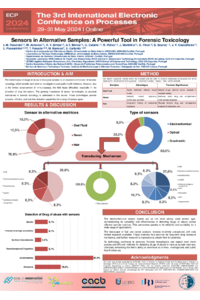
poster sensors.pdf
Some characteristics of actinomycetes isolated from the soil of the Belgorod region.
Development of Electrocoagulation system of fuel using supporting medium for identification of volatile compound products