Event submissions
Published
This submission belongs to the session C. Smartphone-based Biosensors of the event The 4th International Electronic Conference on Biosensors
Published date
28 May, 2024
Academic Editor
'%3e%3cpath%20d='M12.6657%2010.9104C12.4185%2010.325%2012.0599%209.79327%2011.6097%209.34482C11.1609%208.89508%2010.6293%208.5365%2010.0442%208.28888C10.0389%208.28626%2010.0337%208.28495%2010.0285%208.28233C10.8446%207.69279%2011.3752%206.73249%2011.3752%205.64904C11.3752%203.8542%209.92103%202.39999%208.1262%202.39999C6.33136%202.39999%204.87715%203.8542%204.87715%205.64904C4.87715%206.73249%205.40774%207.69279%206.22393%208.28364C6.21869%208.28626%206.21345%208.28757%206.20821%208.29019C5.62129%208.5378%205.09463%208.89284%204.64265%209.34613C4.1929%209.79493%203.83432%2010.3266%203.58671%2010.9117C3.34345%2011.4845%203.21226%2012.0987%203.20023%2012.7209C3.19988%2012.7349%203.20233%2012.7488%203.20744%2012.7619C3.21255%2012.7749%203.22022%2012.7867%203.22998%2012.7968C3.23975%2012.8068%203.25142%2012.8147%203.26431%2012.8202C3.2772%2012.8256%203.29105%2012.8284%203.30504%2012.8284H4.09109C4.14874%2012.8284%204.19459%2012.7825%204.1959%2012.7262C4.2221%2011.7148%204.62823%2010.7676%205.34617%2010.0497C6.08899%209.30683%207.0755%208.89808%208.1262%208.89808C9.17689%208.89808%2010.1634%209.30683%2010.9062%2010.0497C11.6242%2010.7676%2012.0303%2011.7148%2012.0565%2012.7262C12.0578%2012.7838%2012.1037%2012.8284%2012.1613%2012.8284H12.9474C12.9613%2012.8284%2012.9752%2012.8256%2012.9881%2012.8202C13.001%2012.8147%2013.0126%2012.8068%2013.0224%2012.7968C13.0322%2012.7867%2013.0398%2012.7749%2013.0449%2012.7619C13.0501%2012.7488%2013.0525%2012.7349%2013.0522%2012.7209C13.0391%2012.0947%2012.9094%2011.4855%2012.6657%2010.9104ZM8.1262%207.9024C7.52486%207.9024%206.9589%207.6679%206.53312%207.24211C6.10733%206.81633%205.87283%206.25037%205.87283%205.64904C5.87283%205.0477%206.10733%204.48174%206.53312%204.05596C6.9589%203.63018%207.52486%203.39567%208.1262%203.39567C8.72753%203.39567%209.29349%203.63018%209.71927%204.05596C10.1451%204.48174%2010.3796%205.0477%2010.3796%205.64904C10.3796%206.25037%2010.1451%206.81633%209.71927%207.24211C9.29349%207.6679%208.72753%207.9024%208.1262%207.9024Z'%20fill='%235D1EE1'/%3e%3c/g%3e%3c/svg%3e) Jun Kameoka
Jun KameokaCitation
Balım Bengisu CAF, Gizem ÇEBİ, Haluk Çelik, Aliasghar Noroozi, Ali Atasever, Miray TAYFUN, The Validation of Smartphone-Based Point-of-Care Urinalysis Vivoo App, in Proceedings of The 4th International Electronic Conference on Biosensors, 20 May–22 May 2024, MDPI: Basel, Switzerland
Share
Email
Facebook
Twitter
LinkedIn
The Validation of Smartphone-Based Point-of-Care Urinalysis Vivoo App
'%3e%3cpath%20d='M12.6647%2010.9104C12.4176%2010.325%2012.0589%209.7933%2011.6088%209.34485C11.16%208.89511%2010.6283%208.53653%2010.0432%208.28891C10.038%208.28629%2010.0327%208.28498%2010.0275%208.28236C10.8437%207.69282%2011.3743%206.73252%2011.3743%205.64907C11.3743%203.85423%209.92005%202.40002%208.12522%202.40002C6.33038%202.40002%204.87618%203.85423%204.87618%205.64907C4.87618%206.73252%205.40677%207.69282%206.22296%208.28367C6.21772%208.28629%206.21248%208.2876%206.20724%208.29022C5.62031%208.53783%205.09365%208.89287%204.64167%209.34616C4.19192%209.79496%203.83334%2010.3266%203.58573%2010.9117C3.34247%2011.4846%203.21128%2012.0987%203.19925%2012.721C3.1989%2012.735%203.20135%2012.7489%203.20646%2012.7619C3.21157%2012.7749%203.21924%2012.7868%203.22901%2012.7968C3.23877%2012.8068%203.25045%2012.8148%203.26334%2012.8202C3.27623%2012.8256%203.29007%2012.8284%203.30406%2012.8284H4.09012C4.14776%2012.8284%204.19362%2012.7825%204.19493%2012.7262C4.22113%2011.7148%204.62726%2010.7676%205.34519%2010.0497C6.08802%209.30686%207.07452%208.89811%208.12522%208.89811C9.17592%208.89811%2010.1624%209.30686%2010.9052%2010.0497C11.6232%2010.7676%2012.0293%2011.7148%2012.0555%2012.7262C12.0568%2012.7839%2012.1027%2012.8284%2012.1603%2012.8284H12.9464C12.9604%2012.8284%2012.9742%2012.8256%2012.9871%2012.8202C13%2012.8148%2013.0117%2012.8068%2013.0214%2012.7968C13.0312%2012.7868%2013.0389%2012.7749%2013.044%2012.7619C13.0491%2012.7489%2013.0515%2012.735%2013.0512%2012.721C13.0381%2012.0947%2012.9084%2011.4856%2012.6647%2010.9104ZM8.12522%207.90243C7.52388%207.90243%206.95792%207.66793%206.53214%207.24215C6.10636%206.81636%205.87185%206.2504%205.87185%205.64907C5.87185%205.04773%206.10636%204.48177%206.53214%204.05599C6.95792%203.63021%207.52388%203.3957%208.12522%203.3957C8.72655%203.3957%209.29252%203.63021%209.7183%204.05599C10.1441%204.48177%2010.3786%205.04773%2010.3786%205.64907C10.3786%206.2504%2010.1441%206.81636%209.7183%207.24215C9.29252%207.66793%208.72655%207.90243%208.12522%207.90243Z'%20fill='%235D1EE1'/%3e%3c/g%3e%3c/svg%3e)
Balım Bengisu CAF 1,2
Gizem ÇEBİ 1,3
Haluk Çelik 1,4
Aliasghar Noroozi 1
Ali Atasever 1
Miray TAYFUN 1
1. Vivosens, Inc., 44 Tehama Street, Suite 409, San Francisco, CA, US 94105
2. Program of Bioengineering, Graduate School of Science and Engineering, Yıldız Technical University, Esenler, Istanbul, 34220, Turkey
3. Program of Chemical Engineering, Institute of Graduate School, Istanbul Technical University, ITU Ayazaga Kampusu, Maslak, Istanbul, 34469, Turkey
4. Department of Stem Cell and Tissue Engineering, Institute of Health Sciences, Istinye University, 34010, Istanbul, Turkey
Abstract
Point-of-care (POC) analysis has become a crucial method for delivering fast and convenient medical diagnostics. The use of smartphone-based solutions further enhances the accessibility and convenience of POC, facilitating efficient analysis on the go. Integrating smartphone technology with POC has led to innovative applications like the Vivoo app, which enables users to conveniently monitor various health parameters. TheVivoo app can detect bilirubin, ketone, leukocyte, pH, specific gravity, protein, magnesium, sodium, calcium, creatinine, vitamin C, and MDA parameters in the same way as existing biosensors. In our test, we performed the detections with the Smartphone-Based Point-of-Care Urinalysis Vivoo app and compared the results to existing biosensors. Our research aimed to confirm the accuracy and dependability of the Vivoo mobile application for urinalysis, using a comparative approach. We compared artificial urine samples analyzed through both the Vivoo app and traditional laboratory methods, assessing a wide range of health parameters. Throughout the study, we evaluated a total of 2618 strips using Vivoo. The results showed that these strips consistently matched the expected measurement results. Moreover, when we applied a ±1 color block acceptance criterion, 2608 out of 2618 measurements from the tested strips aligned perfectly with the expected results. Based on these findings, the 95% confidence interval for the exact match agreement proportion of Vivoo falls within 87.55% ± 1.27% and 99.62% ± 0.24%. Consequently, our study concludes that Vivoo is a reliable and high-performing device for wellness purposes. Its ability to provide precise and timely health insights holds great promise for improving individual health management, particularly in the context of smartphones' growing role in modern healthcare.
Keywords
Point of care
Urinalysis
Artificial Intelligence
Smartphone
Wellness
Healthcare
Poster
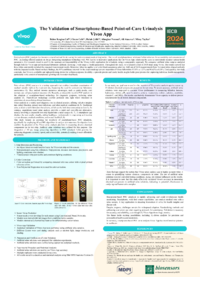
Biosensor Event Poster Presentation CAF et al.pdf
Pretreatment Methods Enhance Cancer Detection Biosensor Performance via Optimized Deposition of Multilayer Chitosan and Hyaluronic Acid Films
Data Augmentation for Reagent-less Spectroscopy Point-of-Measurement in Hydroponics