Event submissions
Published
This submission belongs to the session A. Environmental and Green Processes of the event The 3rd International Electronic Conference on Processes
Published date
28 May, 2024
Academic Editor
'%3e%3cpath%20d='M12.6657%2010.9104C12.4185%2010.325%2012.0599%209.79327%2011.6097%209.34482C11.1609%208.89508%2010.6293%208.5365%2010.0442%208.28888C10.0389%208.28626%2010.0337%208.28495%2010.0285%208.28233C10.8446%207.69279%2011.3752%206.73249%2011.3752%205.64904C11.3752%203.8542%209.92103%202.39999%208.1262%202.39999C6.33136%202.39999%204.87715%203.8542%204.87715%205.64904C4.87715%206.73249%205.40774%207.69279%206.22393%208.28364C6.21869%208.28626%206.21345%208.28757%206.20821%208.29019C5.62129%208.5378%205.09463%208.89284%204.64265%209.34613C4.1929%209.79493%203.83432%2010.3266%203.58671%2010.9117C3.34345%2011.4845%203.21226%2012.0987%203.20023%2012.7209C3.19988%2012.7349%203.20233%2012.7488%203.20744%2012.7619C3.21255%2012.7749%203.22022%2012.7867%203.22998%2012.7968C3.23975%2012.8068%203.25142%2012.8147%203.26431%2012.8202C3.2772%2012.8256%203.29105%2012.8284%203.30504%2012.8284H4.09109C4.14874%2012.8284%204.19459%2012.7825%204.1959%2012.7262C4.2221%2011.7148%204.62823%2010.7676%205.34617%2010.0497C6.08899%209.30683%207.0755%208.89808%208.1262%208.89808C9.17689%208.89808%2010.1634%209.30683%2010.9062%2010.0497C11.6242%2010.7676%2012.0303%2011.7148%2012.0565%2012.7262C12.0578%2012.7838%2012.1037%2012.8284%2012.1613%2012.8284H12.9474C12.9613%2012.8284%2012.9752%2012.8256%2012.9881%2012.8202C13.001%2012.8147%2013.0126%2012.8068%2013.0224%2012.7968C13.0322%2012.7867%2013.0398%2012.7749%2013.0449%2012.7619C13.0501%2012.7488%2013.0525%2012.7349%2013.0522%2012.7209C13.0391%2012.0947%2012.9094%2011.4855%2012.6657%2010.9104ZM8.1262%207.9024C7.52486%207.9024%206.9589%207.6679%206.53312%207.24211C6.10733%206.81633%205.87283%206.25037%205.87283%205.64904C5.87283%205.0477%206.10733%204.48174%206.53312%204.05596C6.9589%203.63018%207.52486%203.39567%208.1262%203.39567C8.72753%203.39567%209.29349%203.63018%209.71927%204.05596C10.1451%204.48174%2010.3796%205.0477%2010.3796%205.64904C10.3796%206.25037%2010.1451%206.81633%209.71927%207.24211C9.29349%207.6679%208.72753%207.9024%208.1262%207.9024Z'%20fill='%235D1EE1'/%3e%3c/g%3e%3c/svg%3e) Juan Francisco García Martín
Juan Francisco García MartínCitation
Leila Iminova, Valentina Polivtseva, Tatiana Abashina, Nataliya Suzina, Inna Solyanikova, Evaluation of the properties and degradative potential of soil isolates, in Proceedings of The 3rd International Electronic Conference on Processes, 29 May–31 May 2024, MDPI: Basel, Switzerland
Share
Email
Facebook
Twitter
LinkedIn
Evaluation of the properties and degradative potential of soil isolates
'%3e%3cpath%20d='M12.6647%2010.9104C12.4176%2010.325%2012.0589%209.7933%2011.6088%209.34485C11.16%208.89511%2010.6283%208.53653%2010.0432%208.28891C10.038%208.28629%2010.0327%208.28498%2010.0275%208.28236C10.8437%207.69282%2011.3743%206.73252%2011.3743%205.64907C11.3743%203.85423%209.92005%202.40002%208.12522%202.40002C6.33038%202.40002%204.87618%203.85423%204.87618%205.64907C4.87618%206.73252%205.40677%207.69282%206.22296%208.28367C6.21772%208.28629%206.21248%208.2876%206.20724%208.29022C5.62031%208.53783%205.09365%208.89287%204.64167%209.34616C4.19192%209.79496%203.83334%2010.3266%203.58573%2010.9117C3.34247%2011.4846%203.21128%2012.0987%203.19925%2012.721C3.1989%2012.735%203.20135%2012.7489%203.20646%2012.7619C3.21157%2012.7749%203.21924%2012.7868%203.22901%2012.7968C3.23877%2012.8068%203.25045%2012.8148%203.26334%2012.8202C3.27623%2012.8256%203.29007%2012.8284%203.30406%2012.8284H4.09012C4.14776%2012.8284%204.19362%2012.7825%204.19493%2012.7262C4.22113%2011.7148%204.62726%2010.7676%205.34519%2010.0497C6.08802%209.30686%207.07452%208.89811%208.12522%208.89811C9.17592%208.89811%2010.1624%209.30686%2010.9052%2010.0497C11.6232%2010.7676%2012.0293%2011.7148%2012.0555%2012.7262C12.0568%2012.7839%2012.1027%2012.8284%2012.1603%2012.8284H12.9464C12.9604%2012.8284%2012.9742%2012.8256%2012.9871%2012.8202C13%2012.8148%2013.0117%2012.8068%2013.0214%2012.7968C13.0312%2012.7868%2013.0389%2012.7749%2013.044%2012.7619C13.0491%2012.7489%2013.0515%2012.735%2013.0512%2012.721C13.0381%2012.0947%2012.9084%2011.4856%2012.6647%2010.9104ZM8.12522%207.90243C7.52388%207.90243%206.95792%207.66793%206.53214%207.24215C6.10636%206.81636%205.87185%206.2504%205.87185%205.64907C5.87185%205.04773%206.10636%204.48177%206.53214%204.05599C6.95792%203.63021%207.52388%203.3957%208.12522%203.3957C8.72655%203.3957%209.29252%203.63021%209.7183%204.05599C10.1441%204.48177%2010.3786%205.04773%2010.3786%205.64907C10.3786%206.2504%2010.1441%206.81636%209.7183%207.24215C9.29252%207.66793%208.72655%207.90243%208.12522%207.90243Z'%20fill='%235D1EE1'/%3e%3c/g%3e%3c/svg%3e)
Leila Iminova 1
Valentina Polivtseva 2
Tatiana Abashina 2
Nataliya Suzina 2

Inna Solyanikova 2
1. Federal Research Center "Pushino Scientific Center for Biological Research of Russia Academy of Sciences" , Skryabin Institute of Biochemistry and Physiology of Microorganisms
“Russian Biotechnological University (ROSBIOTECH)”
2. Federal Research Center "Pushino Scientific Center for Biological Research of Russia Academy of Sciences" , Skryabin Institute of Biochemistry and Physiology of Microorganisms
Abstract
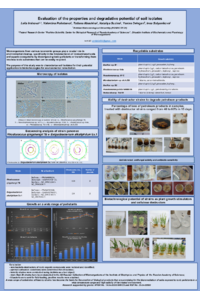
Microorganisms from various taxonomic groups play a crucial role in environmental cleanup, specifically in the bioremediaton of contaminated soils and aquatic ecosystems by decomposing toxic pollutants or transforming them into less toxic substrates that can be easily recycled. The purpose of this study was to characterize soil isolates for their potential application in biotechnologies for environmental remediation. Bacteria that can degrade phenol, petroleum hydrocarbons, pesticides, toluene, isoprene, and organochlorine compounds were isolated from both polluted and unpolluted soils using the enrichment cultivation method. Over 150 cultures were examined for their capability to utilize these substances as the only source of growth in a mineral medium, with phenol concentrations in the medium varying from 0.1 g/L to 3.0 g/L, oil at 1-2%, pinoxaden and toluene up to 0.5%, and carbon tetrachloride up to 10%. It was found that the isolated bacteria belonged to the genera Rhodococcus, Pseudomonas, Peribacillus, Microbacterium, and Bacillus. Some isolates were found to be able to thrive at temperatures ranging from +3 to +55 ℃, at pH levels between 5 and 11, and in salinity levels of up to 14%. On average, the concentration of petroleum products decreased by 29% and 46% under these circumstances. Rhodococcus and Pseudomonas isolates are known for their ability to promote growth in plants like rye and wheat. Isolates from the genera Peribacillus and Bacillus have also been identified as antagonists of pathogenic microorganisms. Therefore, the research conducted successfully identified potent strains that can efficiently eliminate various pollutants. Additionally, the study also involved analyzing their characteristics and exploring the potential strains for producing biological products for agriculture and bioremediation.
Keywords
Degradation
degrading bacteria
biologics
bioremediation.
Poster
ECP 2024- Confirmed Poster for Gallery sciforum-089862.pdf
Moringa arborea-mediated Iron Oxide Nanoparticles, their Characterization and their Anti-cancer Potential on Highly and Weakly Metastatic Human Breast Cancer Cells
Green Synthesis of Zinc Oxide Nanoparticles Embedded in Sodium Alginate Matrix for Efficient Slow-Release Biofertilizers with Antibacterial and Antioxidant Properties