Event submissions
Published
This submission belongs to the session B. Energy Systems of the event The 3rd International Electronic Conference on Processes
Published date
28 May, 2024
Academic Editor
'%3e%3cpath%20d='M12.6657%2010.9104C12.4185%2010.325%2012.0599%209.79327%2011.6097%209.34482C11.1609%208.89508%2010.6293%208.5365%2010.0442%208.28888C10.0389%208.28626%2010.0337%208.28495%2010.0285%208.28233C10.8446%207.69279%2011.3752%206.73249%2011.3752%205.64904C11.3752%203.8542%209.92103%202.39999%208.1262%202.39999C6.33136%202.39999%204.87715%203.8542%204.87715%205.64904C4.87715%206.73249%205.40774%207.69279%206.22393%208.28364C6.21869%208.28626%206.21345%208.28757%206.20821%208.29019C5.62129%208.5378%205.09463%208.89284%204.64265%209.34613C4.1929%209.79493%203.83432%2010.3266%203.58671%2010.9117C3.34345%2011.4845%203.21226%2012.0987%203.20023%2012.7209C3.19988%2012.7349%203.20233%2012.7488%203.20744%2012.7619C3.21255%2012.7749%203.22022%2012.7867%203.22998%2012.7968C3.23975%2012.8068%203.25142%2012.8147%203.26431%2012.8202C3.2772%2012.8256%203.29105%2012.8284%203.30504%2012.8284H4.09109C4.14874%2012.8284%204.19459%2012.7825%204.1959%2012.7262C4.2221%2011.7148%204.62823%2010.7676%205.34617%2010.0497C6.08899%209.30683%207.0755%208.89808%208.1262%208.89808C9.17689%208.89808%2010.1634%209.30683%2010.9062%2010.0497C11.6242%2010.7676%2012.0303%2011.7148%2012.0565%2012.7262C12.0578%2012.7838%2012.1037%2012.8284%2012.1613%2012.8284H12.9474C12.9613%2012.8284%2012.9752%2012.8256%2012.9881%2012.8202C13.001%2012.8147%2013.0126%2012.8068%2013.0224%2012.7968C13.0322%2012.7867%2013.0398%2012.7749%2013.0449%2012.7619C13.0501%2012.7488%2013.0525%2012.7349%2013.0522%2012.7209C13.0391%2012.0947%2012.9094%2011.4855%2012.6657%2010.9104ZM8.1262%207.9024C7.52486%207.9024%206.9589%207.6679%206.53312%207.24211C6.10733%206.81633%205.87283%206.25037%205.87283%205.64904C5.87283%205.0477%206.10733%204.48174%206.53312%204.05596C6.9589%203.63018%207.52486%203.39567%208.1262%203.39567C8.72753%203.39567%209.29349%203.63018%209.71927%204.05596C10.1451%204.48174%2010.3796%205.0477%2010.3796%205.64904C10.3796%206.25037%2010.1451%206.81633%209.71927%207.24211C9.29349%207.6679%208.72753%207.9024%208.1262%207.9024Z'%20fill='%235D1EE1'/%3e%3c/g%3e%3c/svg%3e) Michael C. Georgiadis
Michael C. GeorgiadisCitation
Aimad BOUDOUCHA, NOUR EL YAKINE KOUBA, SARA TOUHANT, YASMINE SAIDOUN, A novel optimal power management and control strategy for Marine Microgrids Integrated with Renewable Energy Sources and hybrid energy storage devices, in Proceedings of The 3rd International Electronic Conference on Processes, 29 May–31 May 2024, MDPI: Basel, Switzerland
Share
Email
Facebook
Twitter
LinkedIn
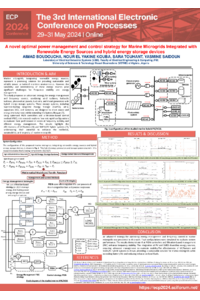
A novel optimal power management and control strategy for Marine Microgrids Integrated with Renewable Energy Sources and hybrid energy storage devices
'%3e%3cpath%20d='M12.6647%2010.9104C12.4176%2010.325%2012.0589%209.7933%2011.6088%209.34485C11.16%208.89511%2010.6283%208.53653%2010.0432%208.28891C10.038%208.28629%2010.0327%208.28498%2010.0275%208.28236C10.8437%207.69282%2011.3743%206.73252%2011.3743%205.64907C11.3743%203.85423%209.92005%202.40002%208.12522%202.40002C6.33038%202.40002%204.87618%203.85423%204.87618%205.64907C4.87618%206.73252%205.40677%207.69282%206.22296%208.28367C6.21772%208.28629%206.21248%208.2876%206.20724%208.29022C5.62031%208.53783%205.09365%208.89287%204.64167%209.34616C4.19192%209.79496%203.83334%2010.3266%203.58573%2010.9117C3.34247%2011.4846%203.21128%2012.0987%203.19925%2012.721C3.1989%2012.735%203.20135%2012.7489%203.20646%2012.7619C3.21157%2012.7749%203.21924%2012.7868%203.22901%2012.7968C3.23877%2012.8068%203.25045%2012.8148%203.26334%2012.8202C3.27623%2012.8256%203.29007%2012.8284%203.30406%2012.8284H4.09012C4.14776%2012.8284%204.19362%2012.7825%204.19493%2012.7262C4.22113%2011.7148%204.62726%2010.7676%205.34519%2010.0497C6.08802%209.30686%207.07452%208.89811%208.12522%208.89811C9.17592%208.89811%2010.1624%209.30686%2010.9052%2010.0497C11.6232%2010.7676%2012.0293%2011.7148%2012.0555%2012.7262C12.0568%2012.7839%2012.1027%2012.8284%2012.1603%2012.8284H12.9464C12.9604%2012.8284%2012.9742%2012.8256%2012.9871%2012.8202C13%2012.8148%2013.0117%2012.8068%2013.0214%2012.7968C13.0312%2012.7868%2013.0389%2012.7749%2013.044%2012.7619C13.0491%2012.7489%2013.0515%2012.735%2013.0512%2012.721C13.0381%2012.0947%2012.9084%2011.4856%2012.6647%2010.9104ZM8.12522%207.90243C7.52388%207.90243%206.95792%207.66793%206.53214%207.24215C6.10636%206.81636%205.87185%206.2504%205.87185%205.64907C5.87185%205.04773%206.10636%204.48177%206.53214%204.05599C6.95792%203.63021%207.52388%203.3957%208.12522%203.3957C8.72655%203.3957%209.29252%203.63021%209.7183%204.05599C10.1441%204.48177%2010.3786%205.04773%2010.3786%205.64907C10.3786%206.2504%2010.1441%206.81636%209.7183%207.24215C9.29252%207.66793%208.72655%207.90243%208.12522%207.90243Z'%20fill='%235D1EE1'/%3e%3c/g%3e%3c/svg%3e)
Aimad BOUDOUCHA 1
NOUR EL YAKINE KOUBA 2,3
SARA TOUHANT 4
YASMINE SAIDOUN 4
1. PhD candidate at the Laboratory of Electrical Industrial Systems (LSEI), Faculty of Electrical Engineering & Computing (FEI), at the University of Sciences & Technology Houari Boumediene (USTHB) in Algiers, Algeria.
2. Laboratory of Electrical Industrial Systems (LSEI), Faculty of Electrical Engineering & Computing (FEI), University of Sciences & Technology Houari Boumediene (USTHB) of Algiers , Algeria.
3. IEEE-IAS Affiliate Member
4. Master student at the Laboratory of Electrical Industrial Systems (LSEI), Faculty of Electrical Engineering & Computing (FEI), at the University of Sciences & Technology Houari Boumediene (USTHB) in Algiers, Algeria.
Abstract
Abstract : An advanced strategy for optimizing power management and frequency control in
marine microgrids is introduced in this paper. The investigated system incorporates a mix of
renewable energy sources and hybrid energy storage devices. A robust optimal PID controllerwas employed to tackle the intermittency challenges associated with wind and marine energy
sources, ensuring precise frequency control via time-domain simulations. A hybrid energy
storage system, which includes SMES/Battery/Ultra-Capacitors (UCs) and Fuel Cells (FCs),
was implemented to manage frequency variations and optimize the charge/discharge cycles
of batteries. To further mitigate power fluctuations and extend the life of batteries, a low-pass
filter was applied, inspired by optimization techniques for hybrid storage systems. A notable
innovation in this study is the introduction of a photovoltaic (PV) energy source into the
system, enhancing the diversity and capacity for renewable energy production in the
microgrid. A comprehensive comparative study is conducted, exploring a range of scenarios:
with and without energy storage, with the integration of PV energy, excluding the use of
diesel, and implementing battery filtering. This approach allows for an evaluation of the
impact of each configuration on the overall performance of the microgrid, underscoring
significant enhancements in sustainability, efficiency, and a reduction in dependence on fossil
fuels. The preliminary results point to a considerable improvement in energy management in
isolated marine environments, showcasing the potential of this strategy for future marine
microgrid applications. This research makes a significant contribution to the advancement of
renewable energy management systems, presenting a viable and sustainable option for the
powering of marine microgrids.
Keywords
Hybrid energy systems
Solar power
Wind power
Energy storage systems
Optimization
Power management
Frequency control
Marine microgrids .
Poster
BOUDOUCHA Aimad.pdf
INVESTIGATION OF THERMAL STABILITY OF Mg84Cu16 AS NEW POTENTIAL HIGH-TEMPERATURE PHASE CHANGE MATERIALS FOR LATENT HEAT STORAGEE
Solar-Enhanced Photocatalytic Decontamination Of Water From Tetracycline Antibiotics And Its Application In Aquaculture