Event submissions
Published
This submission belongs to the session E. Biomaterials for Drug Delivery of the event The 1st International Online Conference on Functional Biomaterials
Published date
08 Jul, 2024
Academic Editor
'%3e%3cpath%20d='M12.6657%2010.9104C12.4185%2010.325%2012.0599%209.79327%2011.6097%209.34482C11.1609%208.89508%2010.6293%208.5365%2010.0442%208.28888C10.0389%208.28626%2010.0337%208.28495%2010.0285%208.28233C10.8446%207.69279%2011.3752%206.73249%2011.3752%205.64904C11.3752%203.8542%209.92103%202.39999%208.1262%202.39999C6.33136%202.39999%204.87715%203.8542%204.87715%205.64904C4.87715%206.73249%205.40774%207.69279%206.22393%208.28364C6.21869%208.28626%206.21345%208.28757%206.20821%208.29019C5.62129%208.5378%205.09463%208.89284%204.64265%209.34613C4.1929%209.79493%203.83432%2010.3266%203.58671%2010.9117C3.34345%2011.4845%203.21226%2012.0987%203.20023%2012.7209C3.19988%2012.7349%203.20233%2012.7488%203.20744%2012.7619C3.21255%2012.7749%203.22022%2012.7867%203.22998%2012.7968C3.23975%2012.8068%203.25142%2012.8147%203.26431%2012.8202C3.2772%2012.8256%203.29105%2012.8284%203.30504%2012.8284H4.09109C4.14874%2012.8284%204.19459%2012.7825%204.1959%2012.7262C4.2221%2011.7148%204.62823%2010.7676%205.34617%2010.0497C6.08899%209.30683%207.0755%208.89808%208.1262%208.89808C9.17689%208.89808%2010.1634%209.30683%2010.9062%2010.0497C11.6242%2010.7676%2012.0303%2011.7148%2012.0565%2012.7262C12.0578%2012.7838%2012.1037%2012.8284%2012.1613%2012.8284H12.9474C12.9613%2012.8284%2012.9752%2012.8256%2012.9881%2012.8202C13.001%2012.8147%2013.0126%2012.8068%2013.0224%2012.7968C13.0322%2012.7867%2013.0398%2012.7749%2013.0449%2012.7619C13.0501%2012.7488%2013.0525%2012.7349%2013.0522%2012.7209C13.0391%2012.0947%2012.9094%2011.4855%2012.6657%2010.9104ZM8.1262%207.9024C7.52486%207.9024%206.9589%207.6679%206.53312%207.24211C6.10733%206.81633%205.87283%206.25037%205.87283%205.64904C5.87283%205.0477%206.10733%204.48174%206.53312%204.05596C6.9589%203.63018%207.52486%203.39567%208.1262%203.39567C8.72753%203.39567%209.29349%203.63018%209.71927%204.05596C10.1451%204.48174%2010.3796%205.0477%2010.3796%205.64904C10.3796%206.25037%2010.1451%206.81633%209.71927%207.24211C9.29349%207.6679%208.72753%207.9024%208.1262%207.9024Z'%20fill='%235D1EE1'/%3e%3c/g%3e%3c/svg%3e) Alexander Andrianov
Alexander AndrianovCitation
Anastasia Gershtein, Elizaveta Permyakova, Saida Karshieva, Dmitry Shtansky, The development of doxorubicin delivery systems specifically designed to target cancer cells using magnetic Fe₃O₄ nanoparticles, in Proceedings of The 1st International Online Conference on Functional Biomaterials, 10 July–12 July 2024, MDPI: Basel, Switzerland
Share
Email
Facebook
Twitter
LinkedIn
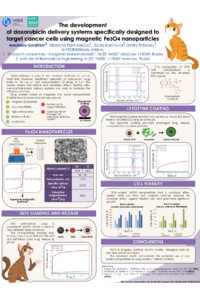
The development of doxorubicin delivery systems specifically designed to target cancer cells using magnetic Fe3O4 nanoparticles
'%3e%3cpath%20d='M12.6647%2010.9104C12.4176%2010.325%2012.0589%209.7933%2011.6088%209.34485C11.16%208.89511%2010.6283%208.53653%2010.0432%208.28891C10.038%208.28629%2010.0327%208.28498%2010.0275%208.28236C10.8437%207.69282%2011.3743%206.73252%2011.3743%205.64907C11.3743%203.85423%209.92005%202.40002%208.12522%202.40002C6.33038%202.40002%204.87618%203.85423%204.87618%205.64907C4.87618%206.73252%205.40677%207.69282%206.22296%208.28367C6.21772%208.28629%206.21248%208.2876%206.20724%208.29022C5.62031%208.53783%205.09365%208.89287%204.64167%209.34616C4.19192%209.79496%203.83334%2010.3266%203.58573%2010.9117C3.34247%2011.4846%203.21128%2012.0987%203.19925%2012.721C3.1989%2012.735%203.20135%2012.7489%203.20646%2012.7619C3.21157%2012.7749%203.21924%2012.7868%203.22901%2012.7968C3.23877%2012.8068%203.25045%2012.8148%203.26334%2012.8202C3.27623%2012.8256%203.29007%2012.8284%203.30406%2012.8284H4.09012C4.14776%2012.8284%204.19362%2012.7825%204.19493%2012.7262C4.22113%2011.7148%204.62726%2010.7676%205.34519%2010.0497C6.08802%209.30686%207.07452%208.89811%208.12522%208.89811C9.17592%208.89811%2010.1624%209.30686%2010.9052%2010.0497C11.6232%2010.7676%2012.0293%2011.7148%2012.0555%2012.7262C12.0568%2012.7839%2012.1027%2012.8284%2012.1603%2012.8284H12.9464C12.9604%2012.8284%2012.9742%2012.8256%2012.9871%2012.8202C13%2012.8148%2013.0117%2012.8068%2013.0214%2012.7968C13.0312%2012.7868%2013.0389%2012.7749%2013.044%2012.7619C13.0491%2012.7489%2013.0515%2012.735%2013.0512%2012.721C13.0381%2012.0947%2012.9084%2011.4856%2012.6647%2010.9104ZM8.12522%207.90243C7.52388%207.90243%206.95792%207.66793%206.53214%207.24215C6.10636%206.81636%205.87185%206.2504%205.87185%205.64907C5.87185%205.04773%206.10636%204.48177%206.53214%204.05599C6.95792%203.63021%207.52388%203.3957%208.12522%203.3957C8.72655%203.3957%209.29252%203.63021%209.7183%204.05599C10.1441%204.48177%2010.3786%205.04773%2010.3786%205.64907C10.3786%206.2504%2010.1441%206.81636%209.7183%207.24215C9.29252%207.66793%208.72655%207.90243%208.12522%207.90243Z'%20fill='%235D1EE1'/%3e%3c/g%3e%3c/svg%3e)
Anastasia Gershtein 1

Elizaveta Permyakova 1
Saida Karshieva 2
Dmitry Shtansky 1
1. Research Laboratory “Inorganic Nanomaterials”, National University of Science and Technology “MISIS”,Moscow 119049, Russia
2. Institute of Biomedical Engineering, National University of Science and Technology “MISIS”,119049 Moscow, Russia
Abstract
Introduction: Drug carriers made of magnetic nanoparticles (Fe3O4) have become increasingly popular. Iron nanoparticles possess distinct magnetic characteristics and can be transported to the desired location by the manipulation of a magnetic field. The medicine utilized in the study is doxorubicin. The issue with magnetic nanoparticles is in their tendency to form agglomerates when suspended in physiological solutions. To enhance particle stability and ensure safe application, it is necessary to apply a biocompatible polymer coating on the surface of the particles. Lysozyme is a biopolymer that possesses both anticancer and anti-inflammatory effects, which can stabilize nanoparticles and enhance therapeutical effects.
Methods: The magnetic nanoparticles were generated using three different methods: hydrothermal, annealing, and coprecipitation. The produced particles were analyzed by SEM, EDX analysis, FTIR spectroscopy, and BET. The surface charge of the nanoparticles was determined by measuring their zeta potential. The magnetic characteristics of the Fe3O4 particles were analyzed using a vibrating sample magnetometer. Experiments involving the loading and release of doxorubicin were conducted at various pH levels. In vitro cytotoxicity studies were conducted on the created nanosystem utilizing the Emt6 cell line and a healthy cell line.
Results: A comparative analysis of three distinct approaches for producing magnetic nanoparticles facilitated the determination of the most pertinent method for synthesizing Fe3O4 nanoparticles. The nanoparticles possess an ideal size of approximately 20 nm and exhibit magnetic properties of 68.4 emu/g. Additionally, they have greater specific surface area values of 62 m2/g. The particles obtained exhibited a significant capacity for loading doxorubicin. The incorporation of a lysozyme shell resulted in an extended duration of drug release from the created systems, in contrast to the uncoated nanoparticles.
Conclusions: Based on the findings of this study, the drug-loaded nanoparticles are suitable for cancer treatment and have potential for further in vivo investigations.
Keywords
magnetic nanoparticles
drug delivery
doxorubicin
lysozyme
Poster
Anastasia Gershtein Poster.pdf
Decorated nanogels as promising tools for selective drug delivery in spinal cord injury
Conducting Polymer Microspheres for Targeting Neuroblastoma