Event submissions
Published
This submission belongs to the session S4. Organic Crystalline Materials of the event The 4th International Online Conference on Crystals
Published date
18 Sep, 2024
Academic Editor
'%3e%3cpath%20d='M12.6657%2010.9104C12.4185%2010.325%2012.0599%209.79327%2011.6097%209.34482C11.1609%208.89508%2010.6293%208.5365%2010.0442%208.28888C10.0389%208.28626%2010.0337%208.28495%2010.0285%208.28233C10.8446%207.69279%2011.3752%206.73249%2011.3752%205.64904C11.3752%203.8542%209.92103%202.39999%208.1262%202.39999C6.33136%202.39999%204.87715%203.8542%204.87715%205.64904C4.87715%206.73249%205.40774%207.69279%206.22393%208.28364C6.21869%208.28626%206.21345%208.28757%206.20821%208.29019C5.62129%208.5378%205.09463%208.89284%204.64265%209.34613C4.1929%209.79493%203.83432%2010.3266%203.58671%2010.9117C3.34345%2011.4845%203.21226%2012.0987%203.20023%2012.7209C3.19988%2012.7349%203.20233%2012.7488%203.20744%2012.7619C3.21255%2012.7749%203.22022%2012.7867%203.22998%2012.7968C3.23975%2012.8068%203.25142%2012.8147%203.26431%2012.8202C3.2772%2012.8256%203.29105%2012.8284%203.30504%2012.8284H4.09109C4.14874%2012.8284%204.19459%2012.7825%204.1959%2012.7262C4.2221%2011.7148%204.62823%2010.7676%205.34617%2010.0497C6.08899%209.30683%207.0755%208.89808%208.1262%208.89808C9.17689%208.89808%2010.1634%209.30683%2010.9062%2010.0497C11.6242%2010.7676%2012.0303%2011.7148%2012.0565%2012.7262C12.0578%2012.7838%2012.1037%2012.8284%2012.1613%2012.8284H12.9474C12.9613%2012.8284%2012.9752%2012.8256%2012.9881%2012.8202C13.001%2012.8147%2013.0126%2012.8068%2013.0224%2012.7968C13.0322%2012.7867%2013.0398%2012.7749%2013.0449%2012.7619C13.0501%2012.7488%2013.0525%2012.7349%2013.0522%2012.7209C13.0391%2012.0947%2012.9094%2011.4855%2012.6657%2010.9104ZM8.1262%207.9024C7.52486%207.9024%206.9589%207.6679%206.53312%207.24211C6.10733%206.81633%205.87283%206.25037%205.87283%205.64904C5.87283%205.0477%206.10733%204.48174%206.53312%204.05596C6.9589%203.63018%207.52486%203.39567%208.1262%203.39567C8.72753%203.39567%209.29349%203.63018%209.71927%204.05596C10.1451%204.48174%2010.3796%205.0477%2010.3796%205.64904C10.3796%206.25037%2010.1451%206.81633%209.71927%207.24211C9.29349%207.6679%208.72753%207.9024%208.1262%207.9024Z'%20fill='%235D1EE1'/%3e%3c/g%3e%3c/svg%3e) Rodolfo Reda
Rodolfo RedaCitation
Muminjon Hakimov, Ilkhomjon Оrtikov, Ibragimdjan Аbdugafurov, Burkhon Elmuradov, Halima Mouhib, Akmaljon Tojiboev, Synthesis, crystal structure, and Hirshfeld surface analysis of isomeric ((1-(4-nitrophenyl)-1H-1,2,3-triazol-4(5)-yl)methoxy)benzaldehyde compounds, in Proceedings of The 4th International Online Conference on Crystals, 18 September–20 September 2024, MDPI: Basel, Switzerland
Share
Email
Facebook
Twitter
LinkedIn
Synthesis, crystal structure, and Hirshfeld surface analysis of isomeric ((1-(4-nitrophenyl)-1H-1,2,3-triazol-4(5)-yl)methoxy)benzaldehyde compounds
'%3e%3cpath%20d='M12.6647%2010.9104C12.4176%2010.325%2012.0589%209.7933%2011.6088%209.34485C11.16%208.89511%2010.6283%208.53653%2010.0432%208.28891C10.038%208.28629%2010.0327%208.28498%2010.0275%208.28236C10.8437%207.69282%2011.3743%206.73252%2011.3743%205.64907C11.3743%203.85423%209.92005%202.40002%208.12522%202.40002C6.33038%202.40002%204.87618%203.85423%204.87618%205.64907C4.87618%206.73252%205.40677%207.69282%206.22296%208.28367C6.21772%208.28629%206.21248%208.2876%206.20724%208.29022C5.62031%208.53783%205.09365%208.89287%204.64167%209.34616C4.19192%209.79496%203.83334%2010.3266%203.58573%2010.9117C3.34247%2011.4846%203.21128%2012.0987%203.19925%2012.721C3.1989%2012.735%203.20135%2012.7489%203.20646%2012.7619C3.21157%2012.7749%203.21924%2012.7868%203.22901%2012.7968C3.23877%2012.8068%203.25045%2012.8148%203.26334%2012.8202C3.27623%2012.8256%203.29007%2012.8284%203.30406%2012.8284H4.09012C4.14776%2012.8284%204.19362%2012.7825%204.19493%2012.7262C4.22113%2011.7148%204.62726%2010.7676%205.34519%2010.0497C6.08802%209.30686%207.07452%208.89811%208.12522%208.89811C9.17592%208.89811%2010.1624%209.30686%2010.9052%2010.0497C11.6232%2010.7676%2012.0293%2011.7148%2012.0555%2012.7262C12.0568%2012.7839%2012.1027%2012.8284%2012.1603%2012.8284H12.9464C12.9604%2012.8284%2012.9742%2012.8256%2012.9871%2012.8202C13%2012.8148%2013.0117%2012.8068%2013.0214%2012.7968C13.0312%2012.7868%2013.0389%2012.7749%2013.044%2012.7619C13.0491%2012.7489%2013.0515%2012.735%2013.0512%2012.721C13.0381%2012.0947%2012.9084%2011.4856%2012.6647%2010.9104ZM8.12522%207.90243C7.52388%207.90243%206.95792%207.66793%206.53214%207.24215C6.10636%206.81636%205.87185%206.2504%205.87185%205.64907C5.87185%205.04773%206.10636%204.48177%206.53214%204.05599C6.95792%203.63021%207.52388%203.3957%208.12522%203.3957C8.72655%203.3957%209.29252%203.63021%209.7183%204.05599C10.1441%204.48177%2010.3786%205.04773%2010.3786%205.64907C10.3786%206.2504%2010.1441%206.81636%209.7183%207.24215C9.29252%207.66793%208.72655%207.90243%208.12522%207.90243Z'%20fill='%235D1EE1'/%3e%3c/g%3e%3c/svg%3e)
Muminjon Hakimov 1
Ilkhomjon Оrtikov 2
Ibragimdjan Аbdugafurov 3
Burkhon Elmuradov 2
Halima Mouhib 4
Akmaljon Tojiboev 5
1. Namangan State University, Bobur Shoh str. 161, Namangan, 160107, Uzbekistan
2. Institute of the Chemistry of Plant Substances, Uzbekistan Academy of Sciences, Mirzo Ulugbek Str. 77, Tashkent 100170, Uzbekistan
3. National University of Uzbekistan, University Str., 4, Tashkent 100174, Uzbekistan
4. VU Bioinformatics, Computer Science Department, Vrije Universiteit Amsterdam, De Boelelaan 1111, 1081 HV Amsterdam, The Netherlands
5. University of Geological Sciences, Olimlar Str. 64, Tashkent 100170, Uzbekistan
Abstract
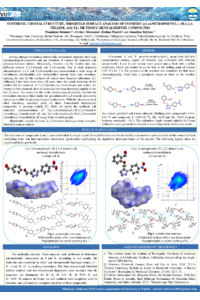
Among nitrogen-containing heterocyclic compounds, triazoles have high pharmacological properties and are therefore of interest for structural and physico-chemical studies. Structurally, triazoles can be divided into two different subsets: 1,2,3-triazole and 1,2,4-triazole. Due to their structural characteristics, 1,2,3- and 1,2,4-triazoles can accommodate a wide range of substituents (electrophiles and nucleophiles) around their core structures, opening the way for the synthesis of various new bioactive substances [1]. Although it has been more than 120 years since the initial discovery of the method for the synthesis of 1,2,3-triazoles by cross-alkynes and azides, the interest in this chemical class of molecules has been increasing rapidly in the last 20 years. The reason for this is the introduction of catalytic methods for cyclization reactions, which made the generation of 1,2,3-triazole derivatives widely accessible for pharmacological applications. With the advancement of click chemistry, scientific work on these five-member heterocyclic compounds is growing rapidly [2]. Here, we report the synthesis and structural characterization of 2-((1-(4-nitrophenyl)-1H-1,2,3-triazol-4-yl)methoxy)benzaldehyde (1) and 3-((1-(4-nitrophenyl)-1H-1,2,3-triazol-4-yl)methoxy)benzaldehyde (2) using X-ray crystallography. The structures of compounds 1 and 2 were established by single-crystal X-ray diffraction, and the identified conformations were described in the context of their stabilizing intra- and inter-molecular interactions, particularly highlighting the significant hydrogen bonds of the crystals. For molecular crystals, Hirshfeld surface analyses can provide crucial insight into the intermolecular interactions. These analyses were performed to determine intermolecular interactions in 1 and 2. According to our results, the molecules are associated by intra- and intermolecular hydrogen bonds, C—H···π, and N—O···π stacking interactions. The three-dimensional Hirshfeld surface analysis and two-dimensional fingerprint plots revealed that the structures are dominated by H···H, H···C/C···H and H···O/O···H contacts.
Keywords
crystal structures. 1,2,3-triazoles. hydrogen bond networks. Hirshfeld surface analysis
Poster
Hakimov_poster.pdf
Synthesis and crystal structure analysis of monochloroacetic acid 2,4-dinitrophenylhydrazide
Interfacial Action of Co-Doped MoS2 Nanosheets on the Directional Piezoelectric Catalytic Generation of Reactive Oxygen Species