Event submissions
Published
This submission belongs to the session S2. Forest Biodiversity, Ecosystem Services, and Earth Observations of the event The 4th International Electronic Conference on Forests
Published date
19 Sep, 2024
Academic Editor
'%3e%3cpath%20d='M12.6657%2010.9104C12.4185%2010.325%2012.0599%209.79327%2011.6097%209.34482C11.1609%208.89508%2010.6293%208.5365%2010.0442%208.28888C10.0389%208.28626%2010.0337%208.28495%2010.0285%208.28233C10.8446%207.69279%2011.3752%206.73249%2011.3752%205.64904C11.3752%203.8542%209.92103%202.39999%208.1262%202.39999C6.33136%202.39999%204.87715%203.8542%204.87715%205.64904C4.87715%206.73249%205.40774%207.69279%206.22393%208.28364C6.21869%208.28626%206.21345%208.28757%206.20821%208.29019C5.62129%208.5378%205.09463%208.89284%204.64265%209.34613C4.1929%209.79493%203.83432%2010.3266%203.58671%2010.9117C3.34345%2011.4845%203.21226%2012.0987%203.20023%2012.7209C3.19988%2012.7349%203.20233%2012.7488%203.20744%2012.7619C3.21255%2012.7749%203.22022%2012.7867%203.22998%2012.7968C3.23975%2012.8068%203.25142%2012.8147%203.26431%2012.8202C3.2772%2012.8256%203.29105%2012.8284%203.30504%2012.8284H4.09109C4.14874%2012.8284%204.19459%2012.7825%204.1959%2012.7262C4.2221%2011.7148%204.62823%2010.7676%205.34617%2010.0497C6.08899%209.30683%207.0755%208.89808%208.1262%208.89808C9.17689%208.89808%2010.1634%209.30683%2010.9062%2010.0497C11.6242%2010.7676%2012.0303%2011.7148%2012.0565%2012.7262C12.0578%2012.7838%2012.1037%2012.8284%2012.1613%2012.8284H12.9474C12.9613%2012.8284%2012.9752%2012.8256%2012.9881%2012.8202C13.001%2012.8147%2013.0126%2012.8068%2013.0224%2012.7968C13.0322%2012.7867%2013.0398%2012.7749%2013.0449%2012.7619C13.0501%2012.7488%2013.0525%2012.7349%2013.0522%2012.7209C13.0391%2012.0947%2012.9094%2011.4855%2012.6657%2010.9104ZM8.1262%207.9024C7.52486%207.9024%206.9589%207.6679%206.53312%207.24211C6.10733%206.81633%205.87283%206.25037%205.87283%205.64904C5.87283%205.0477%206.10733%204.48174%206.53312%204.05596C6.9589%203.63018%207.52486%203.39567%208.1262%203.39567C8.72753%203.39567%209.29349%203.63018%209.71927%204.05596C10.1451%204.48174%2010.3796%205.0477%2010.3796%205.64904C10.3796%206.25037%2010.1451%206.81633%209.71927%207.24211C9.29349%207.6679%208.72753%207.9024%208.1262%207.9024Z'%20fill='%235D1EE1'/%3e%3c/g%3e%3c/svg%3e) Tianxiang Yue
Tianxiang YueCitation
Antonio Peña-Fernández, Maria del Carmen Lobo-Bedmar, Mark D. Evans, Gurminderjeet S Jagdev, María de los Ángeles Peña, Biomonitoring air quality for praseodymium in Leicestershire (UK), in Proceedings of The 4th International Electronic Conference on Forests, 23 September–25 September 2024, MDPI: Basel, Switzerland
Share
Email
Facebook
Twitter
LinkedIn
Biomonitoring air quality for praseodymium in Leicestershire (UK)

Antonio Peña-Fernández 1,2
'%3e%3cpath%20d='M12.6647%2010.9104C12.4176%2010.325%2012.0589%209.7933%2011.6088%209.34485C11.16%208.89511%2010.6283%208.53653%2010.0432%208.28891C10.038%208.28629%2010.0327%208.28498%2010.0275%208.28236C10.8437%207.69282%2011.3743%206.73252%2011.3743%205.64907C11.3743%203.85423%209.92005%202.40002%208.12522%202.40002C6.33038%202.40002%204.87618%203.85423%204.87618%205.64907C4.87618%206.73252%205.40677%207.69282%206.22296%208.28367C6.21772%208.28629%206.21248%208.2876%206.20724%208.29022C5.62031%208.53783%205.09365%208.89287%204.64167%209.34616C4.19192%209.79496%203.83334%2010.3266%203.58573%2010.9117C3.34247%2011.4846%203.21128%2012.0987%203.19925%2012.721C3.1989%2012.735%203.20135%2012.7489%203.20646%2012.7619C3.21157%2012.7749%203.21924%2012.7868%203.22901%2012.7968C3.23877%2012.8068%203.25045%2012.8148%203.26334%2012.8202C3.27623%2012.8256%203.29007%2012.8284%203.30406%2012.8284H4.09012C4.14776%2012.8284%204.19362%2012.7825%204.19493%2012.7262C4.22113%2011.7148%204.62726%2010.7676%205.34519%2010.0497C6.08802%209.30686%207.07452%208.89811%208.12522%208.89811C9.17592%208.89811%2010.1624%209.30686%2010.9052%2010.0497C11.6232%2010.7676%2012.0293%2011.7148%2012.0555%2012.7262C12.0568%2012.7839%2012.1027%2012.8284%2012.1603%2012.8284H12.9464C12.9604%2012.8284%2012.9742%2012.8256%2012.9871%2012.8202C13%2012.8148%2013.0117%2012.8068%2013.0214%2012.7968C13.0312%2012.7868%2013.0389%2012.7749%2013.044%2012.7619C13.0491%2012.7489%2013.0515%2012.735%2013.0512%2012.721C13.0381%2012.0947%2012.9084%2011.4856%2012.6647%2010.9104ZM8.12522%207.90243C7.52388%207.90243%206.95792%207.66793%206.53214%207.24215C6.10636%206.81636%205.87185%206.2504%205.87185%205.64907C5.87185%205.04773%206.10636%204.48177%206.53214%204.05599C6.95792%203.63021%207.52388%203.3957%208.12522%203.3957C8.72655%203.3957%209.29252%203.63021%209.7183%204.05599C10.1441%204.48177%2010.3786%205.04773%2010.3786%205.64907C10.3786%206.2504%2010.1441%206.81636%209.7183%207.24215C9.29252%207.66793%208.72655%207.90243%208.12522%207.90243Z'%20fill='%235D1EE1'/%3e%3c/g%3e%3c/svg%3e)
Maria del Carmen Lobo-Bedmar 3
Mark D. Evans 2
Gurminderjeet S Jagdev 2

María de los Ángeles Peña 4
1. Department of Surgery, Medical and Social Sciences, Faculty of Medicine and Health Sciences, University of Alcalá, Ctra. Madrid-Barcelona, Km. 33.600, 28871 Alcalá de Henares, Madrid, Spain.
2. Leicester School of Allied Health Sciences, De Montfort University, Leicester, LE1 9BH, UK.
3. Departamento de Investigación Agroambiental. IMIDRA. Finca el Encín, Crta. Madrid-Barcelona Km, 38.2, 28800 Alcalá de Henares, Madrid, Spain.
4. Departamento de Ciencias Biomédicas, Universidad de Alcalá, Crta. Madrid-Barcelona Km, 33.6, 28871 Alcalá de Henares, Madrid, Spain
Abstract
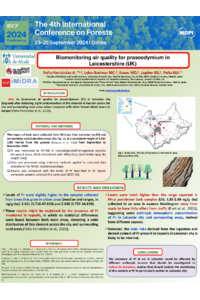
Aims: The aim was to biomonitor air quality for praseodymium (Pr) in Leicester city (England) after detecting slight contamination of this element in topsoils across the city and surrounding rural areas, when compared with other industrialised towns in Europe.
Methods: Thin layers of bark were collected from 96 trees from Leicester (n=55) and surrounding rural/suburban areas (41), at a consistent height of 1.50–1.80 metres from the ground. Pr was monitored by ICP-MS in cleaned/ground/homogenised samples mineralised with HNO3/H2O2 [LoD=0.157 ng/g dry weight (dw)]. The data were compared with the levels of Pr described in 52 topsoil composite samples collected in the same year (2017-18).
Results: The levels of Pr were slightly higher in the samples collected from trees that grw in urban areas (median and ranges, in ng/g dw): 2.611 (0.714-47.603) and 2.450 (0.757-14.839). These results might be explained by the presence of Pr monitored in topsoils, in which no statistical differences were found between both main areas, detecting a wide distribution of this element across the city and in surrounding rural areas. Levels were much higher than the range reported in Pinus ponderosa bark samples (US; 1.85-2.69 ng/g dw) collected in an area in eastern Washington away from roads, to reduce the effect from traffic, suggesting some anthropic atmospheric contamination of Pr in Leicester city and surrounding areas, derived from different sources such as agricultural practices, waste disposal, metal recycling, vehicular/industrial emissions, and urbanisation. However, the toxic risks derived from the ingestion of and dermal contact with Pr present in topsoils in Leicester city is likely to be minimal.
Conclusions: The presence of Pr in air in Leicester could be affected by different anthropic sources that should be investigated to reduce its presence; studies should include the monitoring of the content of Pr in particulate matter in Leicester city.
Keywords
Praseodymium
Leicester
tree bark
distribution
air quality.
Poster
sciforum-099927_Antonio_Peña-Fernández.pdf
Content of lutetium in wild soil mushrooms from Leicester city and surroundings areas in England
Analysing the climate variability and reforestation activities in the areas adjacent to internally displaced camps in Darfur